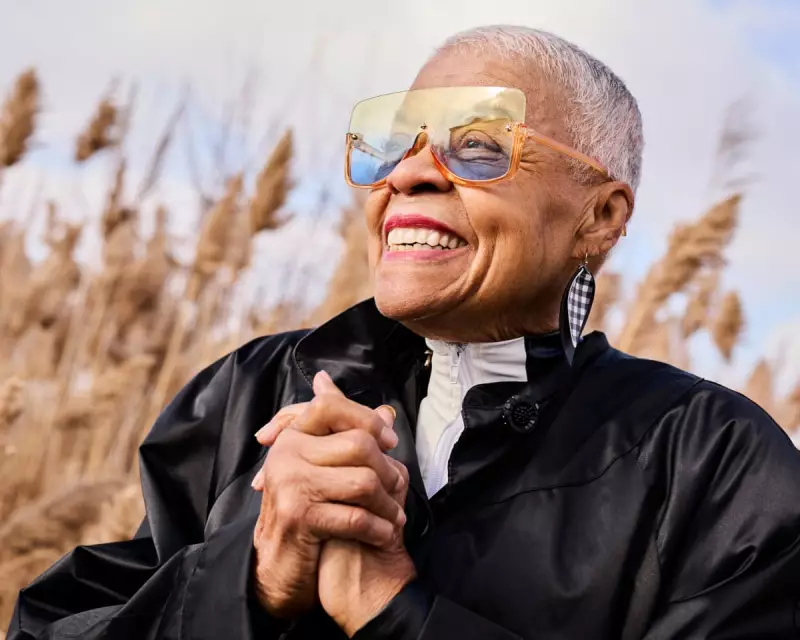
Lajuana Weathers, an 89-year-old resident of Illinois, begins each day with celery juice, tracks her step count diligently, and practices daily meditation. Despite her advanced years, she possesses the cognitive abilities and physical vitality of someone decades younger. Weathers is part of an elite group known as superagers, individuals over 80 whose memory performance matches that of average 50- to 60-year-olds.
The Science Behind Superagers
Weathers participates in the SuperAging Research Initiative at the University of Chicago, where researchers study approximately 400 exceptional individuals across North America. To qualify, participants must undergo extensive testing including memory assessments, MRI brain scans, and genetic analysis. Dr Emily Rogalski, director of the initiative, explains their mission: "We integrate data across brain structure and function, molecular and genetic measures, lifestyle, medical history, psychosocial factors, family history and other factors to understand how these elements interact to support exceptional cognitive ageing."
The research aims to translate findings from this rare population to benefit everyone. "If this rare population has something in common, it could be translated to be beneficial to the general population," says Rogalski. "If you find a protective factor, then you say, 'How do we turn this protective factor on in the mainstream population to boost chances of living long and living well?'"
Lajuana Weathers' Holistic Approach
Weathers embodies the superager philosophy through her comprehensive approach to wellbeing. "I look at my life as a holistic entity, and in that life is my physical, social, emotional and spiritual wellbeing," she explains. "I have to take care of all of those. That's what I like about the ageing process. All the clutter of raising children is out and I can concentrate on the wellness of me."
Her daily routine includes:
- A 40-minute morning walk followed by another after dinner
- Occupational therapy twice weekly
- Weekly wellness classes focusing on nutrition and food preparation
- Daily cognitive exercises including colouring and word searches
- Active involvement with her local church and choir
Weathers follows a largely plant-based diet with some fish and chicken, avoids refined sugar and gluten, and practices what she calls "food stacking" - consuming fibre first, then protein, starches and sugars to aid digestion. Remarkably, she takes only one medication for blood pressure and feels so well she plans to discuss phasing it out with her doctor.
Extraordinary Physical Capabilities
The superager phenomenon extends beyond cognitive health to include remarkable physical achievements. Ina Koolhaas Revers, a 78-year-old powerlifting champion from Amsterdam, demonstrates how older adults can achieve athletic feats typically associated with much younger individuals.
After starting CrossFit at 64, Koolhaas Revers discovered exceptional strength that led her to competitive powerlifting. Research from Maastricht University revealed her quadriceps muscles were 37% larger than average for her age group, with muscle cells comparable to women in their 20s. She can bench press 57.5kg, squat 90kg and deadlift 133.5kg - outperforming average 25-year-old women in all categories.
"I had no idea that the weights I lifted were considered so heavy or that my strength was exceptional," she says. "To me, it was evidence that seniors can achieve far more than they imagine."
Endurance Excellence
Hans Smeets, another 78-year-old Dutch superager, has achieved extraordinary endurance capabilities. Returning to running at 50, he completed his first marathon in 2 hours 50 minutes and has since won numerous European and world championship titles in his age category.
Laboratory testing revealed Smeets has a VO2 max of 50.5 - a measure of maximum oxygen consumption during intense exercise that places him in the 75th percentile for men aged 20-29. Sports scientist Bas van Hooren describes this as "remarkably high" and notes it's "the highest value reported for someone at 75 years old."
Smeets attributes his success to consistent training focused on endurance rather than high intensity, which has kept him virtually injury-free. He maintains a healthy diet, rarely eats meat, avoids processed foods, and bakes his own organic sourdough bread.
The British Superager
Neil Hunter, a 65-year-old from Lancashire, represents British superagers through his triathlon achievements. Starting his first triathlon at 57, he has since completed 100-150 events and recently became an Ironman Age-Group world champion.
Hunter trains 15-20 hours weekly, combining running, cycling, swimming, walking, yoga and pilates. His VO2 max measures 59.6, placing him above the 90th percentile for his age group and close to elite levels for 20-29 year olds.
"My mantra is: get fit, stay healthy, be happy," says Hunter. "I'm convinced that there's no prescription medicine that could provide the same wellbeing results, either physically or psychologically, as daily exercise."
Common Threads Among Superagers
Research reveals several consistent patterns among superagers:
- Social Connection: Northwestern University researchers found superagers tend to have strong interpersonal relationships and social engagement
- Continuous Learning: Challenging the brain with new skills provides cognitive benefits regardless of the activity
- Physical Activity: Regular exercise, tailored to individual capabilities, appears consistently among superagers
- Positive Outlook: Many superagers maintain optimistic attitudes and gratitude practices
Dr Rogalski notes that superagers are "not uniformly 'perfect' in their lifestyle histories" - approximately 40% report a history of smoking, suggesting resilience factors beyond simple lifestyle choices.
The Future of Ageing Research
Emerging technologies promise to revolutionise our understanding of healthy ageing. Eric Topol, professor and cardiologist, discusses "organ clocks" in his book Super Agers: An Evidence-Based Approach to Longevity. These assessments, expected to become available this year, will measure the ageing pace of individual organs to predict disease risks and guide preventive measures.
Topol's research with 1,400 "wellderly" individuals found lifestyle factors outweighed genetic influences in healthy ageing. "In their genome sequence, we found very little to account for their healthy ageing," he explains. "A lot of it is related to non-genetic issues, especially the immune system. Lifestyle has a big influence on our immune system."
Practical Advice for Healthy Ageing
Based on superager research and expert recommendations:
- Engage in both aerobic exercise and resistance training
- Maintain social connections across generations
- Challenge your brain with new learning experiences
- Follow an anti-inflammatory diet, minimising ultra-processed foods
- Prioritise quality sleep and stress management
- Focus on activities within your current abilities rather than perfection
As Weathers beautifully summarises: "I concentrate on how good it is to be alive. I have a 'count my blessings' attitude. I intend to be happy and I have the power to orchestrate that." Her perspective, combined with scientific insights from superager research, offers hope and practical guidance for ageing well at any stage of life.