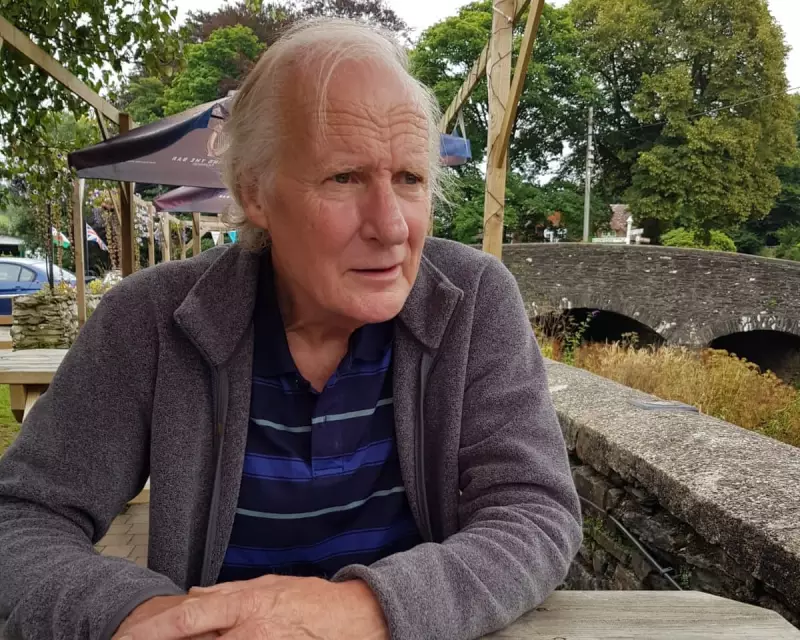
The scientific community mourns the loss of Professor John Garthwaite, an esteemed neuroscientist whose revolutionary work transformed our understanding of how brain cells communicate. Professor Garthwaite passed away at the age of 76, leaving behind a legacy of groundbreaking discoveries in experimental neuroscience.
Revolutionising Brain Communication
During the 1980s, while working at Liverpool University, Professor Garthwaite made a discovery that would challenge fundamental beliefs in neuroscience. He successfully overturned the long-standing assumption that brain cells only communicate at direct contact points called synapses. His research demonstrated that the brain also utilises nitric oxide gas as a chemical messenger, revealing a more complex communication system than previously understood.
Professor Garthwaite's work showed that activation of the NMDA receptor – often described as a master switch for learning and memory – triggers the production of nitric oxide. This gas then diffuses freely throughout the brain, influencing both blood vessels and networks of brain cells. This phenomenon, now known as volume transmission, represented a significant breakthrough in neurological science.
A Distinguished Academic Career
John Garthwaite was born in Scarborough, North Yorkshire to Peter, a silviculturist, and Betty, a homemaker. His educational journey began at Wellington College in Berkshire before he progressed to the University of Surrey, where he earned a degree in medical biochemistry. He later completed his PhD at the University of London's School of Pharmacy in 1977.
His professional career included research at the Medical Research Council's Developmental Neurobiology Unit within the University of London. In 1980, he moved to the University of Liverpool as a lecturer, initially in the department of veterinary physiology and pharmacology, later transitioning to the department of physiology. He progressed through academic ranks to become professor of physiology.
In 1992, Professor Garthwaite accepted an invitation to become head of neuroscience research at the Wellcome Research laboratories in Beckenham, Kent. Four years later, following the closure of these laboratories, he moved to University College London, where his leadership proved instrumental in establishing the Wolfson Institute for Biomedical Research. He served as professor of experimental neuroscience from 1996 until his retirement in 2014, after which he was awarded an emeritus position.
Lasting Legacy and Personal Life
Professor Garthwaite's foundational research earned him several prestigious awards and now provides the groundwork for developing new medicines that target nitric oxide signalling. Beyond his research achievements, he was recognised as a dedicated educator and generous mentor, known for his meticulous approach and dry wit.
Outside the laboratory, Professor Garthwaite was an avid outdoorsman and environmental advocate who also enjoyed carpentry. He met his wife, Giti, an Iranian postdoctoral fellow at the London School of Pharmacy, while in London. They married in 1978 and from 1983 until their retirements, they worked together and coordinated their career moves. He is survived by Giti and their daughter, Nina.
The scientific community remembers Professor John Garthwaite not only for his transformative research in neuroscience but also for his commitment to education and his generous spirit as a colleague and mentor.