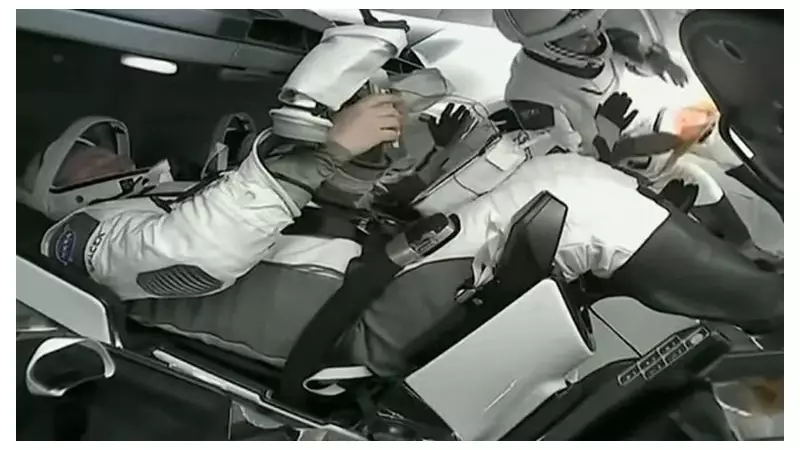
In an unprecedented event, the International Space Station (ISS) has initiated its first-ever emergency crew evacuation due to a serious medical condition affecting one of the astronauts on board.
An Unplanned Return to Earth
The four-person crew of the SpaceX Dragon Endeavour spacecraft undocked from the orbital outpost just after 10.20pm UK time on Wednesday, 14 January 2026. They are now targeting a splashdown off the coast of California at 8.41am on Thursday.
This marks the first time in the station's 25-year history that a mission has been cut short for medical reasons. NASA has not disclosed which of the four crew members is affected, citing confidentiality, nor has it specified the nature of the medical problem. The agency has stated the individual's condition is stable.
Dr. James Polk, NASA's medical chief, emphasised last week that the decision to return was precautionary, stating the team was "erring on the side of caution."
The Crew and Mission Impact
The evacuated crew consists of American astronauts Mike Fincke and Zena Cardman, Russian cosmonaut Oleg Platonov, and Japanese astronaut Kimiya Yui. They had arrived at the ISS in August 2025 aboard a SpaceX mission and were originally scheduled for a six-month stay.
The sudden departure has immediate operational consequences. The first planned spacewalk of 2026, which was to be conducted by Cardman and Fincke to prepare for new solar panels, has been cancelled.
NASA Administrator Jared Isaacman commented, "I'm proud of the swift effort across the agency thus far to ensure the safety of our astronauts."
Medical Capabilities and Remaining Crew
Until now, medical incidents on the ISS have been managed in orbit with support from flight surgeons and medical teams on Earth. Past incidents have included treating a blood clot in an astronaut's jugular vein. The station is equipped with an extensive medical kit containing more than 190 drugs and equipment like an ultrasound machine and a defibrillator.
The evacuation leaves three other crew members aboard the ISS: NASA's Chris Williams and Russia's Sergei Mikaev and Sergei Kud-Sverchkov. They arrived in November 2025 and are scheduled to remain on station until the summer.
This emergency highlights the inherent risks of human spaceflight as NASA plans to decommission the 400-tonne ISS, which orbits Earth at roughly 17,500mph, in late 2030 or early 2031. The vision is for privately-funded stations to eventually take its place.