The medical world is mourning the loss of Sir Terence English, the pioneering cardiac surgeon who defied sceptics to establish the UK's first consistently successful heart transplant programme. He has died at the age of 93.
The Pioneering Operation That Changed Everything
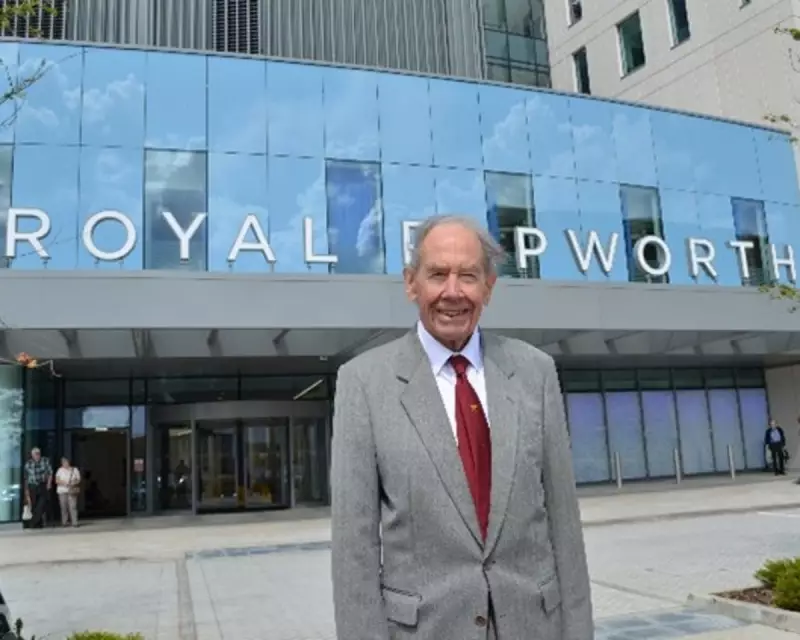
In August 1979, with the future of heart transplantation in Britain hanging in the balance, Terence English performed a landmark operation at Papworth Hospital in Cambridgeshire. The UK had seen a moratorium on the procedure since 1973 after early attempts yielded poor survival rates. English, who had trained under Donald Ross—one of Britain's early transplant surgeons—was determined to revive the field.
"I very much had my back to the wall," he recalled decades later. "I had a shot and I was going to take it." That shot was on builder Keith Castle, a 52-year-old from London. The surgery was a triumph; Castle lived for nearly six more years, becoming a powerful ambassador for the procedure and helping to shift public and medical opinion.
Building a Legacy from a Rocky Start
English's journey to that historic moment was paved with meticulous preparation and resilience. He joined Papworth as a consultant in 1973 and made several study trips to learn from world leader Dr. Norman Shumway in California. A crucial breakthrough came in 1976 with the formal UK recognition of brain death, improving organ viability.
Despite initial rejection from the Department of Health, English secured funding for two trial transplants from a sympathetic local health authority chair, Pauline Burnet. The first attempt in January 1979 ended tragically when the patient died before surgery. The success with Keith Castle just months later proved the technique's potential.
Public and media hostility, which had framed transplants as a "surgeons' vanity project," began to melt away. Funding followed, and the programme flourished. By the end of 1989, English had performed 342 heart transplants. He was knighted in 1991 for his services to medicine and surgery.
A Life of Adventure and Service
Born in Pietermaritzburg, South Africa, in 1932, English's path to medicine was unconventional. He first worked as a diamond driller and earned a civil engineering degree. A family legacy of £2,000 prompted a move to London to study medicine at Guy's Hospital, where he initially struggled but ultimately qualified in 1962.
His leadership extended beyond the operating theatre, serving as President of the Royal College of Surgeons (1989-1992) and the British Medical Association (1995-1996), and as Master of St Catharine's College, Cambridge (1993-2000).
In later life, his focus turned to humanitarian work, supporting medical aid in conflict zones like Palestine and Pakistan. He was also a patron of Dignity in Dying, advocating for law reform on assisted dying. True to his adventurous spirit, he celebrated his 70th birthday by climbing Mount Kilimanjaro and embarked on epic road trips across continents in his Toyota Land Cruiser.
Sir Terence English is survived by his second wife, Judith, his four children, eight grandchildren, and his sister. His legacy is the thousands of lives extended by the transplant programme he fought so hard to establish.