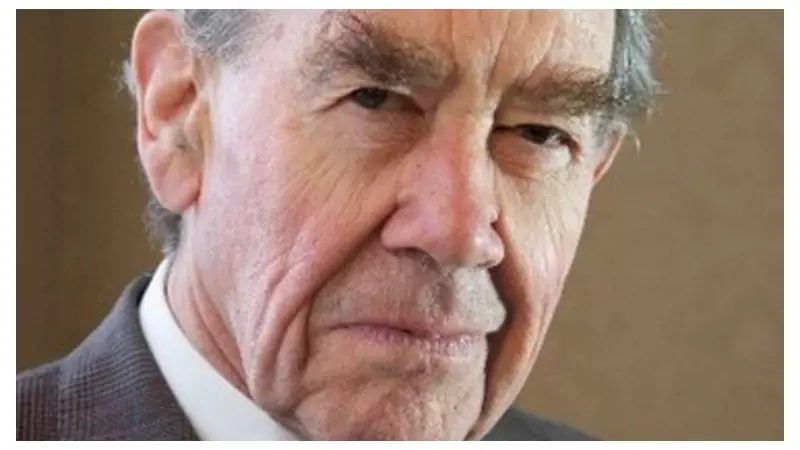
The pioneering surgeon who led the United Kingdom's first successful heart transplant operation has died at the age of 93.
Sir Terence English passed away peacefully at his home in Oxford on Sunday, his family confirmed. He made medical history in 1979 when he performed the groundbreaking surgery on patient Keith Castle.
The Pioneering Operation
Sir Terence's historic achievement came after a decade-long moratorium on heart transplants in the UK. This pause followed three unsuccessful attempts at the procedure during the late 1960s.
In a 2019 interview, Sir Terence revealed the immense pressure he faced, stating he had been turned down by various transplant bodies and faced significant criticism. He described feeling that this was likely to be the last chance for heart transplantation in Britain and that he very much had his back to the wall.
His first attempt at a heart transplant at Royal Papworth Hospital in January 1979 was not successful. However, Sir Terence was determined to try again, famously saying, "I had a second shot and I was going to take it."
A Survivor's Story
His second patient was Keith Castle, a 52-year-old builder from London. Mr Castle was considered a challenging candidate due to being a smoker with peripheral vascular disease and a duodenal ulcer.
Despite these health challenges, Sir Terence noted that what always struck him about Keith was that he was a survivor. This proved true, as Mr Castle lived for five years following his transplant, marking a monumental success for British medicine.
Sir Terence English was born in South Africa in 1932 and worked at the renowned Royal Papworth Hospital in Cambridge from 1972 until 1995.
A Legacy of Pride
In a statement released by Royal Papworth Hospital, one of Sir Terence's daughters, Mary, spoke on behalf of herself and her three siblings. She expressed that they were "immensely proud of what dad did".
The family's statement reflects the profound impact of Sir Terence's work, which not only saved lives but established the UK as a leader in cardiac surgery and transplantation medicine.
His determination in the face of earlier failures and institutional resistance paved the way for thousands of life-saving heart transplants that have followed in the decades since.