
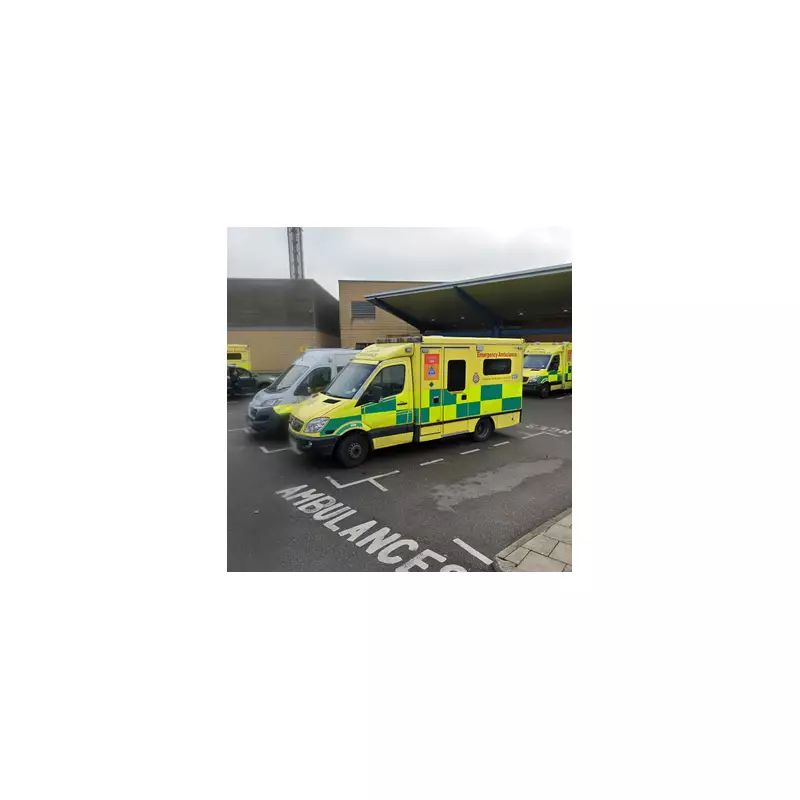
A major East London hospital is issuing an urgent plea for £35 million to overhaul its overwhelmed accident and emergency department, where patients are routinely treated in public corridors due to crippling demand.
A Department Stretched Beyond Its Limits
Queen's Hospital in Romford is struggling to cope with a record number of emergency attendances. The A&E unit, built in 2006, was originally designed to care for 325 people each day. Hospital bosses now report that staff are seeing an average of double that figure daily.
The scale of the pressure became starkly clear last December, which was the hospital's busiest month on record. A staggering average of 995 people attended the A&E every single day of the month, contributing to a total of 14,286 extra patients last year compared to previous levels.
"Corridor Care is Not Right or Fair"
The situation led to disturbing footage broadcast by ITV, showing packed corridors at Queen's. The broadcast appeared to show elderly patients waiting for days and some undergoing examinations in public view.
Matthew Trainer, Chief Executive of Barking, Havering and Redbridge University NHS Hospitals Trust, which runs the hospital, condemned the practice. "As I said to the broadcaster, corridor care isn’t right or fair and it’s not something I would want for one of my relatives," he stated.
He explained the grim rationale behind the move, noting: "It’s happening because we’re seeing more and more patients and it is safer to bring people into the hospital rather than keeping them waiting outside on ambulances for hours, as happened in the past."
The Trust's urgent and emergency services are currently rated as "requires improvement" by the Care Quality Commission (CQC). The £35 million campaign aims to transform the A&E and finally put a stop to corridor care.
Cross-Party Support for Vital Funding
The hospital has found support from local MPs for its funding bid. Andrew Rosindell, the Conservative MP for Romford, voiced his strong backing. "I fully support the campaign to secure the necessary funding for the transformation of our A&E at Queen’s," he said.
"On the many visits that I have made to the hospital... I have seen first-hand the lifesaving work of the team at Queen’s, but I’m afraid that the resources are simply not there to meet ever-increasing demand. This initiative is crucial for ensuring that our community receives the highest standard of emergency care."
In a positive contrast, the hospital's maternity services have seen a dramatic turnaround. Once considered subpar, the unit—the third largest single-site maternity service in England, delivering 7,002 babies in 2025—has now been rated "good" by the CQC.
Mr Trainer highlighted specific improvements, including more midwives and medical staff in triage, 24-hour flow coordinators, and innovative use of theatres to manage the rising demand for caesarean sections.
The crisis at Queen's occurs against a mixed backdrop for London's NHS. Despite record winter demand, NHS England data shows London hospitals successfully reduced treatment waiting lists by over 62,000 people in November. Progress was also reported in cancer care, with nearly 80% of patients receiving a diagnosis or all-clear within the four-week target.
Homerton Healthcare in East London led the region with a 9.4% reduction in its backlog, thanks to new surgical lists and integrated community care. However, health officials remain cautious as they continue to manage high numbers of flu and norovirus cases across the capital.




