
Insurance Barriers for Young Adults as Colon Cancer Cases Surge
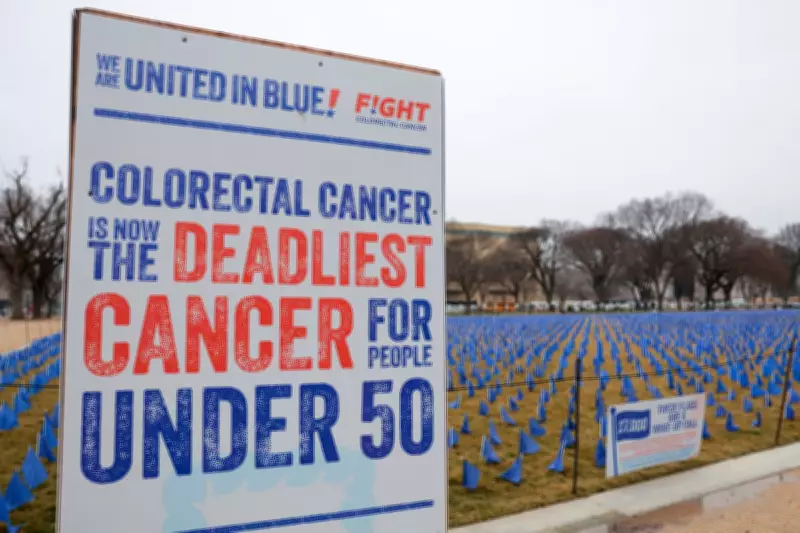
On March 6, 2026, a striking visual representation of the colorectal cancer crisis unfolded on the National Mall in Washington, D.C. Approximately 27,000 blue flags were planted across the iconic lawn, each symbolizing a life that could potentially be saved from colorectal cancer through increased funding and improved access to screening. This powerful display highlighted a growing public health concern that is particularly affecting younger generations across the United States.
The Screening Age Gap and Insurance Complications
While colon cancer rates are declining among older Americans, research indicates a significant and troubling increase in diagnoses among people in their 20s and 30s. This demographic shift has created a critical gap in healthcare coverage, as current insurance requirements under the Affordable Care Act (ACA) mandate coverage for preventive colonoscopies only for individuals aged 45 and older.
Caitlin Murphy, a cancer epidemiologist and professor at the University of Chicago, explains the regulatory distinction: "The ACA requires insurance companies to cover colonoscopies for people over 45 because it's been recommended by the U.S. Preventive Services Task Force. However, for individuals under 45 who experience symptoms like rectal bleeding, a colonoscopy would be considered a diagnostic test rather than a screening test, and therefore it's not covered in the same comprehensive way."
This classification difference creates substantial financial barriers for younger patients. The out-of-pocket costs for diagnostic colonoscopies can vary dramatically between insurance plans, with some patients facing bills of $2,000 or more that must be paid immediately.
Personal Stories Highlight Systemic Failures
The human impact of these insurance limitations becomes clear through individual experiences. Dominick, a 35-year-old software engineer from Florida who requested partial anonymity, encountered this coverage gap firsthand. After experiencing concerning symptoms including bowel movement changes, stomach pain, and unexplained weight loss, his doctor recommended a colonoscopy.
"Initially, my insurance company indicated the procedure would be covered," Dominick recalled. "Then, just three hours before my scheduled appointment, I received a call stating the colonoscopy wouldn't be covered because it was classified as diagnostic rather than preventive."
Having already completed the rigorous preparation process—which typically involves days of dietary restrictions followed by strong laxatives—Dominick faced a difficult choice. He ultimately paid approximately $2,000 out-of-pocket using a credit card. The procedure revealed a precancerous polyp that was successfully removed, but Dominick remains haunted by what might have happened if he couldn't afford the unexpected expense.
Referral Loops and Diagnostic Delays
Beyond financial barriers, young patients often encounter significant delays in receiving appropriate diagnostic evaluations. Murphy notes that she hears weekly from individuals who have experienced symptoms for years without proper assessment.
"Doctors frequently attribute symptoms in younger patients to less serious conditions like hemorrhoids or postpartum changes," Murphy explained. "This creates referral loops where patients move from doctor to doctor without receiving comprehensive evaluation. It's a substantial problem that seems eminently fixable with better awareness and protocol adjustments."
Paul Brennan of the International Agency for Research on Cancer emphasizes the disproportionate impact on younger demographics: "The increase in colon cancer cases is proportionally much higher among adults in their 20s and 30s compared to those in their 40s. While cancer risk continues to rise with age overall, we're seeing more young people receiving diagnoses even as rates decline among those over 60."
The Screening Age Debate and Alternative Approaches
The dramatic increase in young-onset colon cancer has sparked serious discussion about whether the recommended screening age should be lowered further. The current guideline of 45 was only established in recent years after significant advocacy efforts.
Rebecca Siegel, an epidemiologist at the American Cancer Society, recalls the resistance encountered when her organization pushed for the age reduction in 2018: "There was substantial pushback from various quarters. Critics argued the risk was too low in younger populations, expressed concerns about diverting screening resources from older adults who face higher overall burden, and worried about exacerbating existing healthcare disparities."
Since the screening age was lowered to 45, data suggests earlier detection has benefited many patients. However, Siegel cautions that further reductions require careful consideration: "This is not something that's done lightly. There are practical limitations including the availability of gastroenterologists, and colonoscopy itself carries certain risks that must be balanced against benefits."
For younger patients experiencing symptoms while struggling with insurance approval, Murphy and Siegel suggest stool tests like Cologuard might help accelerate the diagnostic process. Ideally, they emphasize, anyone experiencing concerning symptoms like rectal bleeding should receive immediate approval for appropriate diagnostic testing.
Research Priorities and Future Directions
Beyond screening debates, researchers emphasize the importance of investigating what's driving the increase in young-onset colon cancer. Murphy points to the complexity of potential causes: "There are probably thousands of possibilities as to what's causing this increase. We need research approaches that allow us to consider multiple factors simultaneously to identify the most likely contributors."
One promising avenue involves studying the "exposome"—the complete record of environmental exposures throughout an individual's lifetime. Advances in mass spectrometry technology now enable researchers to analyze lifetime exposures from small blood or plasma samples.
"From a big-picture perspective," Murphy concludes, "we need to be careful not to focus exclusively on lowering screening ages while ignoring what might be causing the problem in the first place. Comprehensive approaches that address both detection and causation will be essential for reversing these troubling trends."
As the 27,000 blue flags on the National Mall demonstrated, the stakes in addressing colorectal cancer are profoundly human. Each flag represents not just a statistic, but a potential life saved through improved access, better insurance coverage, and more effective prevention strategies for Americans of all ages.




