
Chief Medical Officer Delivers Stark Warning on Obesity Crisis Solutions
Professor Chris Whitty, the government's chief medical officer, has issued a powerful critique of relying on pharmaceutical interventions to address Britain's escalating obesity crisis. During his annual Medical Journalists Association lecture in London, Whitty emphasized that weight-loss medications alone cannot rescue the nation from its deepening public health challenge.
"Not a Socially Acceptable Answer"
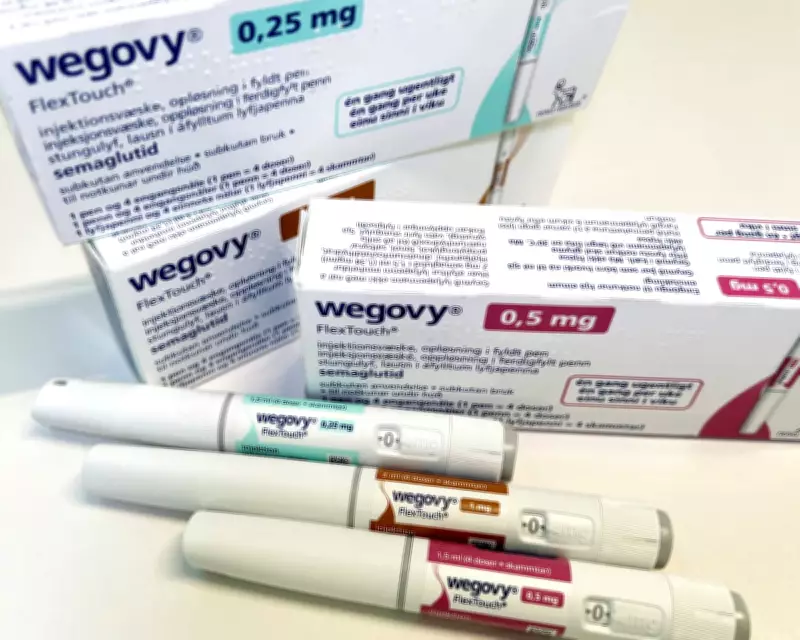
"Just relying on the drugs seems to me the wrong answer," Whitty declared, expressing particular concern about the growing dependence on GLP-1 agonists like Wegovy and Mounjaro. His skepticism stands in direct contrast to Health Secretary Wes Streeting, who has previously hailed these medications as a "real gamechanger" in obesity treatment.
Whitty posed a challenging question to his audience: "Does anyone in this group believe that the correct answer is to allow obesity to rise because of pretty aggressive marketing of obesogenic foods to children and then stick them on GLP-1 agonists at the age of 18? I think it is shocking if that is where we end up."
Significant Side Effects and Limitations
The chief medical officer detailed several concerns about GLP-1 agonists, sometimes colloquially called "fat jabs." While acknowledging they are "very good drugs," he highlighted that weight typically returns when patients stop taking them. More alarmingly, he noted that "some people have very bad reactions to them" and that "a large number of people have unpleasant side-effects, largely gastrointestinal."
Research has shown these medications can increase risks of severe acute pancreatitis, sudden sight loss, and unexpected pregnancy among women using contraception. Whitty also warned about potential long-term consequences, suggesting that weight regain after stopping treatment could leave individuals with less muscle mass and more fat in older age than before they began medication.
Call for Preventive Public Health Measures
Whitty argued forcefully for stronger preventive measures rather than pharmaceutical solutions. "Really, is our answer to say 'give up on public health', which we know will work, in children and then just rely on drugs to get us out of a hole? I do not think this is a socially acceptable answer. Actually, I do not think that's a medically acceptable answer, because these drugs are not benign," he stated.
He called for tougher action to curb junk food advertising and make food healthier through reformulation. "Reformulation definitely has a part to play in this," Whitty urged, specifically recommending that food manufacturers reduce sugar and fat content in their products.
International Comparisons and Industry Resistance
The chief medical officer contrasted Britain's worsening obesity rates with other countries' successes. "In obesity, things are going the wrong way. They don't have to. In France, for example, levels of obesity are pretty well the same now as they were in 1990. No one can claim the French don't like their food," he noted.
Whitty also addressed political challenges, warning that industries facing regulation employ "very strong lobbyists" to influence media coverage and deter ministerial action. He criticized how media often frame beneficial public health policies as "nanny state" interventions, despite majority public support for stronger measures.
Expert Support for Preventive Approach
Obesity experts welcomed Whitty's emphasis on prevention over pharmaceutical intervention. Sonia Pombo, head of research and impact at Action on Salt and Sugar, stated: "Weight loss drugs are not, and must never be treated as, a substitute for a strong, effective food policy. Depending on GLP-1s to counter the harms of an unhealthy food environment is simply putting a plaster on a system that continues to generate ill-health."
Katherine Jenner, director of the Obesity Health Alliance, added: "It is not a common-sense approach for the government to continue to let children grow up in environments flooded with unhealthy options, only to rely on medicines later in life to address the harm. We should not accept a system where the food industry drives obesity and the pharmaceutical industry is left to pick up the pieces."
Jenner emphasized that "childhood obesity is preventable" and called for "stronger action, from reformulating food and restricting junk food advertising aimed at children to setting targets for companies to reduce sales of unhealthy processed products." She concluded: "The UK should be guided by the evidence and act far more boldly to prevent obesity before it starts."




