
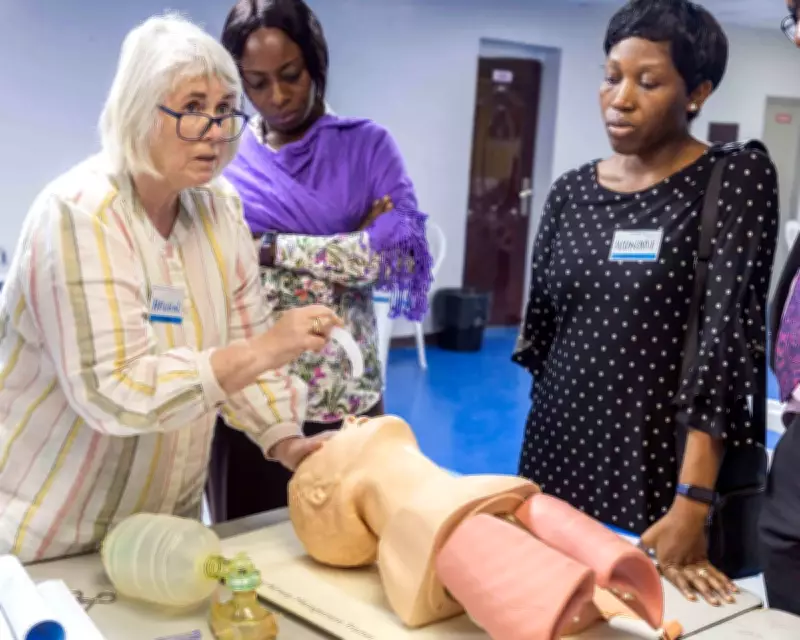
UK Government Terminates Flagship Global Health Initiative Following Aid Reductions
The United Kingdom has officially discontinued its flagship Global Health Workforce Programme, a critical initiative designed to strengthen national health systems across six African nations. This decision comes as part of broader overseas aid reductions, sparking significant concerns about diminished pandemic preparedness and global health security.
Programme Closure and Its Immediate Impact
The Foreign, Commonwealth and Development Office confirmed that the Global Health Workforce Programme will cease operations at the end of this month. This programme, which has operated in various forms since 2008, focused on enhancing development and training for healthcare professionals in Ghana, Kenya, Nigeria, Ethiopia, Malawi, and Somaliland.
Ben Simms, chief executive of Global Health Partnerships, which managed the programme, expressed profound dismay. "This represents a genuinely historic decision, and the UK now risks ceding ground in global health that we will struggle to recover," Simms stated, highlighting the strategic setback for British influence in international health governance.
Historical Context and Recent Funding Decisions
The GHWP has long been promoted by UK ministers as a vital component of global pandemic preparedness, strengthening health systems in countries that supply significant numbers of staff to the NHS and social care sectors. In 2023, under Rishi Sunak's Conservative government, then health minister Will Quince renewed funding, emphasizing the programme's role in reducing health inequalities and boosting global resilience against health threats.
"The pandemic demonstrated unequivocally that patients in the UK are not safe unless the world as a whole is resilient against health threats," Quince remarked at the time, underscoring the interconnected nature of global health security.
Specific Projects and Local Consequences
One notable project funded through the GHWP involved the Power for the People Africa Trust, which trained staff in Kenya's Homa Bay county to address gender-based violence, teenage pregnancies, and HIV infections. Caren Okombo of the trust warned that gains would rapidly reverse without sustained funding.
"New HIV infections in Homa Bay today could eventually cross borders and reach Britain's population. Preventing these infections at their source should be of paramount importance to a country like Britain," Okombo explained, illustrating the direct implications for UK public health.
Broader Political and Fiscal Landscape
The Labour government announced last year that it would reduce overseas aid funding from 0.5% to 0.3% of GDP to reallocate resources toward military spending. This follows a previous reduction under Boris Johnson's administration from the longstanding 0.7% commitment.
The termination of the GHWP was disclosed in a written parliamentary answer to former development minister Sir Andrew Mitchell. Chris Elmore, FCDO minister, defended the decision, stating, "The world has changed, and so must we. With less money, we must make choices and focus on greater impact." Elmore added that efforts are underway to ensure project sustainability beyond the programme's end.
Critical Assessments and Future Implications
A recent review by the Independent Commission for Aid Impact found that the allocation of official development assistance budgets in recent years was "not always based on shared strategic priorities or evidence of value for money." Global Health Partnerships issued a statement acknowledging fiscal pressures but warned that cutting investment in health workforce development in low- and middle-income countries carries severe human costs and long-term financial repercussions.
"Partnerships cannot survive on goodwill alone. They require sustained investment and institutional commitment, and once that thread is cut, it is very difficult to pick it back up," the organization emphasized, pointing to the fragility of international health collaborations.
The FCDO has not provided additional commentary beyond Elmore's statements, leaving uncertainties about the future of UK-led global health initiatives. This move marks a significant shift in Britain's approach to international development, with potential ramifications for both recipient countries and global health stability.




