
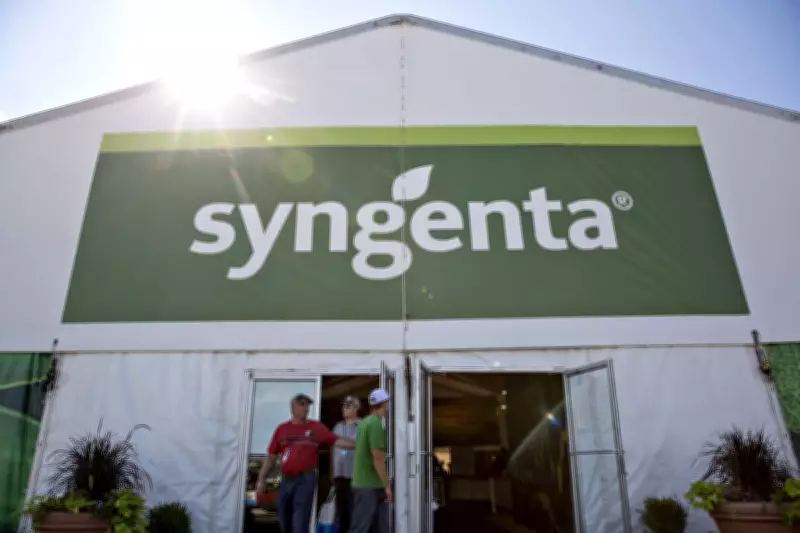
Syngenta Announces End to Paraquat Production Amid Mounting Legal Pressure
In a significant development for agricultural chemicals and public health, Syngenta has declared it will cease production of its controversial paraquat weed killer by the end of June. The announcement comes as the company faces thousands of lawsuits in the United States alleging that exposure to paraquat causes Parkinson's disease, though Syngenta did not reference the litigation in its official statement.
Business Reasons Cited for Decision
Syngenta attributed the decision to exit the paraquat business to "significant competition" from generic producers and the product's "less than 1 percent" contribution to global sales. Mike Hollands, president of Syngenta UK and head of global production and supply, emphasized that this move allows the company to focus resources "where they deliver the greatest value for our business and our customers."
Despite the production halt, Syngenta maintains that "paraquat is safe when used in line with registered label instructions" and remains "highly effective in controlling weeds." The company has consistently argued that scientific evidence linking paraquat to Parkinson's disease is "fragmentary" and "inconclusive."
Public Health Implications and Scientific Concerns
Medical experts and environmental advocates have hailed Syngenta's decision as a major public health victory. Michael Okun, chair of neurology at the University of Florida and a longtime advocate for banning paraquat, called the announcement a "public health milestone."
"For decades we have warned that certain pesticides increase the risk of Parkinson's and other serious diseases," Okun stated. "This moment proves that advocacy, data and courage can change the trajectory of disease."
Ray Dorsey, a neurologist and director of the Atria Research Institute's Center for the Brain and the Environment, noted that "fewer people are going to develop Parkinson's disease in the future" as a result of this decision, adding that it demonstrates the impact of advocacy from the Parkinson's community.
Legal Landscape and Regulatory Context
Syngenta currently faces more than 8,000 lawsuits in US courts alleging that paraquat exposure causes Parkinson's disease. The company has settled several cases before trial and has been negotiating to resolve a bulk of ongoing litigation. Internal corporate documents obtained by The New Lede in collaboration with the Guardian revealed that Syngenta was aware of research linking paraquat to Parkinson's decades ago and attempted to influence scientific information and public opinion regarding these connections.
While paraquat has been banned in several countries including throughout Europe, it remains approved in the United States where it has been used since 1964. The US Environmental Protection Agency has previously found "insufficient" evidence linking paraquat to Parkinson's but has indicated it wants to evaluate new data before issuing a final regulatory decision.
Market Impact and Future Concerns
Paraquat-based herbicides, particularly Syngenta's Gramoxone brand, have remained popular with US farmers for use in growing soybeans, cotton, corn, grapes, pistachios, peanuts and numerous other crops. Nathan Donley, environmental health science director with the Center for Biological Diversity, cautioned that while Syngenta's exit is positive news, "smaller companies will readily fill the void as long as this poison remains approved in our borders."
Lawmakers in multiple states have introduced legislation to ban paraquat, and several federal lawmakers have also called for prohibitions on the chemical. The ongoing legal battles and regulatory scrutiny suggest that paraquat will remain a contentious issue in agricultural and public health circles even after Syngenta ceases production.




