
RFK Jr Demands Nutrition Overhaul in Medical Training
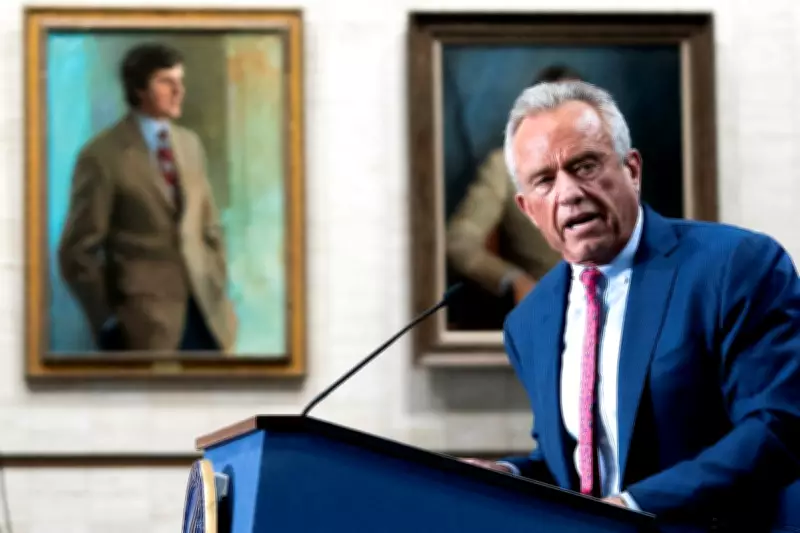
Health Secretary Robert F Kennedy Jr has launched a major initiative to compel medical schools across the United States to significantly expand their nutrition education programs. At a press conference held at the HHS headquarters in Washington DC on February 23, 2026, Kennedy announced that institutions must incorporate at least 40 hours of nutrition instruction or an equivalent competency starting in autumn 2026.
Funding Threats and Incentives Drive Compliance
Kennedy has warned for months that medical schools refusing to adopt these changes could face reductions in federal funding, while those that comply may receive public recognition. As of Thursday morning, 53 medical schools had voluntarily signed on to the initiative, according to senior officials at the US Department of Health and Human Services.
"This is how we implement the Maha [Make America Healthy Again] agenda," Kennedy declared, describing the move as "a transformative breakthrough in medical education that will reshape the way we train doctors in our country." Under the plan, schools are required to assess their current nutrition offerings, appoint a faculty lead for oversight, and publish details on how they will achieve the 40-hour target.
Broader Political and Educational Implications
The effort reflects a wider push by the Trump administration to influence American higher education, marking a departure from traditional academic independence. Kennedy's proposal has garnered support from institutions in both Republican and Democratic-leaning states, including the University of Alabama at Birmingham, University of Florida, and University of California, Irvine.
However, several top-ranked universities with existing funding agreements with the administration, such as Brown, Columbia, and Cornell, have opted not to participate. Critics, including many doctors and researchers, argue that Kennedy's positions, particularly on vaccines, lack scientific rigor and oversimplify complex health issues.
Expanding the Agenda Beyond Medical Schools
In related remarks last week, Kennedy hinted at further regulatory actions, suggesting he might remove certain food products from the market if safety data is insufficient. He specifically targeted major coffee chains, questioning the safety of high-sugar beverages for teenagers.
"We're going to ask Dunkin' Donuts and Starbucks: 'Show us the safety data that show that it's OK for a teenage girl to drink an iced coffee with 115 grams of sugar in it,'" Kennedy stated at an event in Texas. "I don't think they're gonna be able to do it."
This nutrition education push represents a key step in advancing Kennedy's Maha agenda, aiming to shift healthcare focus from medication-based management to diet-based prevention of chronic diseases.




