
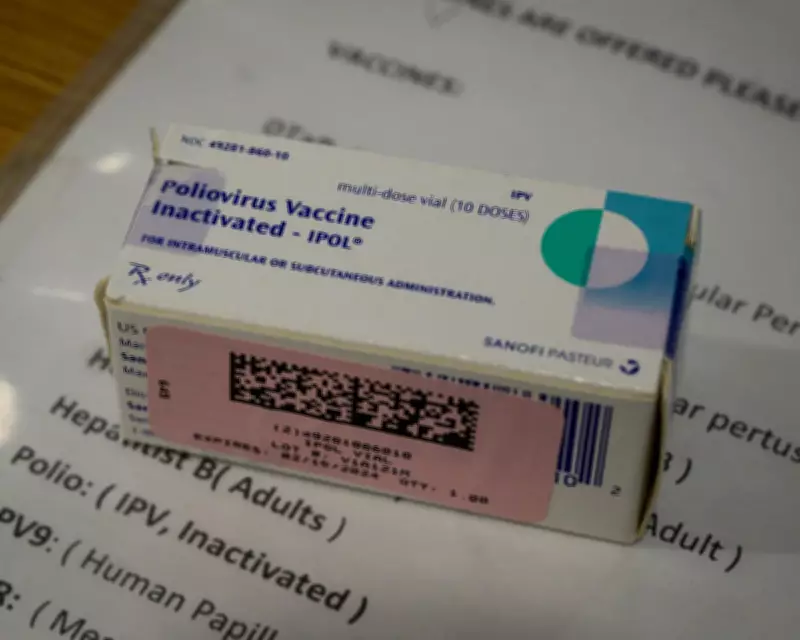
Polio Resurgence Fears Mount as US Vaccine Adviser Questions Childhood Immunizations
With preventable infectious diseases surging across the United States, fears of a polio resurgence are intensifying as a top US vaccine adviser suggests all vaccine recommendations may need reconsideration. Experts are bracing for potential new polio cases while survivors warn the American medical system remains dangerously unprepared to handle an outbreak.
Healthcare Infrastructure Unprepared for Polio Outbreak
"We don't have a healthcare infrastructure to take care of a polio outbreak," said Grace Rossow, an operating-room communications coordinator in Illinois who contracted polio as an infant and now faces long-term health issues. "They don't know how to treat it. It is a massive problem if we have a resurgence of polio."
There is no cure for polio, with treatment for acute cases typically involving supportive care only. Between 25% and 50% of patients develop post-polio syndrome, a lifelong condition characterized by progressive muscle weakness, fatigue, and pain. Yet as highly effective vaccines have made polio increasingly rare, doctors with firsthand experience treating the disease have become nearly extinct.
Vanishing Expertise and Lost Medical Knowledge
Art Caplan, one of the last Americans to contract polio during the Boston outbreak of the 1950s, described the gradual disappearance of polio expertise. "There's nobody left. They don't see it," said Caplan, now a professor of medical ethics at NYU Grossman Medical School, who uses a walker due to polio-related leg weakness.
Gordon Allan, a surgeon and orthopedic residency director at Southern Illinois University School of Medicine, confirmed this troubling trend. "No one practicing has first-hand experience," Allan said, noting he represents "the tail-end" of specialists who understand how to treat post-polio complications.
Allan explained that orthopedic procedures specifically developed for polio patients, such as complex tendon transfers around hips, knees, and ankles, have become "a lost art" as demand disappeared. Even common procedures like total knee or hip replacements become markedly more complicated for post-polio patients due to poor bone quality and muscle weakness.
Survivors Face Daily Challenges with Limited Understanding
Rossow, who contracted polio as an infant in an Indian orphanage in 1992 and now uses a wheelchair due to left leg paralysis, described the challenges of finding appropriate medical care. "I've had neurologists who just don't know anything about polio because they've never seen it," she said.
"The way I describe polio is: it is the 'hold my beer' of medicine. Anything that you think will actually treat it, will not," Rossow explained, noting that even physical therapy can sometimes worsen symptoms for polio survivors.
Vaccine Success Creates Complacency
The polio vaccine has "absolutely been a victim of its own success," according to Rossow. "People aren't scared of polio any more," she said, adding that most people don't understand the risks or "see the daily side of living with a vaccine-preventable disease."
Caplan, whose childhood polio experience made him "very pro-vaccine," expressed fury at recent comments from Kirk Milhoan, chair of the Advisory Committee on Immunization Practices, suggesting routine childhood vaccines might need reconsideration because disease risks have dropped.
"If you could gather up the kids I saw die or become really severely disabled from 50 years ago, they would want you arrested," Caplan said. "It's horrifying, and the height of irresponsibility to leave the door open even a crack."
Warning Signs and Future Risks
As more families choose not to vaccinate their children, particularly after the US stopped fully recommending several key vaccines, Caplan warned: "You are begging to have a recurrence of the disease."
Rossow noted that "deeply religious and antivax families who just do not believe these diseases exist or will harm them" are unfortunately "the families affected most, due to lack of vaccination, and likely those children will suffer."
In insular communities where immunization rejection is common, "you could really get polio under way before anybody realized that it was there," Caplan cautioned. He emphasized that proper preparation "means having huge reservoirs of vaccine available to rapidly deploy when the inevitable recurrence happens."
Both survivors and medical experts agree on one fundamental point: "The only thing to fix polio is the polio vaccine," as Rossow stated, echoing Allan's simple prevention advice: "Don't get polio."




