
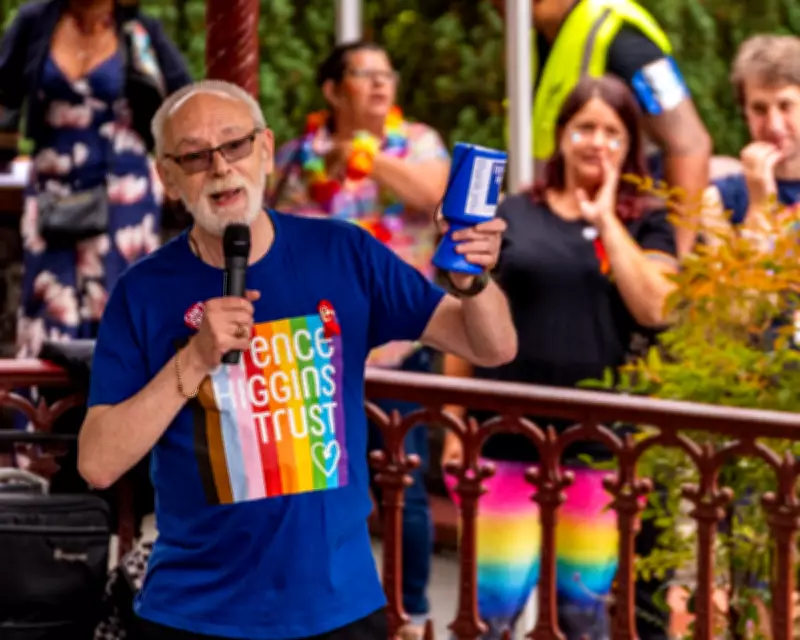
Martyn Butler, Co-Founder of Terrence Higgins Trust, Passes Away at 71
Martyn Butler, a key figure in the fight against HIV and AIDS in the United Kingdom, has died at the age of 71. In 1982, he co-founded the Terrence Higgins Trust, which became the first organization in Europe to address the health crisis caused by HIV/AIDS and is now Britain's leading HIV charity. The trust was established following the death of his friend, Terry Higgins, one of the first named individuals to die from an AIDS-related illness in the UK, which motivated Martyn and Terry's partner, Rupert Whitaker, to take action.
Early Challenges and Community Response
Initially, Martyn and Rupert launched the trust to raise funds for medical research, but they quickly realized that the required sums were enormous and would need support from governments and the pharmaceutical industry. However, there was an urgent need for a community-based response to the emerging disease. In 1983, the London Lesbian and Gay Switchboard, overwhelmed with calls from concerned individuals, collaborated with the Gay Medical Association and the fledgling Terrence Higgins Trust to organize the first UK conference on AIDS at Conway Hall in London.
This meeting featured speeches from Mel Rosen of New York's Gay Men's Health Crisis, established in 1982, as well as prominent figures from London's gay community, including Martyn, who delivered an inspiring address, and Rupert, who had been diagnosed with the disease by then. The trust's mission became clear: to educate the community with limited available information, provide care and support through a buddy service, advocate for appropriate NHS care, and prepare for increased pressure on hospices.
Learning from Experience and Overcoming Stigma
Lessons were drawn from the New York experience, where the illness, initially called Gay Related Immune Deficiency, was identified in 1981, and from Martyn and Rupert's personal experiences, such as when doctors refused to share information with Rupert because he was not considered family. The lesbian and gay community rallied behind the trust, with over 100 gay venues in London raising hundreds of thousands of pounds for the organization.
Despite this support, the community faced marginalization, with police raids on bars, media and political attacks, and the use of AIDS to incite fear. The Conservative government under Margaret Thatcher was reluctant to fund the Terrence Higgins Trust for several years, viewing it as run by gay rights activists. Stigma worsened with the 1988 Local Government Act's Section 28, which banned schools and libraries from promoting homosexuality, and earlier incidents like customs seizing books from Gay's the Word bookshop, including AIDS-related materials.
Growth and Impact of the Trust
In this hostile environment, the Terrence Higgins Trust emerged as a voice of reason, offering services and reliable information to all. Within years, it attracted hundreds of volunteers and continues to provide support, counseling, and information to people with HIV, their friends, partners, and families. The trust has distributed hundreds of thousands of pounds in hardship grants, and in 2025, its helpline, THT Direct, received nearly 13,000 calls and distributed 30,000 HIV test kits.
Today, gay men account for just under half of new HIV diagnoses in the UK, and services have evolved to meet changing needs. The trust promotes self-testing to ensure everyone with HIV knows their status and receives treatment, enabling long, healthy lives and preventing virus transmission. The charity aims to stop HIV transmission in the UK by 2030.
Martyn Butler's Personal Journey and Legacy
In the early days, Martyn overcame personal modesty to speak publicly and drive the trust forward, hosting its first meetings in his London flat and using his own phone number as the initial helpline. Alongside this work, he recorded the funerals of over 50 friends, and his own boyfriend died of AIDS at age 22. Born in Newport, south Wales, Martyn faced challenges due to congenital deafness and a lack of support in school. He moved to London in the 1970s, working in advertising and as a cinema technician, where he met Terry at Bang nightclub; both later worked at Heaven nightclub in Charing Cross.
After Terry's death in 1982, Martyn never received payment from any HIV organization. In 2022, he was appointed OBE and received the Rainbow Honours lifetime achievement award. For 25 years, he ran a laser lightshow business, including for the opening of Canary Wharf in the 1990s. Upon returning to Newport, he lived on his state pension but continued in an unpaid advisory role for the trust, scheduled to speak at the Plaid Cymru conference in Newport shortly after his death.
Martyn Butler is survived by his mother, brothers Guy and Andrew, and sister Jacqueline. His legacy as a laser technician, businessman, and campaigner endures through the ongoing work of the Terrence Higgins Trust.




