
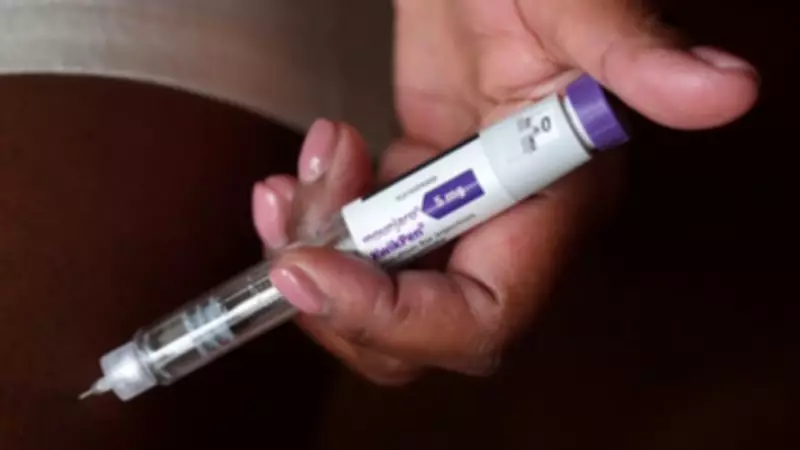
NHS Introduces Financial Incentive for GP Practices to Prescribe Weight Loss Injections
General practitioner practices across England are set to receive annual bonuses of up to £3,000 for prescribing weight loss jabs to patients as part of a new government initiative. Health Secretary Wes Streeting announced the scheme on Tuesday 24 February 2026, emphasizing that access to obesity treatments should be determined by medical necessity rather than financial capacity.
Addressing Healthcare Inequality in Obesity Treatment
The National Health Service initiated its comprehensive rollout of weight loss injections during the previous summer, yet the majority of the estimated 2.4 million British citizens currently using these medications obtain them through private channels. This new program, supported by £25 million in specifically allocated funding, aims to enhance accessibility to weight management support within the public healthcare system.
"I'm determined that access should be based on need, not ability to pay," declared Health Secretary Wes Streeting. "Outside the NHS, we've seen those who can spare the cash buying privately, and the proliferation of rogue prescribers peddling dangerous unlicensed drugs that are putting patients at risk."
He further explained that this incentive, incorporated into the new GP contract, "will bring the principle of fairness - which has always underpinned the NHS - to obesity jabs."
Implementation Criteria and Concerns
According to the Department of Health and Social Care, medical practices must satisfy specific requirements to qualify for the financial bonus. The program focuses on enhancing obesity care standards, which includes the appropriate prescription of weight loss injections when clinically indicated.
NHS England has indicated that its phased introduction of the Mounjaro injection could extend over twelve years. Initially, this treatment is reserved for individuals with severe obesity accompanied by additional health complications. Approximately 220,000 patients have been prioritized for the initial three-year period, although current data reveals that even eligible individuals frequently encounter difficulties obtaining these medications, and not all general practitioners currently prescribe them.
Professional Caution and Workload Considerations
Professor Victoria Tzortziou Brown, chair of the Royal College of GPs, has expressed reservations about expanding the rollout, warning that it "could end up increasing workload in a way that may not be sustainable, and risk raising unrealistic expectations among patients who may not be eligible."
She emphasized: "While long-overdue investment in general practice is welcome, GPs do not withhold treatment or prescribe based on financial incentives. Decisions are guided by clinical judgment and what is safest and most appropriate for individual patients."
NHS England previously calculated that if all eligible patients—estimated at over three million—sought treatment within the first year, with 70% commencing therapy, this would consume approximately 18% of available GP appointments. Recent research indicates that women and middle-class demographics currently represent the predominant users of these weight loss injections.




