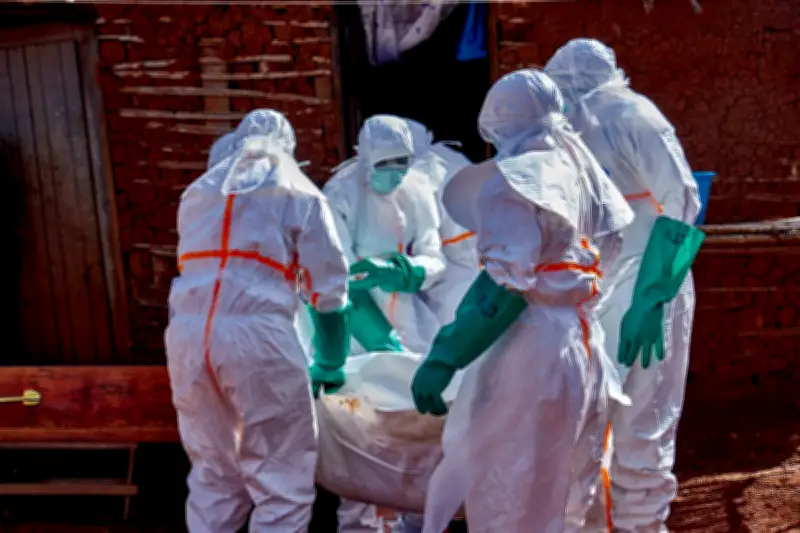
On Thursday, officials announced that the Centers for Disease Control and Prevention (CDC) will tap $107 million in emergency funding to address the Ebola outbreak in the Democratic Republic of the Congo (DRC) and Uganda. This decision comes as the outbreak, now the third largest on record, approaches 1,000 confirmed cases across 31 health zones in the DRC.
Outbreak Details
Dr. Satish K. Pillai, incident manager for the CDC’s Ebola response, stated during a briefing, "Specifically, and consistent with that modeling, we are now already approaching 1,000 confirmed cases across 31 health zones in DRC. There are 31 cases in Kampala, Uganda." The CDC currently has 23 field staff supporting disease investigations and 125 staff members across both countries. Additionally, CDC staff hold twice-weekly calls with US host cities for the World Cup, which is jointly hosted by Canada, Mexico, and the US.
Current Situation
The outbreak of Bundibugyo viral disease (BVD), a rare zoonotic species of Ebola, began roughly one month ago along the western border of the DRC and the eastern border of Uganda. BVD is a hemorrhagic fever that has killed between 30% and 50% of infected individuals in recent outbreaks. As of June 15, the CDC reported 837 confirmed cases in the DRC and 19 in Uganda, with a total of 198 deaths across both countries.

African health officials warn that the outbreak could become the worst on record and may take a year to contain at current infection rates. The worst Ebola outbreak on record infected over 28,000 people and killed 11,000 between 2014 and 2016 in West Africa and the eastern DRC.
Risk Assessment
While the risk within the DRC and Uganda is high, the global risk remains low. Ebola is transmitted through direct contact with blood, bodily secretions, and contaminated surfaces, unlike airborne diseases such as COVID-19 or measles, which are far more contagious. Despite this, the US is among 22 countries that have imposed travel restrictions on travelers from affected regions, a move criticized for hindering the outbreak response.
Efforts to contain the disease have been hampered by mistrust and shortages of personal protective equipment and vehicles for transporting deceased individuals. The CDC’s emergency funding will supplement the roughly $910 million already pledged to combat the outbreak, of which less than 10% has been received from donors, according to African health leaders.
CDC's Role
"CDC activities are focused on controlling the outbreak in the Democratic Republic of Congo, controlling the outbreak in Uganda, and ensuring our domestic readiness to respond in the unlikely event of cases," said Pillai. The CDC’s field staff continue to support disease investigations and coordinate with local health authorities, who have primarily dealt with typical illnesses associated with large events, such as heat-related conditions.