
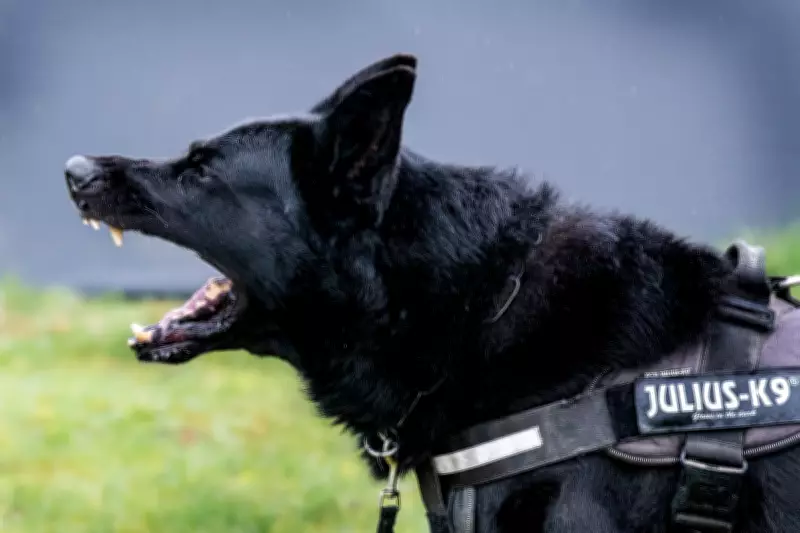
The Growing Market for Canine Bodyguards
In a quiet corner of Norfolk, a Belgian shepherd named Butch Cassidy demonstrates a chilling skill. At his owner's command in German, the 40kg dog darts forward and clamps onto a protective arm sleeve with precision force, holding firm until released. This is not an aggressive pet but a highly trained personal protection dog – a growing phenomenon in the UK where animals are being schooled to bite, hold and release on command.
From Celebrity Trend to Mainstream Concern
The market for these canine guardians has expanded dramatically beyond its origins among security professionals and the ultra-wealthy. Today, former pop stars Rochelle and Marvin Humes, reality television personalities Molly-Mae Hague and Katie Price, actor Barry Keoghan and numerous footballers including John Terry, Rio Ferdinand, Marcus Rashford and Raheem Sterling have all acquired protection dogs, often following burglaries or security threats.
Australian fitness influencer Kayla Itsines, who purchased two dogs from a UK-based company after enduring months of stalking, declared in a promotional video that she had "never slept more soundly" since their arrival. These high-profile endorsements have helped drive what industry insiders describe as unprecedented demand.
"Demand has increased, without a doubt," confirms Alaster Bly, founder of K9 Protector, which has supplied dogs to Olympic athlete Mo Farah, singer Alexandra Burke and a former prime minister whose identity remains confidential. While most clients remain wealthy or public figures, Bly notes growing interest from ordinary citizens wanting "to make an investment in security."
The Premium Protection Industry
At the market's premium tier, purpose-bred German shepherds, Belgian malinois, dobermans, rottweilers and cane corsos are trained to respond to perceived threats, deter intruders and physically restrain them when commanded. K9 Protector breeds and trains its own animals, selling between 40 and 60 each year, with prices starting at £32,000 for their proprietary "chimera" hybrid – a specific genetic combination developed for higher-risk environments.
Bly estimates that 1% of the dogs he sells will bite and hold or fight with someone within their first year of ownership. He describes the biting training as "more of an obedience exercise" than "forward aggression," emphasising that his animals are thoroughly socialised and stable enough to be taken anywhere.
A Regulatory Vacuum
This expanding market operates in a concerning legal grey area. Personal protection dogs fall outside the Guard Dogs Act, which governs working guard dogs protecting commercial premises. "Legally, they are treated in exactly the same way as any other dog," explains Sunjay Versani, a criminal defence solicitor at Duncan Lewis Solicitors. "What matters is the dog's behaviour and level of control exercised by the owner, not how the animal is marketed or labelled."
This legal ambiguity creates significant risks. Training a dog for protection purposes can increase an owner's criminal liability, Versani warns, "because it may be treated as evidence that the dog was being used as a weapon, rather than as a pet." Standard home and pet insurance policies typically exclude dogs trained to bite, leaving owners exposed both legally and financially.
Welfare Concerns and Questionable Motives
The Royal Society for the Prevention of Cruelty to Animals has noted a disturbing increase in complaints about protection dogs, rising from just two in 2020 to thirty-nine last year. Most related to dogs being trained with force or coercion.
"We are worried that this is becoming an emerging trend," says Dr Samantha Gaines, head of the RSPCA's Companion Animals Science and Policy department. She questions whether dogs should be used for personal protection at all, noting that "dogs are sensitive beings; they've got their own emotions, preferences, wants and needs. This idea that they will consistently and reliably behave in accordance with how they've been trained is actually misguided. They're not robots."
Grahame Green, Cassidy's owner and a professional dog trainer with decades of experience at Norwich Dog Training School, receives regular inquiries from local people wanting him to train their dogs to protect them and even bite on command. "Most of them are idiots," he states bluntly. "They've just got no clue as to the work involved. And why would you want one in the first place?"
Green attributes growing mainstream demand to social media, which spreads performative displays of canine power and aggression. He observes that many prospective owners seek protection dogs as status symbols, overlooking the substantial risks. "They want to look big and tough and macho," he says. "It's all an ego thing."
Breeding and Training Challenges
The breeds most commonly used for protection work – while not prohibited under the Dangerous Dogs Act – are large, powerful animals that can prove challenging for inexperienced owners. Since the XL bully ban, cane corsos have reportedly grown in popularity, demonstrating how demand for "status" dogs can shift in response to regulation.
Alaster Bly acknowledges there are potential risks but maintains that his properly trained dogs pose no greater threat than average pets. He carries out basic searches on potential owners and sometimes enlists external companies for further checks, having once refused to sell to a "career criminal."
Bly attempted years ago to establish industry standards, gathering protection dog providers to create a regulatory body with minimum welfare, training and breeding requirements. "I couldn't get everybody on the same page," he recalls. Where there were once only a handful of providers, dozens now operate, with Bly acknowledging that some are not "morally correct," selling unhealthy or unstable dogs to vulnerable people.
The Future of Canine Protection
K9 Protector is now breeding and training what Bly calls "high-threat-environment dogs" capable of taking on multiple intruders and responding to weapons, marketed as "the sword at your side." He believes it's "just a matter of time" before one is injured or killed in an altercation, noting that "ultimately, they are being bought with the viewpoint that they may have to place themselves in harm's way."
The RSPCA supports introducing licensing for dog owners, with Dr Gaines suggesting a tiered system could help track those with protection animals and dissuade unsuitable owners. Greater regulation of breeders and trainers could better ensure welfare, though in the bigger picture, the organisation questions the practice entirely.
"There are alternative security measures that are much, much easier," Gaines concludes, highlighting the fundamental tension between treating dogs as living beings with their own needs and using them as defensive equipment in an increasingly anxious society.




