
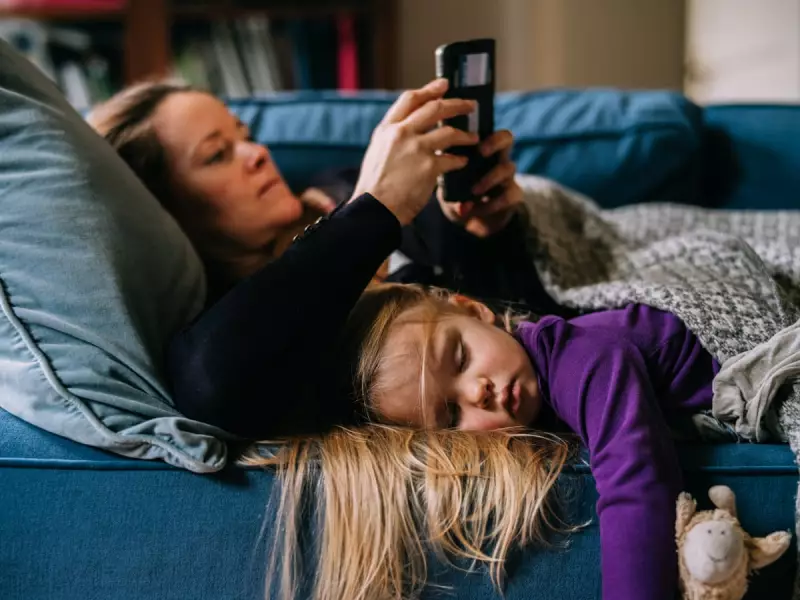
As we move into 2026, a quiet revolution is taking place in family homes across the UK. An increasing number of parents are making a radical decision for the sake of their own mental health and their children's wellbeing: they are deleting Instagram.
The Breaking Point for Modern Parents
For many, the realisation came not from a single dramatic event, but from a slow accumulation of evidence. Parents began to notice how the platform's carefully curated feeds of "perfect" family life were creating unrealistic benchmarks for success. The constant comparison with other families, often showcasing idyllic holidays, immaculate homes, and seemingly flawless children, fostered a pervasive sense of inadequacy.
The pressure to perform parenthood for an online audience became a significant source of stress. Hours that could have been spent engaging directly with children were instead siphoned into scrolling, posting, and anxiously monitoring likes and comments. The very tool that promised connection was, for many, creating a profound sense of isolation and anxiety.
Reclaiming Time and Mental Space
Those who have taken the plunge report transformative effects. The most immediate benefit is the sheer amount of time reclaimed. Without the endless scroll, parents find themselves more present during meals, playtime, and simple daily routines. This digital detox isn't just about removing a distraction; it's about actively choosing where to direct finite attention and emotional energy.
Mental clarity is another frequently cited advantage. Free from the cycle of comparison and performance, parents describe feeling more confident in their own choices. Decisions about activities, discipline, and family routines are made based on what feels right for their unique household, not on what might garner approval from a distant network of followers. The noise of external validation fades, allowing a more authentic, intuitive style of parenting to emerge.
A Powerful Example for the Next Generation
Perhaps the most compelling argument for this shift is the powerful modelling it provides for children. In an era where young people are grappling with their own complex relationships with technology, seeing a parent consciously choose a life less mediated by screens is a profound lesson. It demonstrates that self-worth is not tied to online metrics and that real-life connection holds greater value than virtual approval.
This action moves the conversation about screen time from one of restrictive rules for children to one of shared family values. It opens up discussions about digital citizenship, attention, and the importance of protecting one's mental space in a hyper-connected world. By deleting the app, parents are not just making a personal choice; they are setting a new standard for their entire family's digital ecosystem.
The Path Forward Without the Platform
This movement does not advocate for a complete rejection of technology or a return to a pre-digital age. Instead, it is a call for more intentional use. Many parents who have left Instagram maintain smaller, more private messaging groups with close friends and family for sharing updates and photos. The difference is the context: sharing becomes a targeted act of communication, not a broadcast into the void for algorithmic validation.
The trend suggests a maturation in our collective relationship with social media. As we enter 2026, the initial allure of these platforms is being weighed against a clearer understanding of their psychological costs. For parents, whose time and emotional reserves are perpetually in high demand, the calculation is leading to a simple conclusion: the benefits of leaving often far outweigh the perceived social cost of staying.
The act of deleting Instagram is, therefore, being reframed not as a loss, but as a strategic gain in time, peace of mind, and familial connection. It is a practical step towards safeguarding the mental environment of the home, proving that sometimes the best way to move forward is to consciously disconnect.




