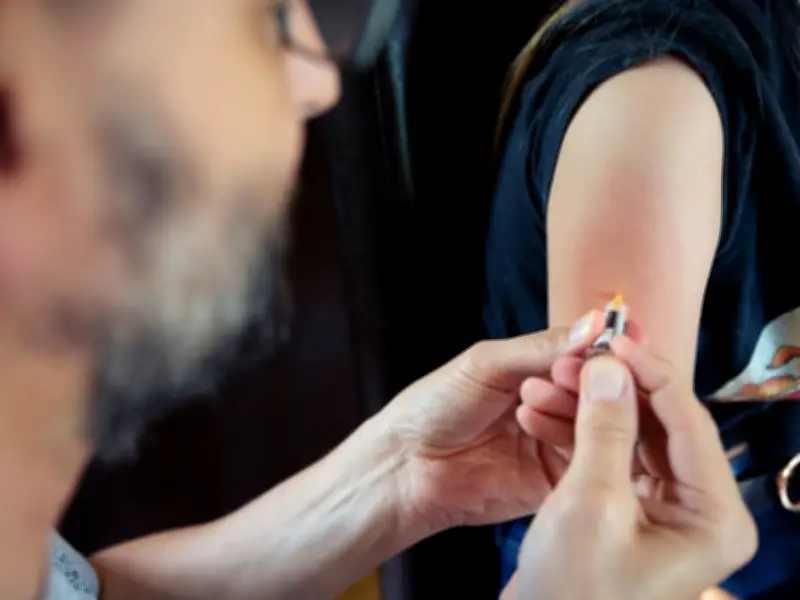
A new study reveals that the human papillomavirus (HPV) vaccine has saved approximately 200 lives in England from cervical cancer, with the number expected to rise as vaccinated populations age. The research, funded by Cancer Research UK and led by Queen Mary University of London, demonstrates the vaccine's effectiveness in eliminating cervical cancer across the country.
Key Findings on Vaccine Impact
The study, published in The Lancet, estimates that children vaccinated at ages 12–13 have nearly zero risk of dying from cervical cancer before turning 30. For the first time, between 2020 and 2024, no deaths from cervical cancer were recorded among women aged 20 to 24 in England. Additionally, from 2015 to 2019, there was an 80% reduction in cervical cancer deaths among women aged 20–24.
The HPV vaccine was introduced for girls in 2008 and extended to boys in 2019. HPV refers to a group of viruses transmitted through sexual contact, often without symptoms. About 13 high-risk HPV types cause 99.7% of cervical cancers. The vaccine also protects against genital warts and head and neck cancers, including those of the mouth and throat.
Concerns Over Falling Vaccination Rates
Despite this progress, experts worry about declining vaccine uptake. The HPV vaccine is routinely offered in Year 8, with catch-up programs in Years 9 and 10. In England, from 2024 to 2025, 71.7% of girls and 67% of boys were vaccinated in Year 8. By Year 10, rates reached 75.5% for girls and 70.5% for boys, still below the World Health Organization's target of 90% for girls and lower than the previous year. London had the lowest rates: 62.6% for girls and 57.7% for boys.
Cancer Research UK warns that falling uptake threatens progress, with about one in four young people leaving school unprotected. Michelle Mitchell, chief executive of Cancer Research UK, said: “We know the HPV vaccine is extremely effective at stopping cervical cancer before it starts and for the first time, these findings show it is saving lives – a powerful example of what’s possible when science is backed by strong public health programmes.” She added: “Thanks to HPV vaccination and cervical screening, a future where almost nobody gets cervical cancer is now firmly in sight. But uptake of the vaccine has dropped in recent years, and this progress is at risk.”
Professor Peter Sasieni, lead author from Queen Mary University of London, stated: “This is the first study to highlight the impact of HPV vaccination on cervical cancer mortality. We estimate that since its introduction, HPV vaccination has prevented nearly 200 young women from dying from cervical cancer in England. But that’s just the tip of the iceberg – as vaccinated generations grow older, we’ll see many more lives saved from cervical cancer.”
Caroline Temmink, NHS director of vaccination, commented: “This hugely encouraging news shows the life-saving impact of the HPV vaccine and it’s incredibly exciting to be able to say to this whole generation: cervical cancer and some other cancers shouldn’t be a risk for you. Alongside cervical screening, HPV vaccination is central to the NHS ambition to eliminate cervical cancer by 2040. It’s a safe and effective vaccine and we urge everyone eligible to take up the offer when invited.”