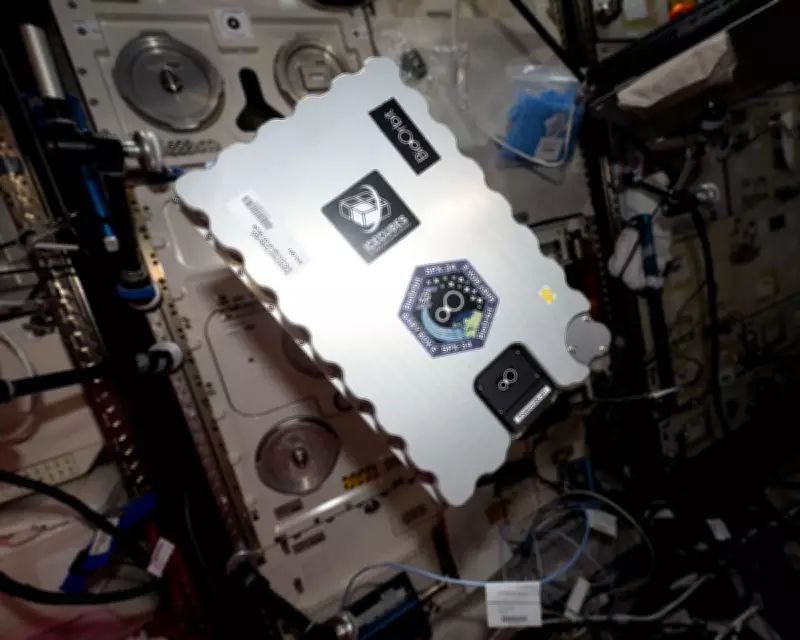
A British startup, BioOrbit, has sent a compact drug-crystallization unit to the International Space Station (ISS) aboard a SpaceX flight, aiming to produce self-injected cancer treatments. The Box-E unit, about the size of a microwave, launched on May 15 from Kennedy Space Center in Florida and will remain in orbit for six weeks.
How Microgravity Enhances Drug Crystallization
In microgravity, pharmaceutical compounds can crystallize into pure, highly stable structures that are not achievable on Earth. This allows for concentrated drug formulations with low viscosity, enabling self-injection via pens instead of lengthy hospital IV infusions. The resulting medications also have a longer shelf life and can be stored in a fridge.
Dr. Katie King, co-founder and CEO of BioOrbit, who holds a PhD in nanomedicine from Cambridge University and interned at NASA, described the orbital tests as a "big step change towards large-scale production of protein crystals in space." She explained that gravity negatively impacts crystallization, especially for large, flexible protein and antibody drugs. "Through going to space you see a much better, more superior crystallisation process than what you can achieve here on Earth," she said.

Overcoming Challenges in Cancer Treatment
For cancer therapies, large doses are needed, but liquid formulations can become too thick for injection pens. "Which is why we don't have these treatments at home already," King noted. "Through using crystals, you can get these really concentrated formulations that will have a low enough viscosity that they can still flow through the needle."
Hundreds of experiments on the ISS have already demonstrated the process. US pharmaceutical company Merck produced protein crystals for its bestselling cancer drug Keytruda, enabling a quick injection instead of a lengthy IV infusion. The US health regulator approved this new delivery route in September.
Mass Manufacturing and Cost Savings
Assuming successful orbital tests, multiple Box-E units can be stacked to scale up pharmaceutical manufacturing in space. BioOrbit aims to process thousands of liters of fluid per box annually, potentially producing enough for a blockbuster drug with a handful of units in constant use. Despite the high cost of space launches, King argues that switching to self-injection at home could save the NHS and other health systems "millions, potentially billions" of pounds.
Founded in 2023 by King and Dr. Leonor Teles, a medical doctor and cancer researcher, BioOrbit raised £9.8 million from investors including LocalGlobe and Breega. The company also won a £250,000 contract from the UK Space Agency in March to manufacture drugs in microgravity.
Industry and Future Outlook
SpaceX's recent stock market flotation prospectus highlights in-space manufacturing of pharmaceuticals as a key revenue stream, estimating a $22.7 trillion market. BioOrbit aims to be part of this emerging industry. However, King cautions that it will take at least five years for new cancer drug formulations to reach the market, as they require clinical trials and regulatory approval. The crystallization technology can also be applied to other treatments; about 70% of the world's top-selling drugs are administered intravenously in hospitals.
BioOrbit plans to partner with pharmaceutical companies and has already attracted interest from multinational groups in the UK and US. Competitors like Varda Space Industries are also exploring space-based pharmaceutical manufacturing, working with US biotech United Therapeutics Corporation on treatments for rare lung disease.