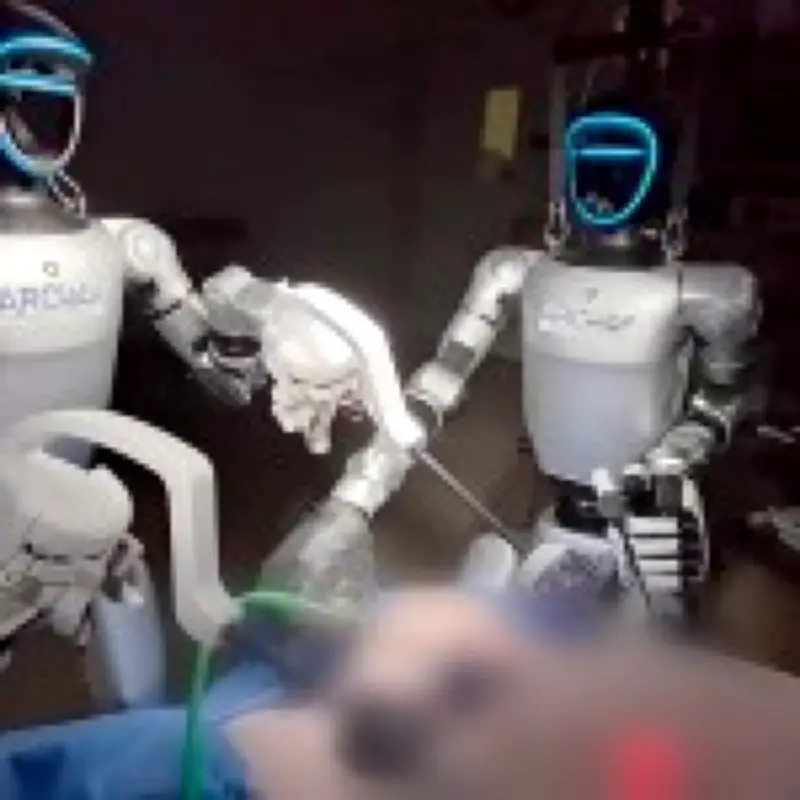
Researchers have successfully carried out the world's first operation performed by robot surgeons, a breakthrough that could allow specialists to perform life-saving procedures from hundreds of miles away. The human-shaped robots, nicknamed 'Surgie', completed two gallbladder removal operations during a preclinical trial on large animal models.
Two procedures demonstrate robot capabilities
In one procedure, a robot operated alongside a human surgeon acting as an assistant. In the second, two humanoid robots worked together as the surgical team. The research, published in the journal Nature, was conducted by engineers and surgeons at the University of California San Diego.
The robots stand around 5ft tall, weigh just 27kg, and use standard surgical instruments. This means they could work in existing operating theatres without the specialist facilities needed for conventional robotic surgery systems, which can weigh almost 1,800lb and require large support teams.

Potential to address surgeon shortage
Professor Michael Yip, one of the study's senior authors, said the technology could help tackle a growing global shortage of surgeons. He stated: "There is a shortage of surgeons alongside growing patient needs, which leads to longer wait times, reduced access and greater healthcare disparities. Remotely operated and autonomous humanoid robots have real potential for expanding access to critical surgeries that patients would otherwise not receive."
Dr Shanglei Liu, who remotely controlled one of the robots during the trial, added: "It's a fraction of the cost and it takes a fraction of the space in an operating room. So it's easy to deploy anywhere from rural areas to the battlefield, and even to space."
Teleoperation system and current limitations
The robots mirror a surgeon's hand movements using a teleoperation system, allowing procedures to be performed remotely. However, the team says the technology is still in its early stages. The robots needed several recalibrations during surgery, and the operations took much longer than those carried out using existing robotic systems.
Despite these limitations, the researchers believe the technology will improve rapidly. They point out that early robotic keyhole surgery once took six hours but can now be completed in around 30 minutes. They hope humanoid robots will eventually work alongside surgeons, helping deliver specialist care to patients wherever it is needed.