In her new book We Are Not Machines: The Fight for the Future of Work, Financial Times journalist Sarah O'Connor explores the collision of artificial intelligence, automation, and human labour. The book takes its title from signs carried by striking Swedish miners in 1969: "Vi är ej maskiner" (We are not machines). O'Connor argues that while the technology is new, the threats to worker dignity and safety are reconfigurations of old battles.
Modern Warehouses and Remote Monitoring
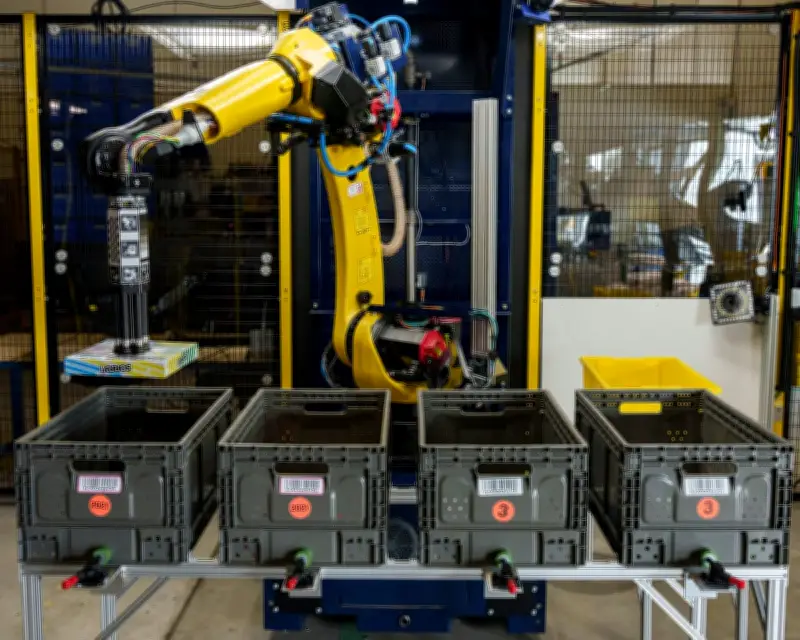
O'Connor visits the EMA4 Amazon warehouse in Sutton Coldfield, where robots and humans work side by side picking and stowing items. Remote workers in Costa Rica and India monitor video feeds of Amazon shelves, auditing AI camera systems that track item placement. These workers screen up to 8,000 videos per week during nine-hour shifts, creating an entirely new online production line. O'Connor questions whether this represents progress.
The Legacy of Taylorism
Frederick Winslow Taylor, the father of management consulting, features prominently. His concept of Taylorism—breaking production into measurable components—persists in most workplaces. O'Connor argues that the real issue is not new technology but the assumptions it carries: "seemingly neutral technological tools can smuggle powerful ideas into a marketplace by the back door." In the age of AI, these ideas include the interchangeability of human and machine contributions.
Trade-offs and Worker Power
O'Connor notes that if a machine's work is slightly worse but cheaper and faster, employers may accept that trade-off. Examples include nonsensical AI-written furniture instructions and frustrating customer service chatbots. However, workers are fighting back: the Writers Guild of America screenwriters struck to set terms on AI use in scripts, and Dutch care workers established their own practice to provide personalized care without strict time constraints.
A Cautionary Conclusion
The book ends with a warning: "The goal might be to make machines in our image, but what I fear is that—perhaps without even quite noticing—we remake ourselves in theirs." O'Connor emphasizes that these questions are not settled, and the future of work remains something we can shape.