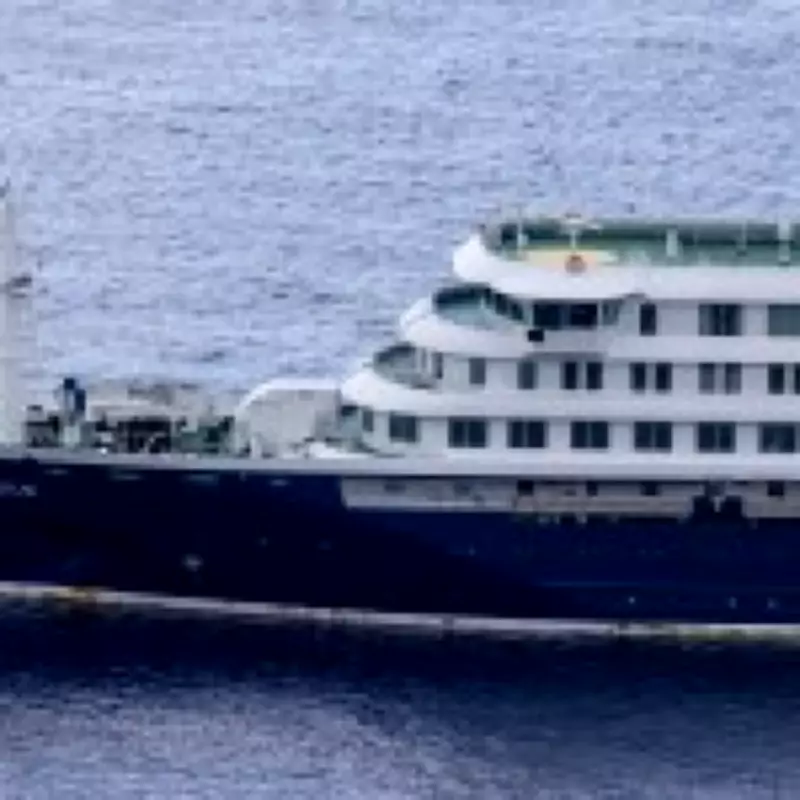
A third British citizen is feared to have contracted hantavirus following an outbreak on the cruise ship MV Hondius. The patient is currently on the remote Atlantic island of Tristan da Cunha, where the ship stopped in mid-April. Two other British men have already been confirmed with the disease after staying on the vessel.
Confirmed Cases and Evacuations
Martin Anstee, a professional birdwatching guide, was evacuated to a hospital in the Netherlands, where he remains in stable condition. Another British man, a doctor, is in intensive care in South Africa. In total, there are five confirmed cases, including one of the three people who have died from the virus.
WHO's Response and Potential Spread
The World Health Organization (WHO) has stated that the number of confirmed cases has risen to five, but they anticipate more as the incubation period can last up to six weeks. Dr. Maria Van Kerkhove, a WHO expert, said: 'These numbers may change. As we are doing follow-up, we may see some additional cases being reported.' She also noted that the Andes strain of hantavirus, which spreads between humans, is responsible for the outbreak.

International Cases and Precautions
A French national who was on the same flight as a confirmed case has developed mild symptoms and gone into isolation. Meanwhile, two Singapore residents are being tested for the virus after sharing a flight with a confirmed case. Authorities are searching for 29 passengers who disembarked from the ship on the island of St. Helena after the first victim died. The ship is now heading to the Canary Islands, with no remaining guests or crew showing symptoms.
The WHO has confirmed that the Andes strain of hantavirus can spread from person to person through close contact, unlike other strains that are primarily rodent-borne. Dr. Van Kerkhove emphasized: 'This is not COVID, this is not influenza, it spreads very very differently.'
Symptoms and Treatment
Early symptoms of hantavirus include headaches, dizziness, chills, and abdominal issues such as diarrhea, vomiting, and nausea. If it progresses to Hantavirus Pulmonary Syndrome (HPS) or Hemorrhagic Fever with Renal Syndrome (HFRS), symptoms can become severe, including low blood pressure, internal bleeding, and acute kidney failure. There is currently no cure, and treatment focuses on supportive care.