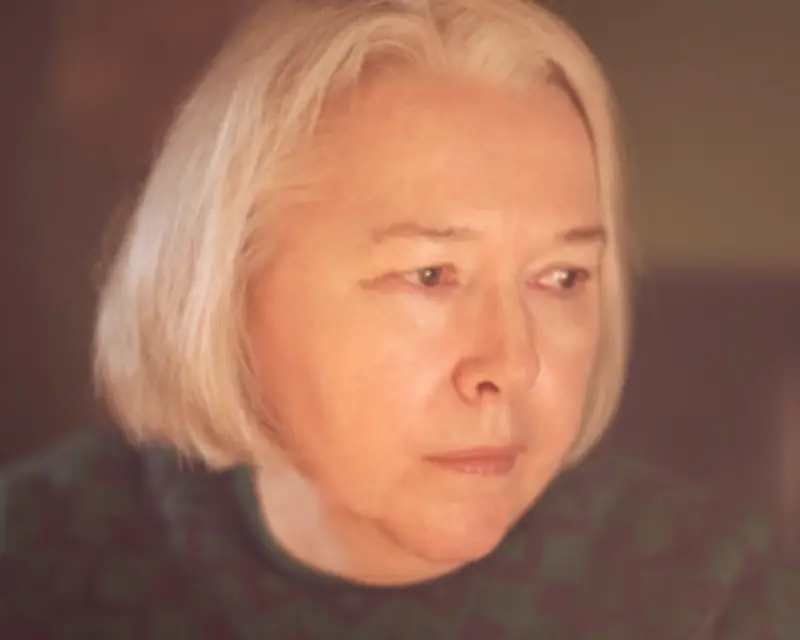
In October 2016, Susanna Clarke was in hospital. She had been ill for 11 years with chronic fatigue syndrome, but in the previous six weeks a strange crisis had overtaken her. She was unable to eat—a day when she managed a couple of biscuits was a good day; at times she trembled so violently that her voice shook; at night she was overwhelmed by dread.
On the hospital ward, a consultant gastroenterologist appeared. “How do you feel?” he asked. “I feel,” she said, “very ill.” This, apparently, was not the concise yet comprehensive answer she had imagined. He seemed to require something more. “Can you describe it?” he asked. She couldn’t. That anguished, pressurised feeling—a sensation somewhere between burning and falling—extended through her torso, limbs, and entire body. It was so familiar to her, she was astonished that it didn’t have a name and that she didn’t know it. How could this be? She was, after all, a prize-winning novelist.
Virginia Woolf and the Limits of Language
In her essay On Being Ill, Virginia Woolf says, “let a sufferer try to describe a pain in his head to a doctor and language at once runs dry.” Clarke remembers very well what she wanted to say to the doctor: “I feel like I am about to fall off the world.” She had the sense to realise that he would probably not be able to do much with this. What doctors need is a clear description of something physical, but what the sufferer experiences may be as much emotional as it is physical—it may even have a spiritual component. It is very difficult in her experience to separate the different strands.
Nowadays, in the pit of her stomach there is a feeling she calls anxiety. But when she asks herself what this sensation actually is, she realises that it consists of almost nothing at all—a very slight pressure. Yet, in spite of its nigh-on non-existence, the emotional weight of it drags at her days, pulls them all askew and makes her feel, despite her best efforts, constantly on edge.
The Body Intervenes
Woolf says, “All day, all night the body intervenes …” And that is true: all day, all night the body is talking to us; but not necessarily in a language we understand. Illness brings us up against the limitation of words, reminds us that what we experience will always be greater than the words we have to describe it. Dreams, silent meditations, experiences of God, moments of transcendence, moments we are aware of love, all of these evaporate into thin air, unless we scribble them down. At the age of 30, Julian of Norwich had an illness. Believing she was dying, she experienced a series of visions of God. The visions lasted for only one night, but she spent the rest of her life trying to distil them into a form that could be understood by other people. (She wrote two different versions, to be on the safe side.)
There is hardly any sense of struggle in On Being Ill. Struggle is what the healthy are doing, beyond the invalid’s window pane. Ant-like, they are rushing to and fro, being clerks and bus conductors and widows and lawyers. The shadowy figure at the essay’s centre—the figure who might be Woolf or who might be us—seems almost delighted to have fallen ill. They float like a stick on a stream; they are as gratefully irrelevant as a dead leaf being blown across a lawn; they watch the clouds mutate and form pictures above a London entirely unconscious of the beauty above its head.
Beauty and the Universe
This was an insight that Clarke too gained in illness, and it is part of what she tried to write about in Piranesi: that there is a whole world endlessly going on, endlessly being beautiful, regardless of whether anyone is there to see it or not. Where Woolf and she part company is in what this means. For Woolf it was evidence of the stark indifference of the universe to human beings: “Divinely beautiful it is also divinely heartless.” For Piranesi, the central character of the book, and for Clarke, the sheer profligate abundance of beauty is evidence of a universe intensely bound up with its creations. Piranesi walks through his world, cataloguing its contents, describing its wonders. This he considers his chief task in life. “The Beauty of the House is immeasurable; its Kindness infinite.”
But perhaps the greatest joy of Woolf’s happy invalid is a sort of intellectual freedom. Cut off from the life of the busy bank-clerks and the bus conductors, widows and lawyers, they are free to read Shakespeare in a new and thrilling way, a way not available to them when they were healthy. Finally they are free from the shackles of other people’s opinions; they no longer care what anyone else has said about Shakespeare; they can read him and have their own thoughts.
The Underworld of Illness
As an ill person, you have gone down into a sort of underworld, sometimes oppressive, sometimes not; either way, what people say and think in the world above matters less and less. This can be very freeing for a scholar, a saint, a musician or an artist. Clarke remembers Kathy Acker saying something similar when talking about her writing process. At least she thinks it was Kathy Acker; she’s going back to the 1970s, so she can’t be entirely sure. But whoever it was described a nocturnal existence; she wrote at night in order to be free from other people’s thoughts.
To return to illness and language. If, in one sense, language “runs dry” in the face of illness, in another sense it is desperately needed. Clarke remembers in a discussion group long, long ago (she thinks about the importance of story) a young woman saying that she had once been ill and that she couldn’t get better until she was able to tell herself a story about what had happened to her. This struck her at the time as an important truth.
Narrative as Cure
To take the simplest of examples: an elderly woman Clarke knew used to suffer from neck aches. Whenever this happened, she would tell herself the same story: “I have this pain because I was silly and I sat in a draught from an open window.” She might have been aware of the draught at the time or she might not. It didn’t really matter; the existence of the draught could always be deduced from the existence of the pain, and as long as she was vigilant against draughts in the future, the pain wouldn’t be able to return.
A narrative makes illness seem rational—and it gives the sufferer a measure of control—or at any rate the illusion of it. This is particularly true of the sort of chronic illness in the face of which poor doctors are often at a loss. There is no obvious course of treatment for fibromyalgia, chronic fatigue, chronic pain, long Covid and all the myriad forms of chronic illness. There is no drug to take that will restore you to who you once were. There is only narrative.
Clarke knows very well how grateful you feel to the doctor or therapist who provides a narrative to explain what has happened. And how upset and angry you feel when a different, perfectly well-meaning, doctor says something else or offers a theory that seems to threaten that narrative.
The Writer’s Many Narratives
Of course one of the problems with being a writer with a long illness is that one can produce narratives without number. What would you like? She can do a revengeful, blame-apportioning narrative: “She became ill after months of book tours, during which she crossed and recrossed the Atlantic on numerous occasions, all the result of her wicked publishers spending large sums of money on promoting her first novel—presumably out of sheer vindictiveness.” (A journalist once spent a surprising amount of time and energy trying to get her to say this.) She can do a zoological narrative: “She was bitten by a blood-feeding tick and caught Lyme disease.” She can do a fairytale narrative: “She wrote about fairies and now they have exacted their revenge and she lies ill of something mysterious and Lady-of-Shalott-adjacent.” She can do a childhood-adversity narrative: “She was told as a child that she would never succeed and indeed did not deserve success. Having achieved success, she promptly fell ill in order to comply with her upbringing.”
She pauses here. The narrative of being told she did not deserve success pulls at her heart, not only for herself, but for others too. Because, of course, she wasn’t the only girl of her generation to be told that. Her school—a comprehensive on a run-down Bradford council estate—produced, as far as she knows, only one other writer, Andrea Dunbar, a playwright of extraordinary talent. She doesn’t think she ever met her, but she must have been a year or two below her. Dunbar died at the age of 29 of a brain haemorrhage, possibly related to alcoholism. Her best friend during the same period was a ridiculously talented musician who went on to have a hit record. She died before the age of 40. “You see, from one point of view, I got off lightly.”
The Story of Cure
But if illness can be a story, so perhaps can the cure. There is a bunch of interrelated therapies, all fairly recent, that share an interest in narrative. They are pain reprocessing, somatic tracking, polyvagal theory and others. The underlying idea is that in some people—and she stresses some people—chronic illness might look like this: a very ancient and primitive part of the brain and nervous system believes it has detected danger, possibly a tiger or something like that, and so it produces pain or a whole range of symptoms in an effort to get the sufferer to close down and protect herself. The nervous system does this very effectively and it can carry on doing it for decades. It is really very inventive. She feels that hers ought to be eligible for some sort of prize.
It comes to this. A story you have on some level believed—that the world is fraught with danger—can be countered by a different story. Yes, the world is fraught with danger, but not everywhere, and not always, not here in this place and not now in this moment. You are safe. So this is her narrative now, the story of how she got ill—and perhaps, if she pays careful attention to it, she will be able to retrace her steps through the labyrinth of her own body and return to safety. This essay was originally commissioned for Charleston festival.