In 2023, the Norwegian Red Cross faced a critical shortage of blood donors. Data showed that while 50% of Norwegians would need blood during their lifetime, fewer than 2% of the eligible population were donating. Many registered donors were also leaving the system due to age and health conditions, creating an urgent need to attract a new demographic.
The Blood League: a competitive solution
To address this, the Red Cross launched the Blood League campaign in autumn 2023 with the slogan 'Blø for drakta' (bleed for the jersey). The initiative harnessed the power of football rivalries by establishing a friendly competition among top-flight men's and women's football teams. Every time someone registered as a blood donor, they could declare their club allegiance, scoring a point for their team. The club with the most sign-ups would win the league for that year.
'We know that football supporters bleed for the jersey and we wanted to transfer that to being a life-saving action,' said Camilla Rodø, senior adviser for the blood programme.

Exceeding targets
The campaign aimed to recruit 5,000 new donors but achieved nearly 10,000 sign-ups over two years, potentially saving 29,000 lives. Football was chosen because of its central role in Norwegian culture. 'It's a big part of the Norwegian identity,' Rodø explained. 'When I was a kid, there were only three things you could do: play football, cross-country ski or be in the school band. It's a passion for so many.'
Creative advertising with regional focus
The campaign featured TV adverts showing a critically ill man in a hospital bed, with a doctor saying the only available blood came from a rival team's supporter. The family reluctantly agrees, but not without noting it was 'perhaps the worst thing that could have happened to him.' Rodø noted the importance of humour: 'A lot of Norwegians are very grounded and down to earth. We don't take things so seriously.'
Twenty-one versions of the ad were made to target regional rivalries, a key factor in the campaign's success. An online leaderboard updated live with each registration added a competitive edge.
Donor and club impact
New donor Signe Opsal, a Rosenborg BK supporter, said: 'Becoming a blood donor was something I had considered for a long time, but I never actually took the step. This campaign was the final push I needed. Knowing that I could give something back, help save lives, and at the same time contribute to my club's success in the Blood League made the decision easy.'
The second year of the Blood League was won by Rosenborg BK, while the first year was won by Tromsø IL, a club from Norway's far north known for its tight-knit community. 'It was a huge movement within the city; everyone was supporting the campaign,' Rodø recalled.
Future and global potential
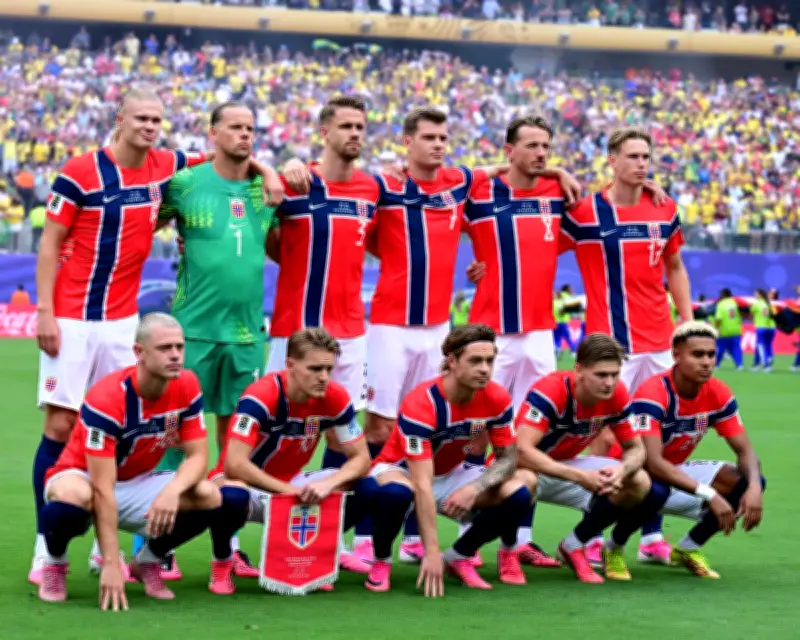
Though the Blood League officially ran only in 2023 and 2024, its impact continues. The Red Cross hopes to use Norway's momentum in the 2026 World Cup to raise further awareness. 'After the match between Norway and Brazil there were 100,000 people gathered on the streets of Oslo to do the rowing celebration! It demonstrates how football can unite and inspire people to do extraordinary things for society,' Rodø said.
The concept could be adopted in other football-crazy nations. Blood supply shortages are a global issue: last year the UK's NHS issued an amber alert seeking 200,000 more donors. The Norwegian Red Cross has been contacted by Portuguese and Chilean authorities for advice. Perhaps one day an international blood league will accompany the World Cup.