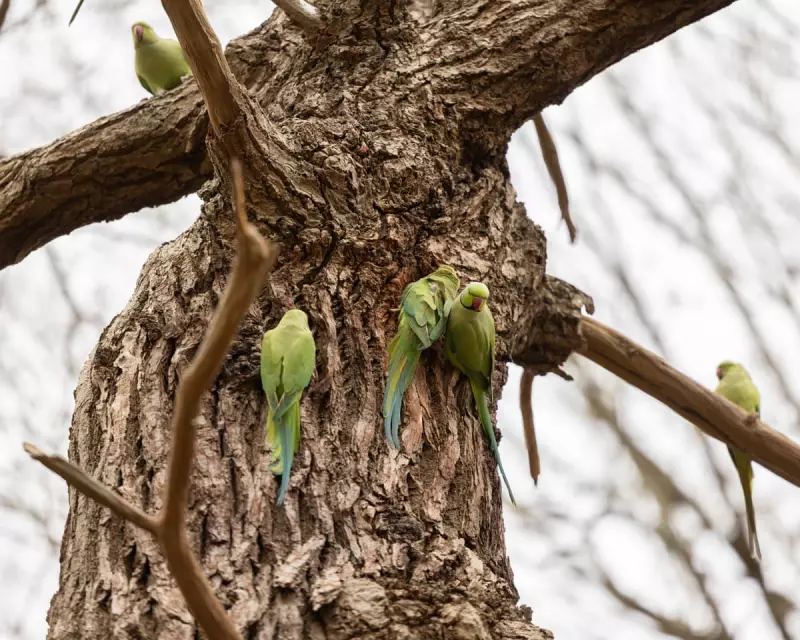
Exotic Parakeet Boom Transforms UK Soundscapes
The distinctive, raucous squawk of the bright green ring-necked parakeet is becoming an increasingly dominant sound in parts of the UK, marking a dramatic shift in the nation's auditory landscape. Over the past two decades, the population of this non-native bird has increased a staggering 25-fold, with the British Trust for Ornithology now estimating there are more than 30,000 individuals, comprising at least 15,000 breeding pairs.
Originally from the Indian subcontinent and Africa, the birds first appeared in the wild in the UK in the late 1960s after pets were released or escaped. A warming climate has since aided their rapid expansion. While still concentrated in London and the South East, their range is spreading, with sightings now reported in northern cities like Manchester and Newcastle.
Richmond Park: A Parakeet Paradise
Nowhere is this invasion more audible than in London's historic Richmond Park. The park's ancient trees, with their deep trunk cavities, provide perfect nesting sites, while the abundance of fruits, berries, and flowers offers a reliable food source. The result is a thriving colony whose calls often drown out those of native species like the stonechat, skylark, and woodpecker.
"One of the impacts of these birds is the competition they create for our native birds," said Paddy McCleave of Songbird Survival. "Their presence, as woodpecker-sized birds, at garden feeders can cause alarm among native birds, subsequently reducing foraging behaviour and potentially increasing stress."
Evidence of Impact and Calls for Action
The potential threat to native wildlife is the core of the concern. While a 2011 UK study by the British Trust for Ornithology found no significant impact on cavity-nesting species like the nuthatch, evidence from Europe is alarming. Research in Spain linked an 81% decline in a major noctule bat colony to parakeets, which were observed chasing the smaller bats from nests and even killing some.
A Defra risk assessment from 2011, when the population was around 5,000, warned the potential for impact on native fauna and agriculture was "high." With numbers now six times larger, control methods would be far more costly and controversial. Culling has been considered but avoided in the UK due to public opposition, unlike in Madrid where a humane cull programme is underway.
Amy Leedale, a behavioural ecology lecturer at the University of Salford, stresses the need for more data. "To understand adaptation and impacts on native species we do need long-term field data to build a complete picture," Leedale said. Conservationists agree that updated, UK-specific research is urgently required to understand the full ecological consequences of the parakeets' unchecked expansion.