
In 2025, Donald Trump's return to the White House has been marked by a significant escalation in rhetoric surrounding environmental policy and the climate crisis. His administration's actions and statements have repeatedly challenged established scientific consensus, leading to a series of controversial and factually dubious claims.
From 'Worthless Fish' to 'Crazy Whales': Targeting Environmental Protections
One of the first acts of Trump's new term was an executive order signed on his first day in office, 8 January 2025, titled "Putting people over fish." This directive focused on the delta smelt, a small endangered fish in California. Trump labelled it an "essentially worthless fish" and ordered water to be diverted from its habitat towards farmers and wildfire fighting in Los Angeles.
Experts swiftly countered that water from the Sacramento-San Joaquin delta could not practically aid fires hundreds of miles away. They emphasised that the ecosystem's water needs were minimal compared to the larger climatic forces, like the severe droughts exacerbated by climate change, affecting the region.
Weeks later, Trump turned his attention to offshore wind energy. In a notable statement, he claimed that "windmills" were "driving the whales crazy," citing whale strandings in Massachusetts as evidence. However, his own government's scientists at the National Oceanic and Atmospheric Administration (NOAA) stated there was no scientific evidence linking offshore wind surveys to whale deaths. The primary threats remain fishing nets, boat strikes, and shifting prey patterns due to ocean heating.
Rebranding Fossil Fuels and Denying Global Heating
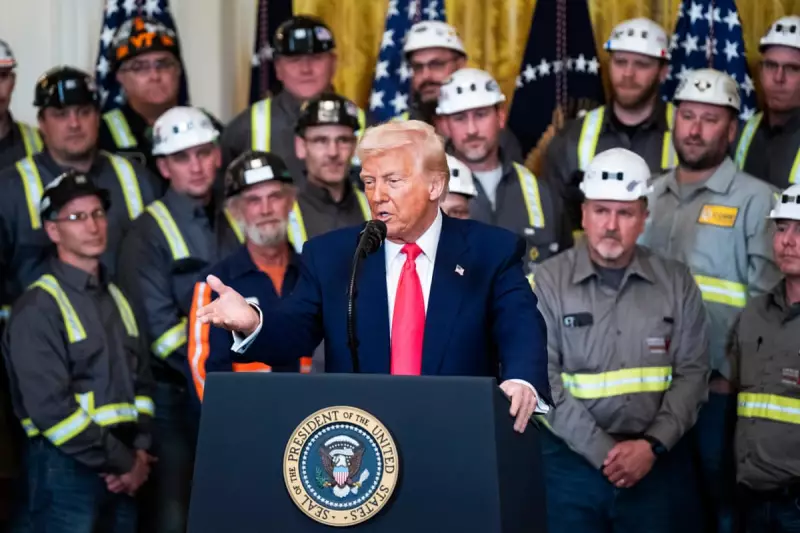
A striking moment came during a speech to the United Nations General Assembly on 23 September 2025. Trump declared climate change the "greatest con job ever perpetrated" and unveiled a personal rebranding effort for coal. "I have a little standing order in the White House," he said. "Never use the word 'coal'. Only use the words 'clean, beautiful coal'."
This description starkly contrasts with reality. Coal is the most carbon-intensive fossil fuel, a major driver of global heating, and a source of harmful air pollution. The administration had also previously terminated a program screening coalminers for black lung disease, caused by inhaling coal dust.
In the same UN address, Trump revived a long-debunked argument, claiming scientists had shifted from warnings of "global cooling" in the 1920s and 1930s to global warming. He asserted, "then it started getting cooler." Scientific records are unequivocal: the planet is heating at an unprecedented rate due to human activity. The Earth is now hotter than at any point in human civilisation, a trend starkly visible on temperature graphs.
Investigating the Messengers, Not the Crisis
The pattern of challenging climate science culminated in November 2025. At a US-Saudi investment forum in Washington D.C., Trump announced new investigations related to the climate crisis, but not into its causes or impacts. Instead, he targeted those who communicate its risks.
"It's a little conspiracy out there," Trump stated. "We have to investigate them immediately." While he did not specify who "they" were—scientists, politicians, or insurers—the intent aligned with his administration's previous actions: removing climate references from government websites and banning certain terminology.
Notably, Trump did not call for investigating fossil fuel companies. Internal documents from as early as the 1950s show these companies produced accurate projections of global heating while publicly downplaying the risks. The president has, however, actively sought their campaign donations and rolled back clean air regulations.
The year 2025 has solidified an approach where questionable environmental claims directly inform federal policy, from executive orders on water and energy to international speeches denying fundamental science, creating a profound disconnect between the White House and the scientific community.



