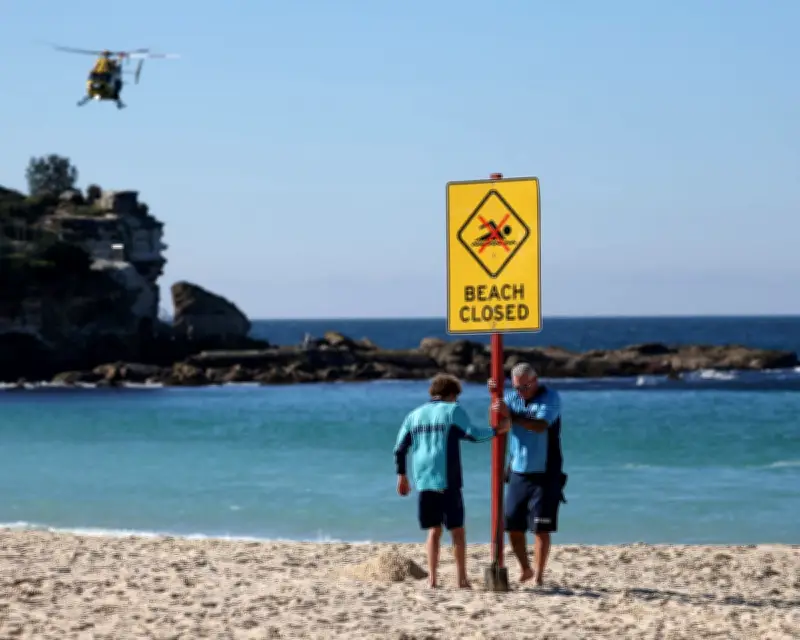
A woman remains in critical condition after being bitten by a shark at Sydney's Coogee Beach, one of Australia's most popular swimming spots. The incident follows a series of shark attacks in New South Wales over the summer, sparking concern among beachgoers and debate on how authorities should respond.
What Happened at Coogee?
Authorities said the 35-year-old woman was swimming about 30 metres offshore when she was bitten shortly after 11am on Saturday. A spokesperson for NSW Ambulance said she suffered arm and leg injuries and was taken to St Vincent's hospital, where she remains in critical but stable condition. Marcel Green, who leads shark programs at the NSW Department of Primary Industries, said the woman was swimming between the flags and "doing everything right" at the time of the attack. Beaches from Bondi to Maroubra were closed for at least 24 hours.
What Kind of Shark Was It?
Authorities have not confirmed the species, but Randwick council said the shark was believed to be 3–4 metres long. Elite paddleboarder Charlie Verco, who rescued the woman, estimated it at about 3.5 metres. Green said drone and helicopter footage taken after the attack indicated a white shark was in the area but stressed "that doesn't mean that that was necessarily that shark." Since January, the department has tagged about 60 white sharks and recorded roughly 170 detections of tagged white sharks across NSW. However, no tagged white or tiger sharks were detected in the Sydney region on Saturday. Chris Pepin-Neff, a shark bite policy researcher at the University of Sydney, said it was probably a white shark, noting sightings at Coogee are extremely rare.
How Was It Different to Earlier Attacks?
Pepin-Neff said water temperature was the key difference. "What is probably the most important variable in my 20-year history of shark attacks is water temperature: 20C and above is bull sharks, below is white sharks," they said. "Yesterday the water at Coogee was 18C." Bull sharks, responsible for summer attacks, favour murkier conditions attributed to heavy rainfall. Green said Saturday's attack occurred in crystal clear water, unlike the turbid conditions of summer. Both experts noted it is not unusual for white sharks to come close to shore, with Green saying drone footage has captured them "well inside the surf zone."
Were the Sharks Hunting People?
As in the summer attacks, the answer is very likely no. Experts say bull sharks would have been hunting smaller fish. Pepin-Neff said most shark bites, particularly involving white sharks, result from "curiosity or defensiveness" rather than aggression.
What Will Happen Now?
On Sunday, NSW agriculture minister Tara Moriarty said the government was taking the situation "very, very seriously" and that "nothing is off the table." She said her focus would be on technology, including AI-enabled drones, but did not rule out a potential cull, though great whites are a protected species. Shark detection drones are generally restricted at Coogee due to Civil Aviation Safety Authority rules, as the beach sits under a commercial flight path. A temporary exemption was granted on Sunday, which Moriarty said the government would seek to make permanent. Pepin-Neff said there is no evidence to support culling as a prevention method, advocating instead for public education, drones, and cleaner water.
What Can Swimmers Do to Lower Risk?
Authorities recommend: stay close to shore, swim between the flags in patrolled areas, swim with others, avoid swimming at dusk and dawn, stay away from fishing areas, avoid murky waters and river mouths after heavy rainfall, and do not swim with pets.