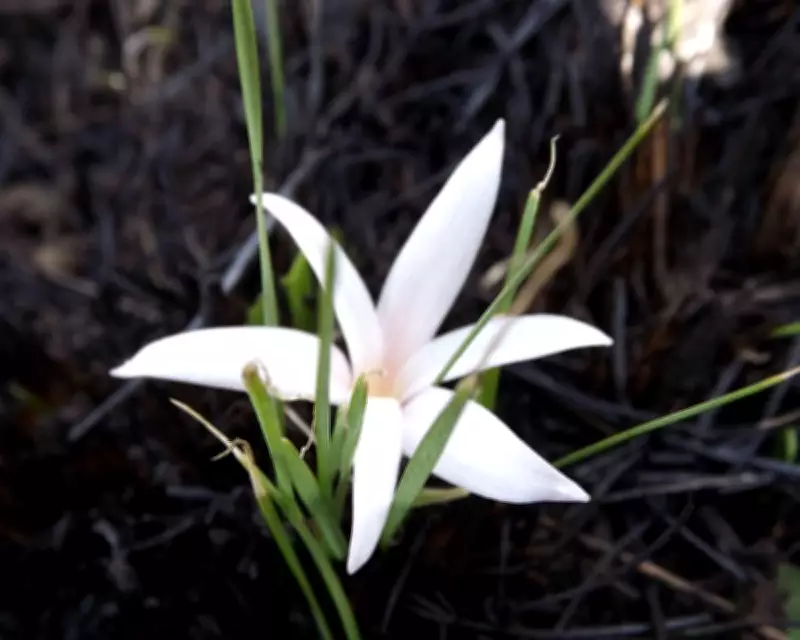
The natural world is full of astonishing adaptations, but few are as dramatic as the reproductive strategy of the Natal crocus. This remarkable South African plant, scientifically known as Apodolirion buchananii, has evolved a complex lifecycle that co-opts fire, bees, and ants in a masterful display of biological ingenuity.
A Beacon in the Ashes
In its native grasslands, the Natal crocus remains dormant until a natural fire sweeps through the landscape. Shortly after the flames subside, it bursts into bloom, producing a gloriously bright white flower that emerges from the ground before its leaves appear in early spring. This timing is no accident—the flower stands out like a beacon against the blackened grass, creating a stark visual contrast that helps attract its primary pollinators: bees.
The flower doesn't rely on visual cues alone. It emits an irresistible sweet scent that wafts through the post-fire air, further enticing bees to visit. This fire-triggered blooming ensures the plant maximizes its reproductive opportunities when competition from other vegetation is minimal and pollinators are actively seeking resources in the recovering ecosystem.

An Underground Waiting Game
After successful pollination, the Natal crocus enters another fascinating phase of its lifecycle. The developing fruits remain underground for approximately six months until they reach maturity. This subterranean development provides crucial protection from predators and environmental hazards while the seeds mature and prepare for dispersal.
When the seeds are finally ready, they employ one of the plant kingdom's most sophisticated deception strategies. Researchers have discovered that the seeds produce a scent that perfectly mimics ant larvae. This chemical mimicry represents a remarkable evolutionary adaptation that ensures the plant's seeds are effectively dispersed.
The Great Ant Deception
The scent deception works with astonishing precision. Ants encounter the seeds and, fooled by the familiar larval scent, believe they are rescuing their own offspring. They carefully collect the seeds and transport them back to their nest, where they dutifully tend to them as they would their genuine larvae.
This ant-assisted dispersal provides multiple benefits for the Natal crocus. The seeds gain protection within the ant nest, access to nutrient-rich environments, and are transported away from the parent plant, reducing competition. Presumably, the ants experience considerable surprise when their "larvae" eventually germinate into seedlings rather than developing into ant offspring.
The Natal crocus represents a extraordinary example of plant adaptation, demonstrating how species can evolve to exploit multiple elements of their environment—from fire regimes to insect behavior—to ensure their reproductive success. Its fire-dependent blooming, bee-attracting strategies, and ant-deceiving seed dispersal create a reproductive trilogy that continues to fascinate botanists and naturalists alike.