Large Tortoiseshell Butterfly Confirmed as Resident Species in UK After Decades-Long Absence
In a remarkable development for British wildlife, the large tortoiseshell butterfly has officially returned as a resident species in the United Kingdom, ending an absence that spanned over 60 years. Early spring sightings across southern England have provided compelling evidence that this colourful and elusive insect is now breeding and establishing populations once again, according to conservation experts.
Significant Sightings Across Southern England
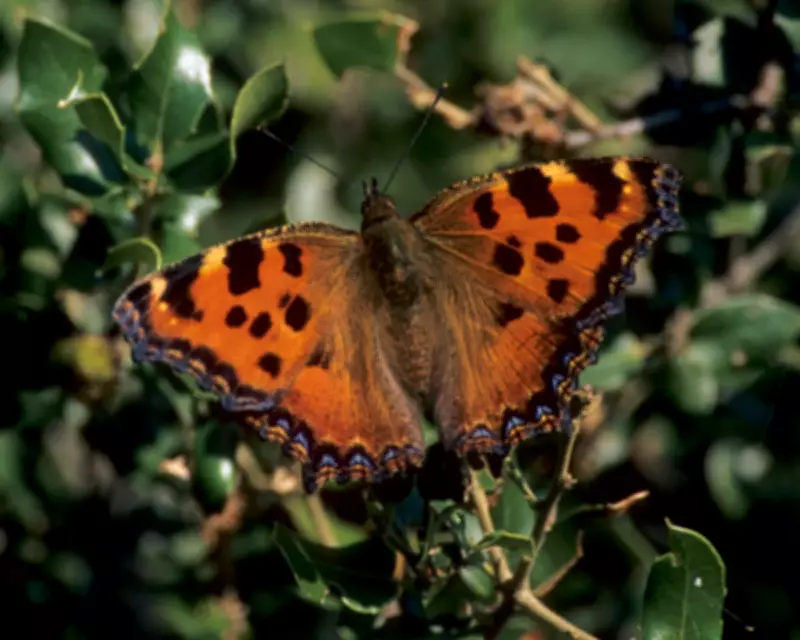
Butterfly Conservation, a leading charity dedicated to insect preservation, has declared the large tortoiseshell (Nymphalis polychloros) a resident species for the first time in its 58-year history. This announcement follows a series of confirmed observations in woodlands throughout Kent, Sussex, Hampshire, Dorset, Cornwall, and the Isle of Wight. These sightings indicate that individuals have emerged from hibernation and are actively reproducing, marking a pivotal moment in the species' recovery.
Richard Fox, head of science at Butterfly Conservation, expressed optimism about the findings, stating, "The signs are really positive, which is lovely. It is resident and therefore it is another species to add to Britain's total, which is good news." However, he cautioned that while the butterfly's return is encouraging, it is not yet well-established enough to guarantee long-term survival across diverse landscapes. The charity remains in a phase of cautious monitoring to assess the species' stability and expansion.

Factors Behind the Butterfly's Return
The resurgence of the large tortoiseshell is attributed to a combination of environmental and climatic factors. Historically, the butterfly became extinct in Britain by the 1960s, with the loss of elm trees due to Dutch elm disease once considered a primary cause. However, lepidopterists now believe that the UK may have always represented the northern limit of its natural range. In recent years, rising global temperatures have facilitated the species' migration from mainland Europe, particularly from populations in the Netherlands and France that have been increasing.
Unlike its more common relative, the small tortoiseshell (Aglais urticae), which thrives in gardens and feeds on nettles, the large tortoiseshell is a tree-dwelling butterfly. Its caterpillars primarily consume leaves from trees such as elm, willow, aspen, and poplar. The species is notably larger and lacks the white markings found on the small tortoiseshell, making it a distinctive and charismatic addition to Britain's biodiversity.
Historical Context and Recent Developments
The large tortoiseshell last flourished in Britain during a series of fine summers in the 1940s. Its initial reappearance in significant numbers occurred along the south coast in 2006-07, though some early sightings were linked to unauthorised releases by butterfly breeders eager to reintroduce the species. Since 2020, however, the discovery of caterpillars feeding on trees in the wild—first in Dorset and now more widely—has provided definitive proof that the butterfly is breeding naturally in the UK once again.
This insect follows a unique life cycle, hibernating as an adult during winter and emerging in spring to mate and lay eggs. The offspring then develop into adult butterflies that take flight in midsummer, raising hopes that the current spring sightings will lead to a burgeoning population later this year. The return of the large tortoiseshell brings Britain's list of native butterflies to 60 species, highlighting a positive trend in wildlife conservation efforts.
Conservation Efforts and Public Involvement
Butterfly Conservation has taken proactive steps to track the large tortoiseshell's progress by adding the species to its first sightings page. The charity is encouraging the public to contribute to citizen science initiatives by logging any observations on iRecord, a free app designed to collect data on wildlife distribution. This collaborative approach is essential for building a comprehensive picture of the butterfly's expanding population and ensuring its long-term survival.

The resurgence of the large tortoiseshell is part of a broader pattern of continental moth and butterfly species moving into or re-establishing themselves in Britain due to climate change. For instance, the spectacular Clifden nonpareil moth has also benefited from higher temperatures, indicating that environmental shifts are reshaping the country's insect populations. As conservationists continue to monitor these developments, the return of the large tortoiseshell serves as a beacon of hope for biodiversity in the face of global challenges.