At the RSPB’s Cors Ddyga reserve on Ynys Môn (Anglesey), nature displays its full richness. Living nearby allows frequent exploration, but one recent evening visit left us awestruck by the abundance of wildlife encounters, posing the question of which moment stood out among so many unforgettable experiences.
A Dusk Arrival Full of Promise
Our arrival at dusk set the stage. Descending a deep-set old lane that drops naturally toward the broad marsh, the flora transitioned from moschatel to meadowsweet. Emerging from the shadowy track into the sunset brilliance over the reeds felt like players entering a stadium of light.
Reedbed Symphony
The reedbed greeted us with a chorus of warblers: willow, Cetti’s, sedge, and reed warblers, punctuated by the intermittent “sharming” of a water rail. Two bitterns boomed in stereo, one on each side of our path, marking their return to Anglesey in 2016 after a 32-year absence as breeders. The soundscape here often rivals the landscape.

Marsh Harrier Sky Dance
Our attention soon shifted to a slender male marsh harrier above the reeds, performing an acrobatic courtship sky dance. Its feathers caught the final rays of sunlight as it oscillated high and low, intercepting a chittering band of sand martins, then slipping through a rabble of several hundred white and pied wagtails, far more than I had ever seen roosting in the reeds, rising and falling indecisively as they chose their night’s resting place.
The Curlew’s Haunting Call
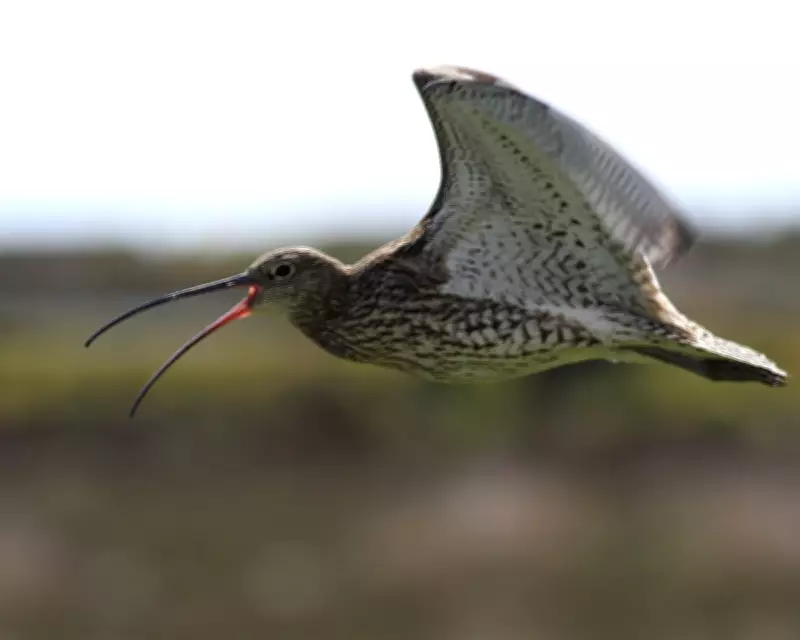
As darkness approached, a far, bubbling note reached us. The caller slid half-seen into view. With trembling wing and voice, the curlew captured the essence of the marsh. Yet Europe’s largest wader is in steep decline. Sustained breeding failure has led to a dwindling, ageing population. According to the British Trust for Ornithology, without more holistic land management like that nurtured here, the curlew will be extinct in Wales within ten years.
World Curlew Day
It is no coincidence that World Curlew Day falls on 21 April, a day that also commemorates Saint Beuno, a local sixth-century abbot whose generosity of spirit toward the natural world, particularly the curlew, needs rekindling.
There is no need to choose a single highlight from the evening, but the curlew holds a special place. Under the Changing Skies: The Best of the Guardian’s Country Diary, 2018-2024, is available now at guardianbookshop.com.