From Pollution to Preservation: The Remarkable Revival of Guanabara Bay's Mangroves
In the shadow of Rio de Janeiro's iconic peaks, where Guanabara Bay's deep blue waters have long served as the city's postcard backdrop, a quiet revolution is unfolding. This famous bay, while visually stunning, has endured decades as one of Brazil's most severely polluted coastal environments. Raw sewage and solid waste from surrounding cities housing over eight million people flow relentlessly into its waters, while cargo ships, oil platforms, and dozens of abandoned vessels contribute to the environmental degradation.
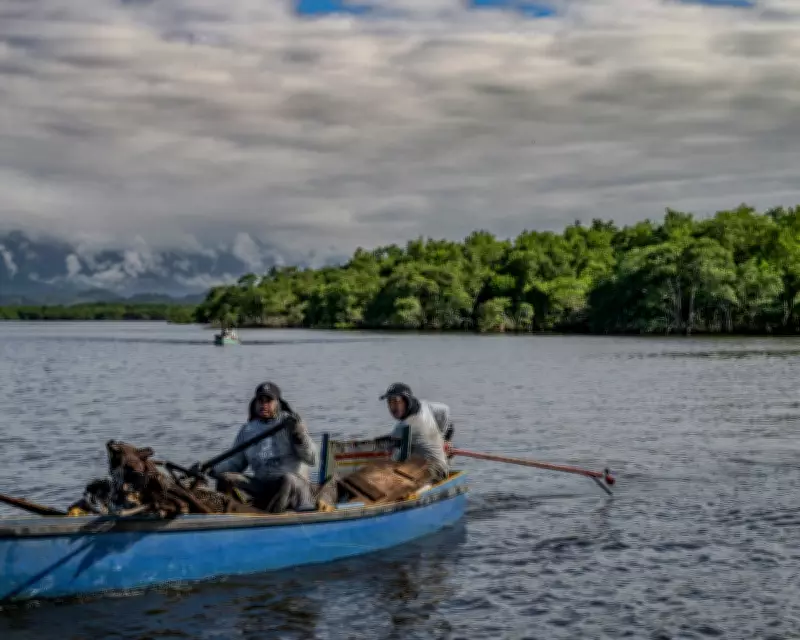
Yet at the bay's head, between Itaboraí and Magé, the atmosphere transforms dramatically. Here, the air feels purer, the waters host only small fishing canoes, and flocks of birds soar overhead. This remarkable change stems from a thriving mangrove forest protected within the Guapi-Mirim environmental protection area (APA Guapi-Mirim), successfully restored through the dedicated efforts of local fishers turned environmentalists.
The Guardian of Guanabara: How Conservation Saved the Bay
"If the APA Guapi-Mirim hadn't been created on 25 September 1984, Guanabara Bay would have died," declares Alaildo Malafaia, a 63-year-old fisher turned environmentalist, as he navigates his motorboat down the Macacu River. "All this area would have become an airport, logistics for trucking, housing estates." His words underscore how close this ecosystem came to complete destruction.

Spanning 14,000 hectares (35,000 acres), with 6,000 hectares of mangrove swamps, the protected area shelters rich biodiversity including crustaceans, fish, mammals, and numerous bird species. Malafaia's personal favourite, the cocoa heron, shares this habitat with great egrets and pink roseate spoonbills that perch on the mangroves' characteristic tangled roots.
The Vital Role of Mangrove Ecosystems
Despite comprising less than 1% of global tropical forests, mangroves perform crucial socio-environmental functions:
- They serve as nurseries for marine species that sustain fishing livelihoods
- They naturally filter pollution from surrounding waters
- They protect coastal areas from storms and hurricanes
- They act as significant carbon sinks, absorbing two to four times more carbon than other Brazilian forests
Brazil possesses the world's second-largest mangrove area, covering approximately 1 to 1.4 million hectares along its coastline from the Amazon to Santa Catarina state. The country recently joined the Mangrove Breakthrough initiative, committing to conserve 15 million hectares globally by 2030. While Brazil has lost an estimated 25% of its mangroves since the last century primarily to urbanisation, today 87% receive protection, beginning with the pioneering APA Guapi-Mirim.
Community-Led Restoration: A Model for Success
In the late 1970s, Guanabara Bay's remaining mangroves faced large-scale clearing to fuel brick factory kilns. Researchers recognising the bay's precarious situation campaigned successfully for conservation, overcoming urban developers planning land reclamation for construction. After more than two decades of natural recovery, some areas required intervention where invasive species prevented regeneration.
"From 2008 onwards, once we realised that there were sizeable areas needing restoration, we implemented a community-based mangrove restoration project," explains Mauricio Barbosa Muniz, an environmental analyst at ICMBio and former director of APA Guapi-Mirim.
To date, 320 hectares have been restored with NGO support that compensates residents for their work. "Those mangroves over there, they were all reeds. They were replanted in 2013 or 2014. Look at the size of the trees," says Eugênia Maria Santos, president of the Cooperativa Manguezal Fluminense, pointing to an area she helped restore along the Macacu River.

Innovative Techniques and Ongoing Challenges
The project's success stems from involving local communities, which led to developing more effective planting methods. Initially, growing seedlings at home failed because plants watered with fresh water couldn't survive transplantation to saline mangrove environments. Fishers innovated by collecting propagules (seedling mangroves that germinate on trees) from beneath parent trees where they wouldn't survive due to insufficient sunlight, then transplanting them to restoration areas.
Residents also collect rubbish carried into mangroves by tides and rivers from surrounding cities. Fishing boats regularly carry sacks filled with driftwood, plastic bottles, and unusual items like mud-encrusted toilet seats. "Solid waste affects the mangroves, as it occupies an area where crabs can no longer dig their burrows and where trees can no longer find space for the seeds to grow," notes Janaína Oliveira, marine biologist and coordinator of Projeto Uçá, named after the ecologically and economically important Ucides cordatus crab.
Rita de Conceição Duarte, 68, earns approximately £170 monthly collecting rubbish two days weekly with Projeto Uçá during crab reproduction periods when catching is prohibited. This work has enabled her to purchase land for growing squash, fruit trees, and medicinal plants. "It's in my blood," she says of her connection to the mangroves, coming from generations of fishers.
Measurable Success and Future Prospects
The restoration has yielded tangible results: 60 animal species have returned according to Oliveira, while Santos observes that mangroves now protect her neighbourhood from storm damage by cushioning wind impact. Duarte notes the reappearance of crabs that had previously disappeared from riverbanks.
Despite ongoing threats from climate breakdown and nearby Petrobras oil refinery activities (ironically, Petrobras funds Projeto Uçá through ESG commitments), pollution in Guanabara Bay has improved with increased sewage treatment and stricter industrial regulations. Projeto Uçá has restored 18.2 hectares since 2013 and plans to more than double that by 2029.
"Even in the face of so much adversity, we were able to show that it is possible to not only conserve, but also recover this ecosystem," concludes Muniz. "The mangroves of the APA Guapi-Mirim are a symbol of resistance." This community-driven transformation demonstrates how local action can revive even severely degraded environments, offering hope for coastal ecosystems worldwide.