African Scientists Lead Global Race to Protect Vital Fungi Ecosystems
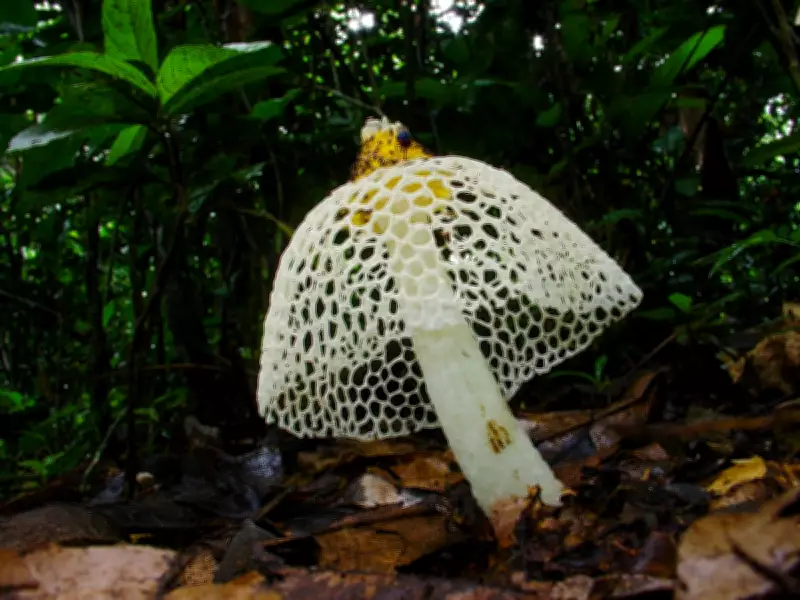
In the lush landscapes of Langoué Baï, within the Republic of Congo's Odzala-Kokoua National Park, a longnet stinkhorn fungus stands as a testament to the mysterious and essential world of African fungi. Across the continent, a growing cohort of scientists is championing the urgent need to preserve 'funga' alongside flora and fauna, driven by mounting evidence of fungi's critical role in ecosystems and carbon storage.
The Overlooked Kingdom of Life in Madagascar
Madagascar, renowned for its unique wildlife from ring-tailed lemurs to endemic baobab trees, has long celebrated its biological treasures. Yet, fungi have remained conspicuously absent from conservation conversations. Anna Ralaiveloarisoa, Madagascar's first homegrown mycologist, is determined to change this narrative. "Fungi are some of the most important things in the world," she asserts. "They feed 90% of terrestrial plants. Without them, there is no life on Earth."
Ralaiveloarisoa's work highlights a staggering knowledge gap: less than 1% of Madagascar's estimated 100,000 fungal species have been scientifically described. She has personally identified 200 new species and is now engaged in the painstaking process of classification. Her challenges are formidable—preserving specimens without proper infrastructure, navigating remote jungle locations lacking reliable roads or electricity, and working in isolation without local expert collaboration.

A Continental Movement Takes Shape
These obstacles are shared by mycologists across Africa, who are increasingly joining forces to advance fungal study and conservation. Last November marked a historic gathering at the International Congress on Fungal Conservation in Cotonou, Benin, where scientists from 27 countries across Africa, Europe, the Americas, and Asia convened. Many African participants represented the sole or one of very few mycologists in their respective nations.
Nourou Yorou, a mycologist recently appointed general director of the Benin Agency for Science and Innovation, captured the moment's significance: "What an exciting time: from almost nothing 20 years ago, fungal conservation has evolved from a little-known field into a dynamic global movement. The challenge is now to plan a future where fungi are firmly placed in the conservation mainstream."
The Global Context and Scientific Imperative
Globally, fungal conservation has historically lagged behind efforts for plants and animals. While bird protection organizations emerged in the 19th century, fungal conservation only gained momentum in the 21st century with the establishment of the International Society for Fungal Conservation in 2010 and the Fungi Foundation in 2012. David Minter, president of the ISFC, notes that early efforts were "just a few disjointed, separate voices of scientists expressing concern about the results they were observing."
Since then, a robust movement has emerged. Chile passed the first conservation legislation including fungi in 2013, and the phrase "fauna, flora, funga" has gained traction to promote fungal inclusion in conservation frameworks. Organizations like Fundis in North America and SPUN (Society for the Protection of Underground Networks) have further advanced the cause.
This growing interest is fueled by scientific revelations about fungi's ecosystem roles. Beyond nourishing 90% of plants, fungi are now recognized as climate stabilizers. A recent study found that up to 36% of annual CO2 emissions from fossil fuels are stored in the underground mycelium of mycorrhizal fungi. Minter likens fungi to essential but overlooked service providers: "If waste collectors go on strike, we sure know that they're needed. It's exactly the same with fungi."

African Expertise and Local Initiatives
At the Benin congress, African mycologists demonstrated their commitment through practical workshops and knowledge sharing. Sydney Ndolo Ebika, the Republic of the Congo's first mycologist, shared insights on Termitomyces fungi, which are cultivated by termites and prized as edible delicacies across Africa. His journey to expertise was arduous—initially emailing foreign mycologists for training opportunities and photocopying entire books during graduate studies in Germany due to limited resources at home. He has since established Congo's first fungarium for specimen preservation.
In Zimbabwe, researcher Cathy Sharp has focused on documenting traditional fungal knowledge among schoolchildren. By asking pupils to draw mushrooms when prompted in local languages, she found that most illustrations were detailed enough for genus or species identification. Sharp is now implementing educational programs in museums and schools to preserve this cultural understanding, advocating for fungi's reinstatement in the national curriculum after its removal during COVID-19 policy changes.
Joyce Jefwa, a Kenyan mycologist, emphasizes the importance of continental unity: "We have to talk with one voice as African mycologists, so that policymakers and those in different sectors, such as forestry, conservation and environment, can get to know the importance of fungi."
The Path Forward: The Cotonou Declaration
Following the congress, participants released the Cotonou Declaration, a document addressing "the persistent under-representation of fungi" in conservation efforts globally. Co-authored by scientists from four continents, it establishes global priorities for mycological conservation while underscoring Africa's pivotal role in the movement. Yorou reflects that the congress was "a milestone for the global mycological community and fungal conservation, both in Africa and across the world," pointing toward a future where fungi are recognized as a fundamental pillar of biodiversity conservation.
As evidence mounts about fungi's indispensable contributions to planetary health—from supporting terrestrial plants to mitigating climate change—African scientists are at the forefront of ensuring these vital organisms receive the protection they deserve. Their work not only expands scientific understanding but also fosters a deeper appreciation for the intricate web of life that sustains our world.