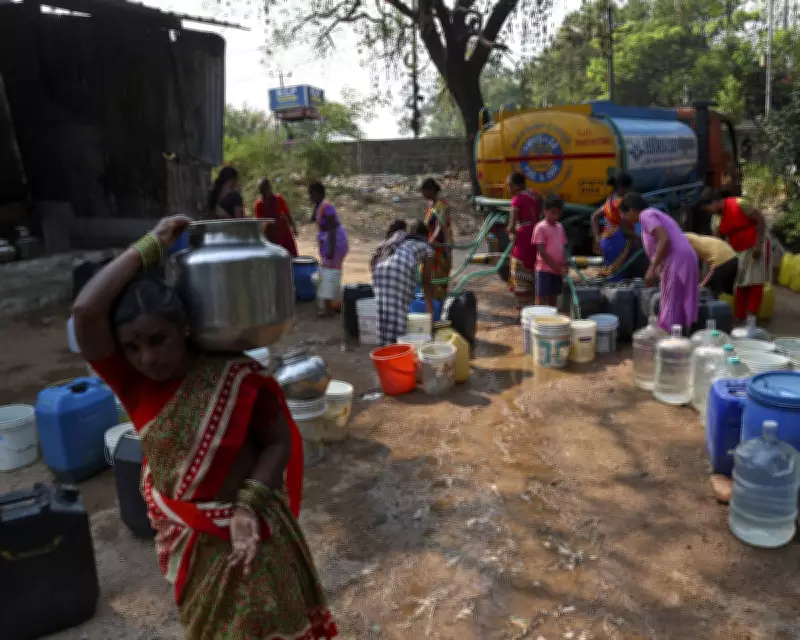
UN Warns Women Bear Brunt of Global Water Crisis, Spending 250 Million Hours Daily
Women and girls are disproportionately affected by water shortages and inadequate sanitation worldwide, hindering economic and social progress in developing nations, according to a United Nations report. The UN has issued a stark warning, highlighting that this imbalance severely impacts health, education, and food security for women.
Massive Time Burden and Climate Impact
In over 70% of rural households without access to mains water in developing countries, women are responsible for water collection. Collectively, women and girls spend an astonishing 250 million hours each day gathering water globally. The climate crisis is intensifying this issue, with a 1°C temperature rise reducing incomes in female-headed households by 34% more than in male-headed ones. Additionally, women's weekly labor hours increase by an average of 55 minutes compared to men's due to climate-related pressures.
Health, Education, and Economic Consequences
Poor sanitation disproportionately harms women, with an estimated 10 million adolescent girls in 40 lower-income countries missing school, work, or social activities between 2016 and 2022 due to lack of toilets. In 2024, data shows more than 2.1 billion people lacked safely managed drinking water, and 3.4 billion lacked safely managed sanitation. Women are also underrepresented in water management decisions, with fewer than one in five workers in water utilities being women across 28 developing countries surveyed.
Calls for Action and Community Solutions
Khaled El-Enany, Director General of Unesco, emphasized the need for action: "Ensuring women's participation in water management and governance is a key driver for progress and sustainable development. We must step up efforts to safeguard women and girls' access to water. When women have equal access to water, everyone benefits." Alvaro Lario, President of the International Fund for Agricultural Development and Chair of UN-Water, added that collaborative management between women and men is essential for societal benefit.
Helen Hamilton, Head of Public Health Policy at WaterAid, stated: "Today's report lays bare a stark injustice: women and girls are carrying the heaviest burden of the global water crisis. Clean water, decent toilets, and good hygiene are not luxuries: they are the foundation of health, education, and economic opportunity." She noted that poor access in clinics leads to unnecessary maternal deaths and increased gender-based violence during water collection.
Positive Outcomes from Inclusive Approaches
When women's roles are recognized, communities can thrive. For example, World Vision drilled a well in Rumate, rural Kenya, where women previously walked up to four hours daily for water. Women participated in drilling and road construction, formed savings groups, established a water committee, and started small businesses. This initiative improved children's health by reducing malnutrition from unsafe water and allowed mothers more time with their families.
Parvin Ngala, Global Director for Water at World Vision, commented: "Harmful social norms often fail to value the time and effort women invest in securing water and exclude them from decision-making. The economic consequences are real: women's opportunities to earn an income are almost impossible." The report underscores the urgent need for gender-inclusive policies to address water access and sanitation globally.