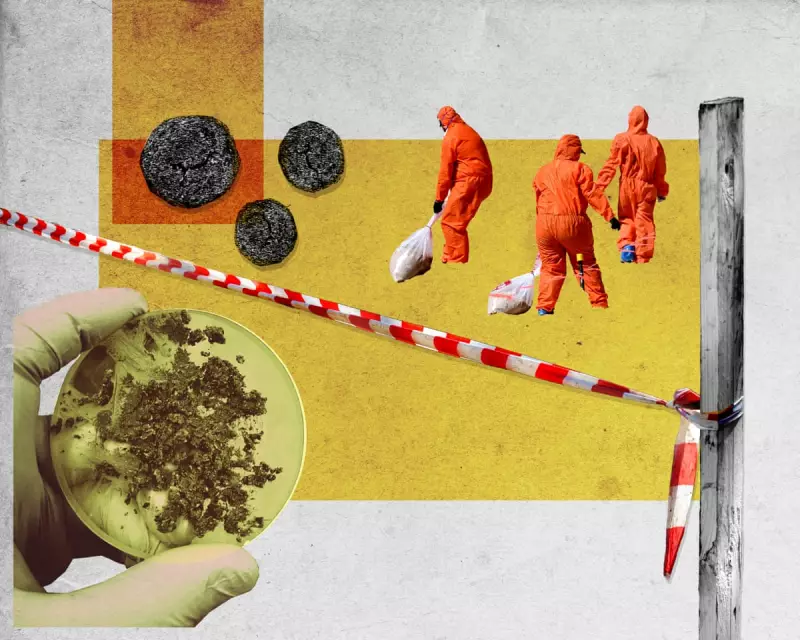
Sydney Water has announced a colossal $32 billion investment over the next 15 years to overhaul the city's ageing sewerage network. The primary goal is to drastically cut the volume of wastewater sent to its coastal treatment plants, following embarrassing incidents of sewage debris washing up on the city's iconic shores.
The Outdated System Behind Sydney's Beach Pollution
For decades, Sydney has relied on an antiquated method for handling the 1.5 billion litres of sewage it produces daily. Unlike most major global cities, Sydney uses a process called 'fast primary treatment' at its three coastal plants in Malabar, Bondi, and North Head. This basic physical process removes some solids before the remaining effluent is pumped 2 to 4 kilometres out to sea via deepwater ocean outfalls (DOOFs), relying on ocean currents for dilution.
This approach, rooted in the outdated 'dilution is the solution to pollution' mantra, is now showing critical flaws. In late 2024 and early 2025, so-called 'debris balls' or 'poo balls' closed several Sydney beaches. Experts, including Professor Stuart Khan from the University of Sydney, linked the incidents to a massive, irremovable fatberg—a congealed mass of fats, oils, and grease—within the inaccessible pipes of the Malabar plant.
Why Sydney Clings to Primary Treatment
The persistence of this system stems from historical cost-saving decisions and significant spatial constraints. In the 1980s, authorities chose building the deepwater outfalls over upgrading to secondary treatment due to expense. Today, the coastal plants are hemmed in by some of Sydney's most expensive real estate.
"It would be very difficult for a government to win community support to build a secondary sewage treatment plant in Bondi," Professor Khan notes, highlighting the immense land and amenity impact. Sydney Water's Managing Director, Darren Cleary, defends the outfalls' overall performance, citing decades of monitoring that show no broad environmental harm and generally excellent beach water quality.
However, critics like environmentalist Richard Gosden, who campaigned against the outfalls in the 1980s, argue Sydney's system was unusual even then for its high-speed, low-efficiency primary process. "Most of the solid matter was going out with the sewage," Gosden states.
The $32bn Path to Modernisation and Recycling
The new multi-billion dollar strategy pivots from trying to expand the coastal plants to treating more wastewater inland before it reaches the ocean. The plan includes:
- Building new treatment facilities from Arncliffe to Quakers Hill.
- Upgrading plants at Glenfield and Liverpool to produce more recycled water for industrial uses, like cooling datacentres.
- Enhancing the Fairfield plant to remove more solids.
This shift aims to reduce the 80% of effluent currently discharged through the three ocean outfalls. The vision aligns with calls from groups like the Total Environment Centre for modernisation and greater water recycling, moving Sydney closer to practices in other Australian capitals and global leaders like Singapore.
"Sydney's definitely out of step with the other [Australian] cities," Professor Khan concludes, pointing to Perth's groundwater replenishment scheme and Melbourne's advanced recycling as examples of more sustainable, climate-resilient water management that Sydney has, until now, largely overlooked in favour of ocean dilution and desalination.