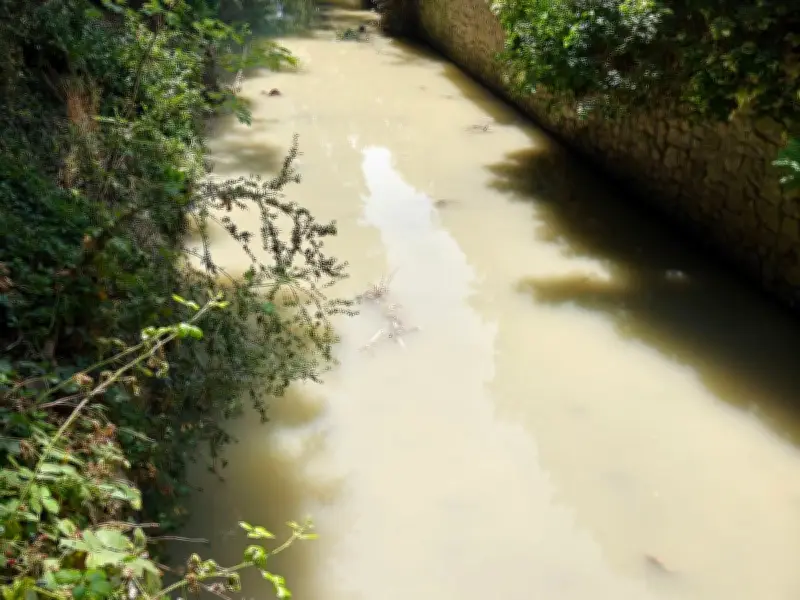
A burst water main has caused the Ravensbourne River in Beckenham, South London, to turn brown, stirring anxiety among residents following a separate pollution spill earlier this month that killed dozens of fish. The discolouration, attributed to gravel and silt disturbed by a large influx of water, prompted an investigation by the Environment Agency (EA).
Environment Agency finds no lasting impact
Bromley Councillor Steven Jefferies reported that the EA, which began investigating on Monday, July 20, concluded the burst main's primary effect was visual and that no significant or lasting impact on water quality is expected. The EA confirmed their current understanding is that the discolouration was caused by a burst water main washing a large amount of water into the river, disturbing silt and gravel as the river was low.
Local MP Liam Conlon expressed deep concern over images shared by residents showing extensive discolouration in the River Ravensbourne within Beckenham Place Park. After liaising with Thames Water and the EA, he stated: "Thankfully, the Environment Agency have said that there is no evidence of pollution in the water, and there is no impact on drinking water. I have gone back to seek immediate reassurance that there is no impact on local wildlife either."
Recent fish deaths add to worries
On July 3, 2026, reports emerged of dozens of dead fish in the River Pool, a tributary of the Ravensbourne, within Cator Park. This incident has heightened concerns among residents about the river's health, especially after the burst main incident. The EA has not yet linked the two events, but the community remains vigilant.
Thames Water has faced scrutiny over leaks in its network, with MyLondon reporting on a manhole leak that persisted for four years as part of its Waste Environmental Campaign. The burst main incident also coincides with a hosepipe ban announced by Thames Water, following no recorded rain in London during July except for a small shower on July 5.
Thames Water responds and outlines upgrades
A Thames Water spokesperson said: "We are sorry that a water main burst in Widmore Road, which led to drinking water entering the Ravensbourne. Our engineers were on site early yesterday morning and carried out tests at various locations, with no pollutants found. Our team have completed a temporary repair and we expect the water discolouration will improve over the next few days. We will also continue to take water quality readings."
The spokesperson added that Thames Water is delivering the biggest upgrade to its network in 150 years, partly funded by an increase in customer bills. The company recently announced completing the replacement of 100km of water mains over the past 16 months. "Replacing ageing mains will help reduce bursts, save large amounts of water and mean less water needs to be taken from rivers or the ground. It will also reduce traffic disruption caused by ongoing repairs and maintenance, while improving network reliability for future generations with the new pipes having a lifespan of 100 years," the spokesperson said.
No official statistics have been released on the amount of water wasted from the burst main, but images show a large volume entering the river. The EA continues to monitor the situation.