From Festive Decor to Coastal Defender: Lancashire's Innovative Dune Project
In an extraordinary environmental initiative, volunteers have planted more than 2,000 discarded Christmas trees along the beach at St Anne's on the Fylde coast in Lancashire. This creative effort forms a crucial part of the ongoing sand dunes restoration project, transforming holiday waste into a natural barrier against the encroaching sea.
A Festive Frontier Against Climate Change
While Britain's climate battle typically features wind farms and solar panels, Lancashire's coastline presents a more unconventional frontline. Tens of thousands of tinsel-free Christmas trees have been partially buried across beaches south of Blackpool, creating a living defense system against rising sea levels that threaten coastal communities.
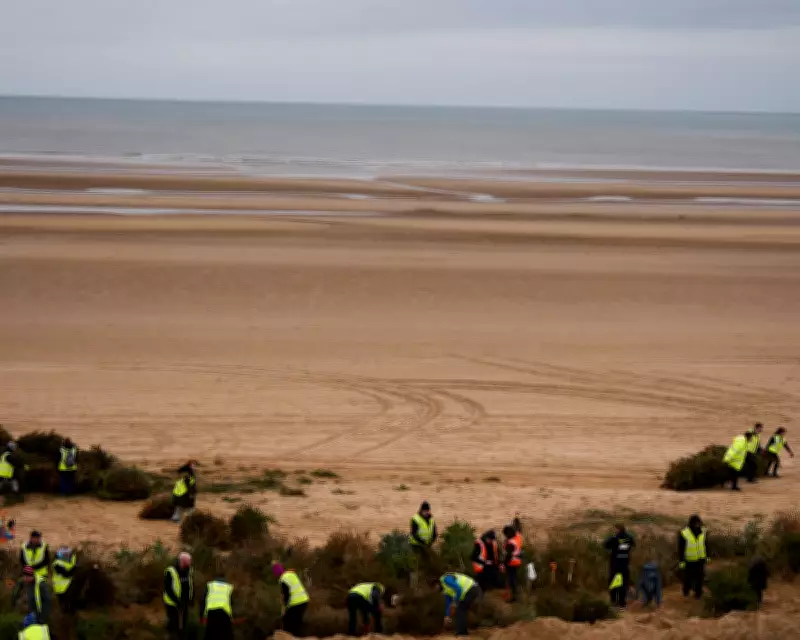
During biting February winds, hundreds of dedicated volunteers haul these recycled trees into shallow trenches, allowing nature to work its transformative magic. Within weeks, and sometimes mere days, these festive remnants morph into robust sand dunes that protect vulnerable seafront homes from flooding and erosion.
The Vanishing Dunes: A Historical Perspective
Conservationists emphasize the critical importance of this work, revealing that since the mid-1800s, the Lancashire coast has lost approximately 80% of its natural sand dunes. This dramatic reduction stems primarily from the rapid expansion of seaside towns including Blackpool and Lytham St Annes.
Amy Pennington of Lancashire Wildlife Trust, which manages the sand dunes project with Environment Agency funding, explains: "Sand dunes once extended for miles inland, but urban development has reduced them to a thin fragment of their former glory. These dunes represent the only natural sea defense available to local communities."
Three Decades of Dune Building
Volunteers initiated this innovative approach to coastal protection more than thirty years ago, with Guardian photographer Christopher Thomond first documenting the effort in 1994. However, the project has significantly intensified over the past decade as sea level rise has accelerated.
National statistics reveal alarming trends: the UK has lost about 30% of its sand dunes since 1900, while sea levels have risen approximately 19.5 centimeters. Remarkably, two-thirds of this increase has occurred within the last thirty years, surpassing global averages according to recent studies.
Pennington notes that increasing storm surges have exacerbated dune erosion, potentially exposing coastal properties to greater flood risks: "We've observed that storm surges push tides further up beaches, washing away dunes more frequently than before."
Beyond Protection: Creating Wildlife Havens
These Christmas tree dunes serve dual purposes, functioning not only as climate barriers but also as vital wildlife habitats. Burrowed within the sandy mounds at Lytham St Annes thrives one of Britain's rarest reptiles.
In 2020, conservationists released hundreds of sand lizards into these artificial dunes, marking their return to an area where they hadn't been sighted for approximately sixty years. The reptiles have since established thriving populations.
Andy Singleton-Mills, area conservation manager for Fylde Council, reports encouraging signs: "Each year we spot more individuals, including numerous juveniles indicating successful breeding within the dune ecosystem."
Though day-trippers hoping to glimpse these striped green and brown reptiles might be disappointed—they typically flee human presence—their successful reintroduction represents a significant conservation achievement.
Recent Volunteer Efforts and Dune Construction
Last week witnessed 650 volunteers working along Lytham beach, with Blackpool's iconic big dipper visible in the distance. They buried approximately 2,000 Christmas trees donated from across Lancashire, creating a two-mile stretch of emerging dunes.
The landscape now features these recycled trees interspersed with tufts of marram grass, whose extensive root systems—sometimes reaching 100 meters—help stabilize the developing dunes. The resulting formations can grow to impressive heights of about three meters (ten feet).
Pennington expresses optimism about their durability: "These new dunes should withstand environmental pressures hopefully indefinitely, though we anticipate needing to build upward rather than seaward within the next five years as sea levels continue rising."
Cultural and Emotional Significance
While some might view sand dunes as mere obstacles to beach access, others find deeper meaning in these landscapes. Artist Holly Moeller, who has created watercolor paintings of the Lytham dunes, cautions against taking them for granted.
"Sand dunes may appear sparse initially, but they harbor incredible biodiversity," Moeller observes. "During challenging periods in my life, particularly regarding mental health, the coastal dunes have provided profound solace—their scale feels capable of containing personal struggles."
This innovative project demonstrates how community action, environmental science, and recycled materials can combine to address pressing climate challenges while restoring precious ecosystems for future generations.