
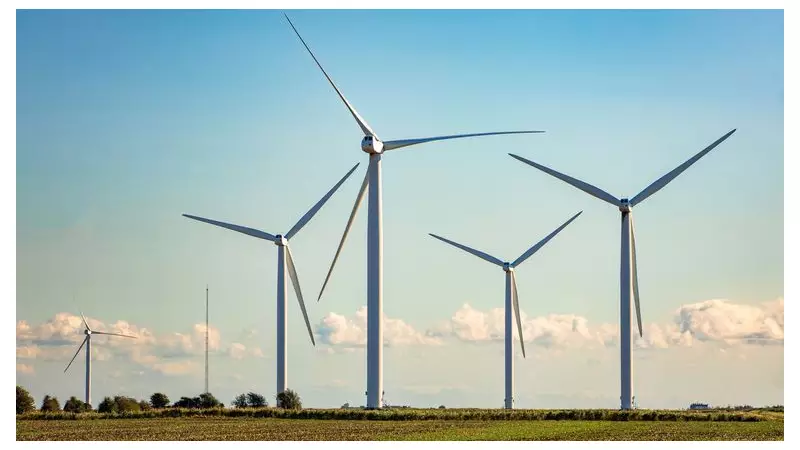
The UK government has declared the country is "firmly on track" to meet its clean power targets for 2030, following a landmark auction for new offshore wind capacity. The results, announced on Wednesday 14 January 2026, have secured contracts for a record 8.4 gigawatts (GW) of new offshore wind power, enough electricity to supply an estimated 12 million homes.
Auction Details and the Rising Price of Green Power
This major auction is a central part of the government's strategy to shift the nation away from reliance on volatile and polluting natural gas. However, the process has revealed a significant increase in costs. The agreed strike price was set at £90.91 per megawatt hour (MWh), which represents an 11% increase on the contracts agreed in the previous year's auction round.
The mechanism used is the Contracts for Difference (CfD) scheme. In this system, generators bid to provide capacity, and the government guarantees them a fixed "strike price" for their electricity. This price acts as a floor for developers and a ceiling for consumers. If the market price falls below the strike price, the government tops up the difference, funded ultimately by energy bills. If the market price is higher, generators pay back the difference.
To attract bidders in this round, the government extended the contract length from 15 to 20 years and set aside an initial budget of £900m for potential top-up payments. The auction has also secured around £22bn in private investment and is expected to create 7,000 jobs across the country.
Political Storm Over Energy Bills and Sovereignty
The announcement has ignited a fierce political debate, centring on the long-term cost to consumers and the UK's energy independence.
Energy Secretary Ed Miliband welcomed the results enthusiastically. He stated the auction would help shield Britain from the kind of fossil fuel price shocks experienced after Russia's invasion of Ukraine. "With these results, Britain is taking back control of our energy sovereignty," Miliband said. He emphasised that the secured price is 40% lower than the cost of building and operating a new gas plant, calling it a "monumental step towards clean power by 2030."
In stark contrast, Conservative Shadow Energy Secretary Claire Coutinho launched a sharp critique. She accused the government of locking families into higher bills, noting the strike price is higher than the current cost of electricity. "If you think your bills are too high, this won't make them any lower," Coutinho argued, claiming the move cements uncompetitive energy prices for decades.
The Path to 2030 and the Market Context
The UK's target of a clean power grid by 2030 requires at least 43GW of operational offshore wind. With 16.6GW currently operational and 11.7GW under construction, the new 8.4GW award leaves a further 6GW or more needed to hit the goal.
The rising strike price—from a low of £51/MWh in 2021 to £82 last year and now £90.91—reflects global pressures from inflation, commodity prices, and higher financing costs for major infrastructure projects. Analysts note that while the CfD price is above last year's average wholesale price of £83, the two figures are not directly comparable, as the wholesale price reflects existing capacity, not the cost of building new plants.
Industry body Energy UK and independent analysts like Aurora point out that new renewable capacity exerts a downward pressure on wholesale prices by reducing dependence on gas. The Energy and Climate Intelligence Unit calculated that wholesale prices in 2025 were around 30% lower due to the dampening effect of existing wind power on the market.
Nevertheless, the UK continues to grapple with some of the highest energy prices in Europe, ensuring that the balance between green ambition, energy security, and affordability will remain a heated and politically charged issue for years to come.



