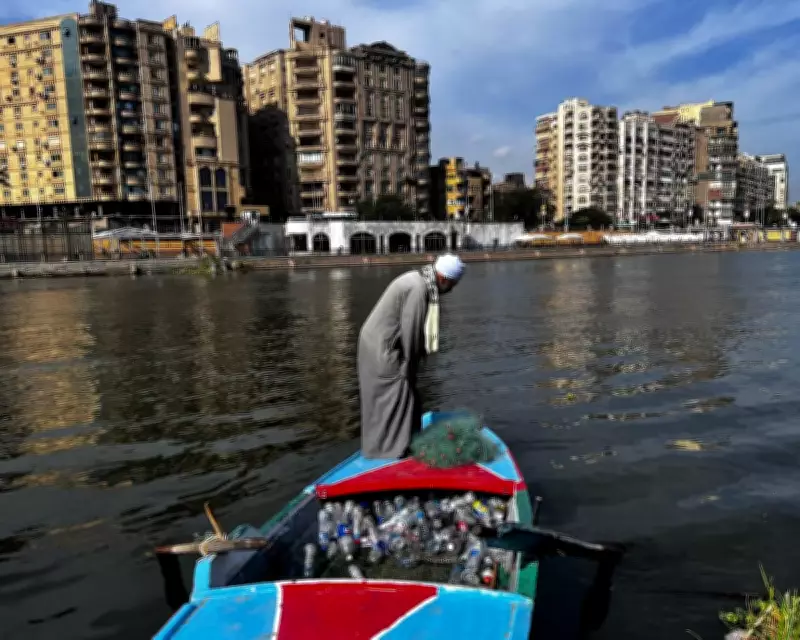
Nile Fishermen Earn More from Plastic Collection Than Fishing Amid Pollution Crisis
At dawn, Mohammed Ahmed Sayed Mohammed navigates his boat from al-Qarsaya island through the Nile waters of Cairo, heading towards the city's riverside clubs. Fifteen years ago, his focus was on catching fish; today, he hunts for plastic bottles. "The fish fled from the plastic chokehold," says Sayed, who moved to the Giza island from Assiut as a teenage fishing apprentice and never left, building a life with his family there.
Declining Fish Populations Force a Pivot
Plastic pollution in the Nile has severely impacted fish populations, compelling around 180 fishers on al-Qarsaya to abandon traditional fishing in favor of waste collection. This shift is driven by economic necessity, as fish catches have plummeted over the years. Sayed recalls winter fishing that once yielded 25 kilograms of fish daily, but now he catches only 4 to 5 kilograms, selling it at 70 Egyptian pounds per kilogram.
In contrast, plastic collection offers a more lucrative income. Plastic sells for 33 pounds per kilogram, a significant increase from 8 pounds in 2018 when the VeryNile initiative began. Tin cans fetch even higher prices at 85 pounds per kilogram. During peak seasons, Sayed can earn 2,000 to 3,000 pounds monthly from plastic alone, enabling him to support his family, including marrying off his three children and building a cafe for his eldest son.

VeryNile Initiative Transforms Livelihoods
Launched in 2018 by the Egyptian social enterprise Bassita, VeryNile aims to clean up the Nile by paying fishers above-market rates for collected plastic waste. The initiative has distributed 150 boats to fishers free of charge and expanded to multiple locations, including Assiut. Since its inception, it has collected over 454 tonnes of plastic waste, processed at a recycling factory in 6th of October City.
The program also employs 25 women from the island in various roles, such as kitchen operations, sorting workshops, and product design. Additionally, it has established an emergency clinic on al-Qarsaya and trains farmers in vegetable cultivation, with produce used in the initiative's kitchen for visitors.
Community Impact and Environmental Awareness
Amna Karamallah, a 20-year-old leading community responsibility for VeryNile, notes that the initiative works closely with fishermen daily, fostering a strong community bond. Experiments are underway to line boats with fiber from recycled plastic to enhance durability. Hoda Gamal, a workshop participant, explains that fishers initially saw declining catches as divine punishment but now understand their role as guardians of the Nile by collecting plastic waste.
Al-Qarsaya island, located in central Cairo yet isolated and accessible only by ferry or boat, faces challenges like inadequate healthcare and limited employment opportunities, especially for women. Despite its central location opposite al-Bahr al-Azam Street and near tourist attractions, the island retains rare greenery in the capital.
From Feeding Cairo to Fueling Recycling
The waste collected by fishers, much of it from party boats on the Nile, is transformed into products made from bottle caps and plastic bags. This shift means that fishers who once supplied fish to Cairo now provide raw materials for the recycling economy, turning pollution into opportunity. The story highlights how environmental degradation is reshaping traditional livelihoods along the Nile, offering a new path forward through innovation and community effort.