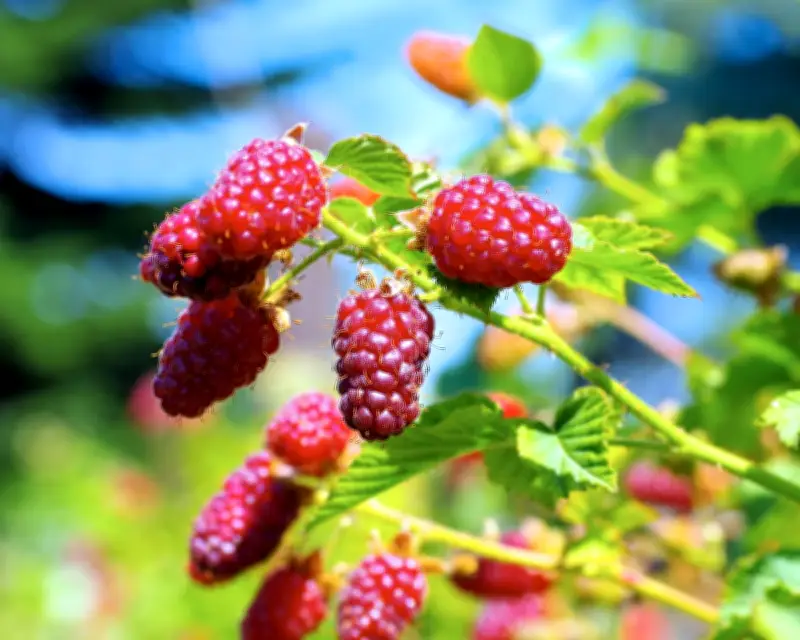
Got a sunny bed going spare? Tayberries offer great bang for your buck. They are a delightful cross between a raspberry and a blackberry that fruits abundantly with the right care.
Why Choose Tayberries?
This time last year, when my veg patch was feeling chaotic, I decided to make a big and fairly consequential change to my setup – devoting one of my five annual beds to perennial fruit. I figured that it would be less effort, more bang-for-your-buck and, importantly, less water and resource-intensive once the plants were settled in. It felt very daring to give up the sunniest bed in a relatively small space but now that the tayberries are here, I’m seeing that my bold decision has really paid off.
Planting and Propagation
Tayberries are a delightful cross between a raspberry and a blackberry that grows vigorously and fruits abundantly with the right care. I purchased my tayberries as small potted plants, although it tends to be cheaper to buy them as bare root stock in winter. If you’re fortunate enough to know someone who has an established tayberry, plants can be readily propagated through tip layering – rooting long branches when they touch the ground.

Growing Conditions
As with all berries, tayberries grow best in a sunny bed that is free of perennial weeds and liberally mulched with compost. Water generously while your plants are rooting down. Once established they shouldn’t need so much supplementary watering.
Pruning and Care
Tayberries fruit on the second year’s wood so if you have space, ideally train each year’s stems in different directions. If, like me, you don’t have the room to do this, you’ll have the prickly job of identifying and cutting back the stems after they’ve fruited. Be sure to wear thorn-proof gloves and long sleeves!
Pollination and Harvesting
All blackberry hybrids are self-fertile, but as with all plants that require pollination to bear fruit, planting companion plants that attract pollinators can improve yields. Tayberries are ready to harvest when the fruits turn deep red and come away from the stem easily. As with other soft fruit, they need to be picked with care to retain their shape. This and the difficulty of transporting them is why soft fruit is expensive to buy and therefore worth growing.
Uses and Storage
Tayberries can be eaten fresh, cooked into compotes and desserts, turned into jam and if there are any left over, freeze fairly well.
Alternatives and Final Tips
When I was choosing which fruit to plant, it was a toss-up between the sweetly floral tayberry and the more tart but similarly delicious loganberry, which requires the same care as they both descend from blackberries. In fact, all the advice in this column can also be applied to growing cultivated blackberries, which were bred to produce larger, juicier and sweeter fruit than those found out in the wild.