Imagining a Billion-Dollar Impact on Society
What could you achieve with a billion dollars dedicated solely to social good? Readers from around the world have shared their visionary proposals, offering a fascinating glimpse into the priorities and creative solutions that could transform communities and address pressing global challenges.
Climate and Environmental Priorities
Many responses focused squarely on environmental sustainability and climate action. Rowan Hooper, podcast editor at New Scientist, proposed establishing a progressive thinktank to fund climate-positive and nature-positive lobbyists, directly countering fossil-fuel funded influence. "With a billion dollars, I would set up a progressive thinktank funding climate-positive and nature-positive lobbyists to counter the malign influence of fossil-fuel funded organizations," Hooper explained.
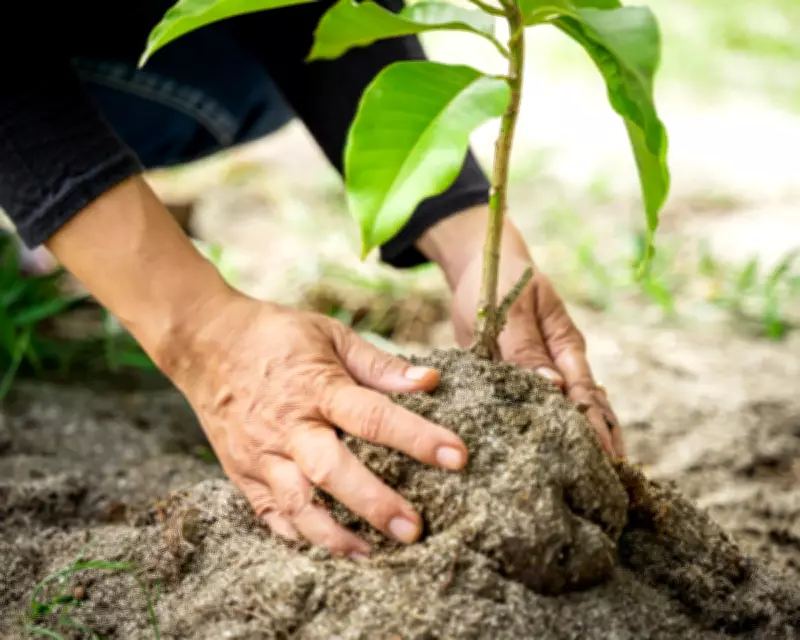
Other environmental suggestions included large-scale solar panel installation programs, with Tomgea noting that "a typical three-bed house can generate enough electrical power for maybe 75% of domestic usage," reducing grid stress while creating valuable trade skills. Several readers advocated for reforestation and rewilding projects, with one suggesting buying and protecting parts of the Amazon rainforest as a world reserve.

Housing and Community Development
Affordable housing emerged as another major theme. Multiple readers proposed converting underutilized buildings into community spaces and affordable housing. Roland Freeman from West Yorkshire suggested acquiring "old warehouse in every town throughout the land and convert it into low-rent community workspaces for artists, local charities and small businesses getting off the ground."
Fender64 emphasized protecting architectural heritage while addressing housing insecurity: "I'd buy and transform some of them into flats for affordable rent. It would be at least a third cheaper than the going rate and everyone would have security of tenure." Several proposals focused specifically on social housing development, with one reader calculating that a billion dollars could fund approximately 16,500 council houses.
Education and Youth Development
Educational initiatives received significant attention, ranging from specialized training programs to broader access improvements. DaveMate proposed scholarships for children to reach cathedral chorister standards, noting that such training "fosters exceptional musical skill, academic excellence and high-level soft skills."
Cristina from Bern advocated for youth centers "where they could meet, do sports, dance, swim and play games, all off screen and free for everyone," emphasizing that these should be visible in city centers rather than hidden in poorer areas. Other educational proposals included construction apprenticeship schools with three-year minimum courses and funding for women's education globally.
Healthcare and Basic Needs
Healthcare access featured prominently in readers' proposals. Multiple suggestions focused on disease prevention in developing countries, with StingLikeABeer noting that "research tends to point towards treating and preventing diseases such as malaria and tuberculosis" as particularly effective interventions. 680199 proposed spending half the billion on MRI machines for poorer areas and the other half developing portable, affordable models.
Basic needs like clean water access received attention, with Scouser58 stating simply: "Make sure everyone on Earth has access to clean water." Nina1414 highlighted menstrual equity, suggesting providing "enough sanitary towels every month so that girls don't have to stay home when they have their period and miss school."
Economic and Systemic Approaches
Several readers proposed systemic economic interventions. Theseligsussex suggested investing in local small businesses while raising base wages to stimulate local micro-economies. Jen Na emphasized job creation with security, arguing that "the true measure for usefulness is to create well-paying jobs with job security."
Bitthebeat proposed buying medical, agricultural, and technological patents to place them in the public domain. Gryphone noted the power of investment returns, suggesting that "you could do everything suggested so far and still be making millions in interest on the principal."

Animal Welfare and Biodiversity
Animal welfare received dedicated attention from several respondents. TM proposed a comprehensive approach to "fundamentally change human behavior towards animals," including eliminating factory farming, promoting veganism, and protecting endangered species. JaneMarple included animal shelters in her proposal, suggesting establishing "a special fund to pay for surgeries, medical care, meds, etc." for rescued animals.
Philosophical Perspectives
Some responses took more philosophical approaches. Lukedeane challenged the premise itself, arguing that "you already have everything that you need right now to make meaningful change on this Earth." Fantod took a different tack, suggesting that since "money is the root of all evil," the best approach would be to remove the billion dollars from circulation entirely.
Twopere offered a cynical but realistic perspective: "I'd buy influence with politicians and use it to shape society in a way that suits me and my other billionaire friends. Isn't that what most people do?"
Scalable Solutions and Effective Giving
Several readers emphasized the importance of scalability and measurable impact. TwelfthNight outlined a framework focusing on climate, poverty and health, equality, and animal welfare, noting that "solutions need to be scalable and solve multiple global issues at once." Pavanne referenced Effective Altruism principles, suggesting donations to "the bicycling lobby in a number of global cities" or "emergency food aid for the worst-affected areas."
George Mokray from Cambridge, Massachusetts, shared specific calculations, noting that providing basic solar electricity access could cost approximately $0.4 billion at retail prices, while more sophisticated approaches involving revolving loan funds might require $22-30 million initial investment.
The diversity of proposals reflects both the complexity of global challenges and the creativity of potential solutions. From immediate humanitarian aid to long-term systemic change, these billion-dollar visions offer a compelling roadmap for social impact that extends far beyond traditional philanthropy.