
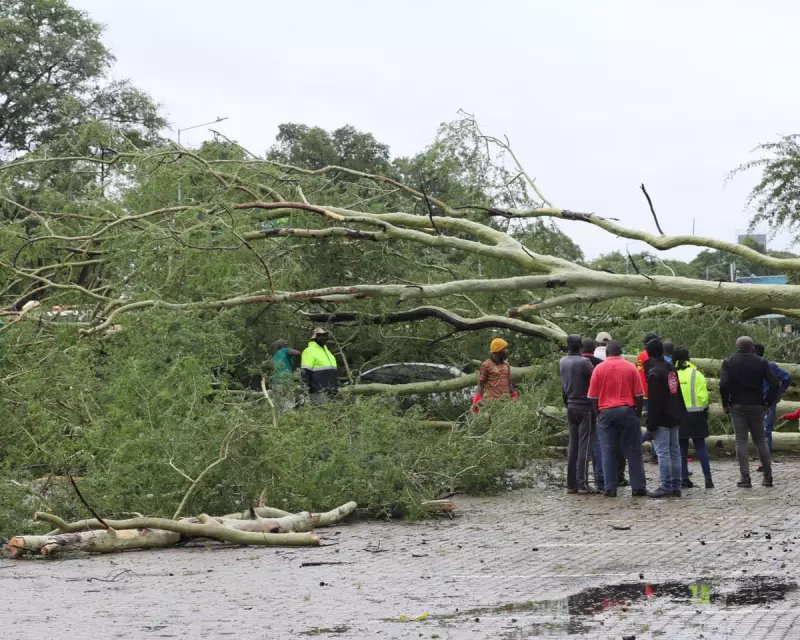
Catastrophic flooding has gripped north-eastern South Africa and neighbouring Mozambique, with relentless torrential rain triggering the highest-level flood warnings and forcing the evacuation of the world-renowned Kruger National Park.
Relentless Downpours and Record Rainfall
The crisis has been driven by a slow-moving cut-off low-pressure system that has remained stubbornly anchored over the region. This weather pattern has continuously drawn in vast amounts of moisture, resulting in days of exceptionally heavy and persistent downpours. The ground, already saturated from an unusually wet December, has been completely overwhelmed.
Specific locations have recorded staggering rainfall totals. Over the weekend, Graskop in Mpumalanga, South Africa, measured 113mm of rain in just 24 hours, while nearby Phalaborwa saw about 85mm. Since October 2025, parts of Limpopo and Mpumalanga provinces have received roughly double their average annual rainfall. Forecasters warn the deluge is not over, with further heavy rain expected through the coming weekend.
Widespread Damage and Disruption
The consequences of the inundation are severe and widespread. Rivers have burst their banks, washing away roads, damaging critical infrastructure, and rendering large areas completely inaccessible. The South African Weather Service has raised its flood warning to the most severe level.
In a significant development, Kruger National Park has been closed to visitors. Emergency services have been carrying out evacuations of staff and tourists trapped by rapidly rising floodwaters. Authorities have also issued warnings about displaced wildlife, including dangerous animals like crocodiles and hippos, which have been spotted near residential areas.
The economic impact is also mounting. The prolonged wet weather is severely disrupting the harvesting and export of key agricultural products such as mangoes and lemons, threatening both local livelihoods and international supply chains.
A Global Pattern of Weather Extremes
This flooding event in southern Africa coincides with dramatic temperature anomalies on the other side of the Atlantic. While South Africa battles unprecedented rain, North America has been experiencing record-breaking warmth for the time of year.
In late January, temperatures across much of the United States and parts of eastern and western Canada soared to 10-15°C above the seasonal average. In Alberta, Canada, thermometers reached a spring-like 15°C, shattering typical January records. Forecasts indicate this atypical warmth will persist in western North America, while an Arctic plunge is set to bring frigid conditions to the eastern half of the continent.
These concurrent events – devastating floods in one hemisphere and extreme heat in another – underscore the increasing volatility and extremity of global weather patterns, presenting profound challenges for communities, economies, and emergency response systems worldwide.



