
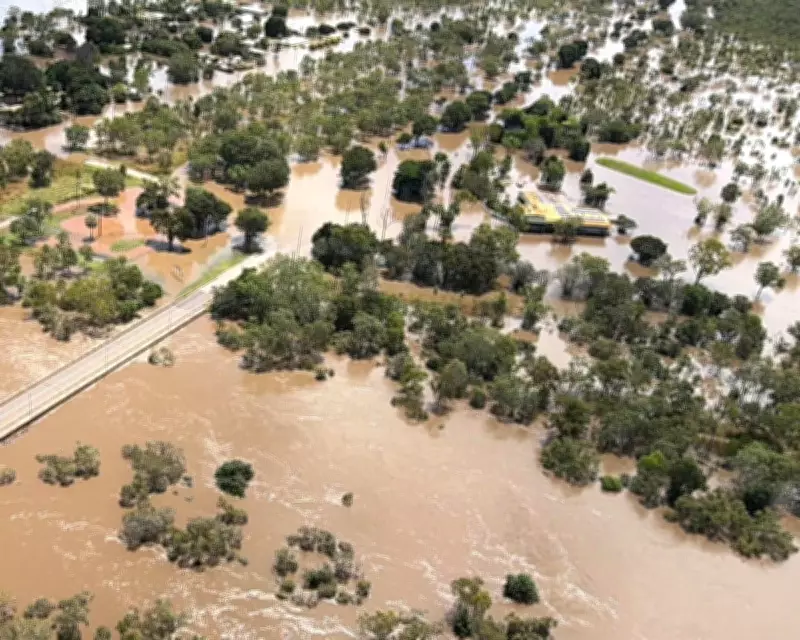
Severe flooding has struck the Northern Territory, with the Katherine River surging to a peak of 19.2 metres on Saturday night, marking the highest water level since the devastating 1998 floods that resulted in three fatalities. This alarming rise has triggered widespread evacuations and urgent safety advisories for residents.
Evacuations and Emergency Response
Hundreds of individuals have been forced to flee their homes over the weekend due to the escalating flood conditions. The entire community of Nauiyu/Daly River was evacuated by Sunday afternoon, as confirmed by Northern Territory Chief Minister Lia Finocchiaro. Emergency services deployed six aircraft and 18 helicopters to conduct rescues across affected areas, including Nganmarriyanga, Katherine, and Jilkminggan.
Approximately 1,000 people are currently sheltering in emergency accommodations following what officials described as a challenging day of evacuations. Finocchiaro reported that 80 residents, who were stranded overnight due to adverse weather, were successfully airlifted to safety after being moved to higher ground by boat.
Financial Assistance and Infrastructure Impact
In response to the crisis, both federal and territory governments have activated financial support measures. Affected families in the Katherine local government area can access payments capped at $1,537, alongside a re-establishment assistance fund offering up to $8,847 for eligible households. The flooding has also disrupted daily life, with government offices, courts, and several schools remaining closed on Monday, as some educational facilities are being utilized as shelters.
Critical infrastructure has been severely impacted, including the closure of the Stuart Highway due to flooding on both sides of Katherine, isolating the town and making travel hazardous. However, train services from Alice Springs to Darwin have resumed, which is expected to aid in food supply logistics.
Crocodile Warnings and Public Safety
Authorities have issued stern warnings against entering floodwaters, citing significant risks from fast-flowing currents and heightened crocodile activity. Shaun Gill, the acting commander of NT incident control, emphasized the danger during a press conference, stating, "There are crocs absolutely everywhere ... please don't go in the water." He highlighted that crocodiles are particularly active during flood events, posing a severe threat to anyone venturing into submerged areas.
Residents have reported sightings of crocodiles in unexpected locations, such as streets and roads, with social media videos capturing one galloping across a roadway in Katherine. The NT government has reinforced its #BeCrocwise campaign, advising people to stay away from water edges, avoid floodwaters entirely, and keep children and pets at a safe distance.
Ongoing Weather Threats and Regional Impact
The Bureau of Meteorology has indicated that flood risks persist, with the Daly River expected to remain at major flood levels throughout the week and potentially into the next. Senior meteorologist Angus Hines noted that the focus is shifting to Queensland, where a tropical low is forecast to bring heavy rainfall, with isolated totals reaching up to 170mm on the Sunshine Coast. This could lead to minor to moderate flooding, with a possibility of major flooding in some areas.
In Katherine, water levels have begun to recede slightly as rains ease, but Hines cautioned that additional isolated rainfall could cause a renewed rise in river levels. Emergency services have dealt with around 120 emergency calls, though telecommunications issues and power outages affecting at least 90 homes have complicated response efforts.
This flooding event underscores the cumulative impacts of an extended wet season in the region, with authorities urging continued vigilance and adherence to safety protocols as conditions evolve.



