
Mediterranean Storm Carnage: How Atmospheric Machine-Gun Ravaged Spain, Portugal, Morocco
The western Mediterranean has become a battleground against nature's fury as an atmospheric machine-gun has unleashed storm after deadly storm across the region. From Spain's wettest town to Portugal's historic regions and Morocco's ancient medinas, communities have faced unprecedented destruction that scientists warn may carry the fingerprints of climate breakdown.
Spanish Town Submerged as Karst Aquifer Overloads
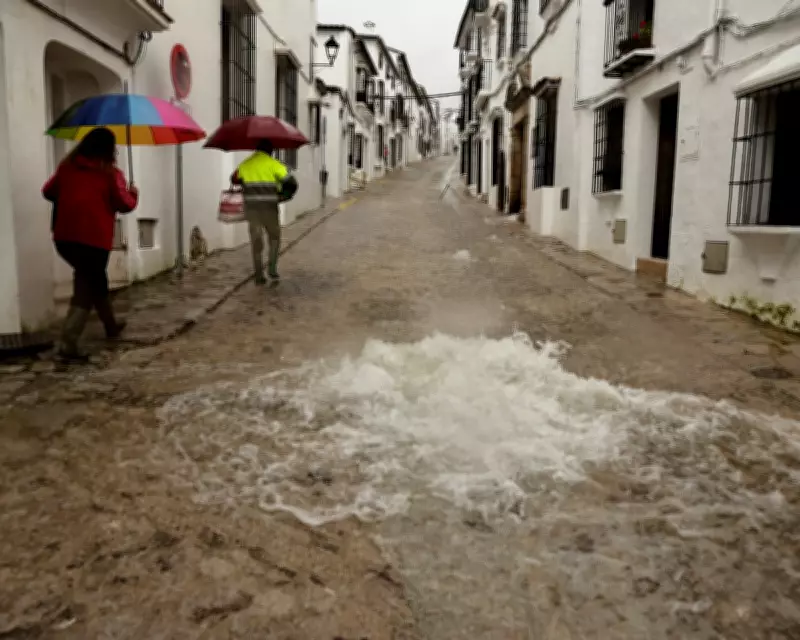
In Grazalema, Spain's wettest town, a year's worth of rainfall descended in just two weeks during Storm Leonardo at February's beginning. The deluge overwhelmed the karst aquifer beneath the town, sending water rushing through homes via floors, walls, and even electrical sockets. Authorities declared a mandatory evacuation for all residents as the situation turned critical.
"I felt a lot of fear," confessed Andrés Sánchez Barea, a guesthouse owner whose property remains in an exclusion zone. "At first we tried to get rid of the water. Lots of people came to help, but we realised it was impossible."
Remarkably, the evacuation proved successful due to swift coordination between Grazalema's centre-left leadership and neighbouring Ronda's centre-right authorities, who opened their doors to displaced residents.
Portuguese Winds Reach Terrifying Velocities
Portugal faced its own nightmare as Storm Kristin battered the country in early February. The Monte Real airbase recorded wind speeds reaching 109mph (176km/h) before the measuring station itself was destroyed by the storm's fury. The tempest knocked out electricity, internet, and telephone services across multiple regions, including Leiria where extreme rainfall shattered historical records.
"It was around this time that everything seemed to be falling apart," recalled Nelson Duarte, a beekeeper from Monte Real who lost half his hives. "The wind became deafening and relentless, mixed with the sound of collapsing structures, flying tiles, breaking trees and violently banging metal sheets. The atmosphere was terrifying and conveyed the feeling the house might not hold up."
Tragically, not all structures survived. Ricardo Teodósio, an industrial painter in Carvide, perished when a garage roof collapsed while he was repairing it with his father. João Lavos, commander of Vieira de Leiria's volunteer firefighters, reported his team responded to 50 storm-related emergencies within 24 hours, with 15 involving accident victims.
Moroccan Medina Transformed into Watery Grave
In Morocco's historic city of Safi, known as the ceramics capital, explosive mud waves shattered fragile pottery stores when rains swamped the souk. The narrow, winding streets of the medina became death traps as water surged through, claiming most of the 43 storm-related fatalities recorded across Morocco since mid-December.
"At first, we didn't think there would be big damages," said Amal Essuide, who watched the chaos unfold from her hotel rooftop in the old town before being rescued by boat. "But after we entered the small boat, and they found someone dead, then we realised it was a very hard thing. It was scary."
Climate Change: Loading the Chamber with Bigger Bullets
Western Europe has endured 16 rapid-fire storms this season due to shifting atmospheric currents that scientists suggest will become more frequent as global temperatures rise. While researchers remain uncertain about climate breakdown's role in storm formation, emerging evidence points to significant amplification effects.
Early analysis from Climate Central indicates climate change made the marine heatwave that supercharged February's storms ten times more likely. A World Weather Attribution study found carbon pollution intensified rainfall and worsened flooding, though regional impacts varied significantly.
Clair Barnes, an Imperial College London scientist and study co-author, explained: "Trends in the region are mixed and are not represented by the climate models. However, other lines of evidence do suggest that climate change has increased the amount of water available in that weather system to fall as rain."
Observational data reveals the most extreme rainfall days in Spain, Portugal, and Morocco now unleash one-third more water than during the 1950s. The WWA study attributed an 11% rainfall increase in northern regions to global heating, though southern impacts proved harder to quantify.
Adaptation Failures and Future Fears
The European Union's scientific advisers recently warned that Europe is failing to adapt to a hotter planet and its accompanying extreme weather. In Portugal, Duarte noted emergency warnings failed to generate adequate public alarm, leaving communities dangerously unprepared.
"Nobody was prepared for such a devastating force," he emphasized, adding that the death toll could have reached hundreds had the storm struck during daytime hours. "It caught us all completely by surprise."
Back in Grazalema, Mario Sánchez Coronel, whose textile shop flooded, praised authorities' response while expressing deep anxiety about the future. "It was hard, because you think about what might happen next," he confessed. "After the 'bad', will the 'worst' come?"
As Mediterranean communities begin the arduous recovery process, scientists continue investigating how climate change transforms regional weather patterns. The atmospheric machine-gun that fired these devastating storms may represent a terrifying new normal for a warming world.



