
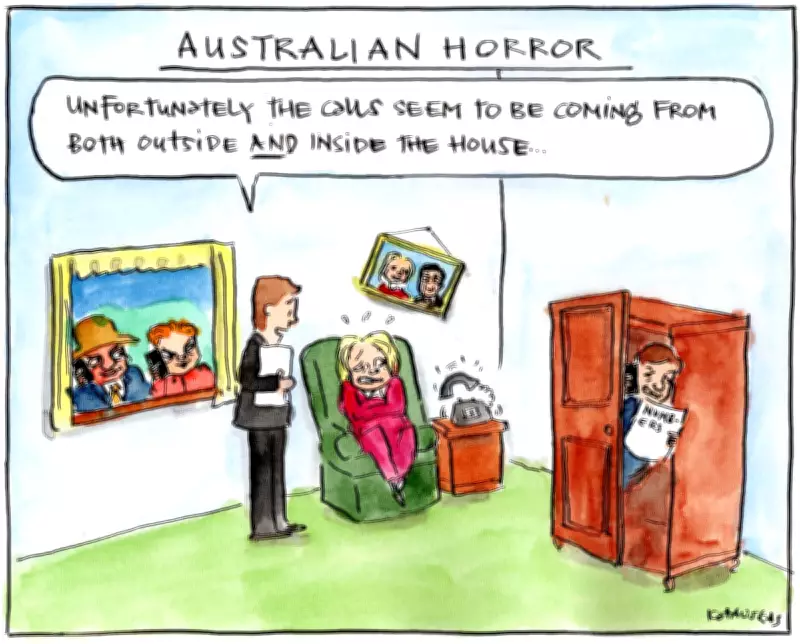
A recent cartoon published by The Guardian has captured significant attention, portraying what is described as the "worst nightmare" of Australian politician Sussan Ley. The image, released in February 2026, serves as a powerful visual commentary on the pressing issue of climate change and its intersection with political leadership in Australia.
The Cartoon's Stark Message
The artwork, featured in The Guardian's comment section, uses symbolic imagery to convey a critical message about environmental degradation and policy failures. While the exact details of the cartoon are not described in the source, it is implied to depict scenarios that challenge Ley's political stance or actions, potentially related to her role in environmental or climate-related matters. This visual satire aims to provoke thought and discussion among readers, highlighting the urgency of addressing climate issues in contemporary politics.
Context of Sussan Ley's Political Career
Sussan Ley is a prominent figure in Australian politics, known for her involvement in various ministerial roles, including those related to the environment and health. Her positions on climate change and environmental policies have often been subjects of public debate and scrutiny. The cartoon likely references these controversies, using hyperbole or allegory to critique her approach or the broader political landscape in Australia regarding climate action.
The timing of the cartoon's publication in 2026 suggests it may be responding to specific events or policy developments at that time, though the source does not provide explicit details. It underscores the ongoing tension between political rhetoric and tangible environmental outcomes, a theme that resonates globally as nations grapple with climate crises.
Reactions and Implications
Such cartoons are a staple of political commentary, using humour and exaggeration to shed light on serious issues. In this case, the depiction of Ley's "worst nightmare" serves to amplify concerns about climate inaction and its potential consequences. It reflects a growing public demand for accountability and more robust environmental policies from leaders.
The Guardian's decision to feature this cartoon aligns with its history of advocating for climate awareness and critiquing political figures who may be perceived as obstructing progress. By visualising Ley's fears, the cartoon invites viewers to consider the real-world nightmares of climate change, such as extreme weather events, biodiversity loss, and economic disruptions.
Broader Significance in Climate Discourse
This incident highlights the role of media and art in shaping public opinion on climate issues. Cartoons, with their ability to simplify complex topics, can make environmental challenges more accessible and emotionally resonant. For Sussan Ley, this portrayal may add pressure to her political agenda, pushing for clearer stances or actions in response to climate concerns.
In summary, The Guardian's cartoon of Sussan Ley's worst nightmare is more than just a piece of satire; it is a poignant reminder of the high stakes involved in climate policy. As Australia and the world face escalating environmental threats, such artistic expressions contribute to the vital conversation about leadership, responsibility, and the future of our planet.



