
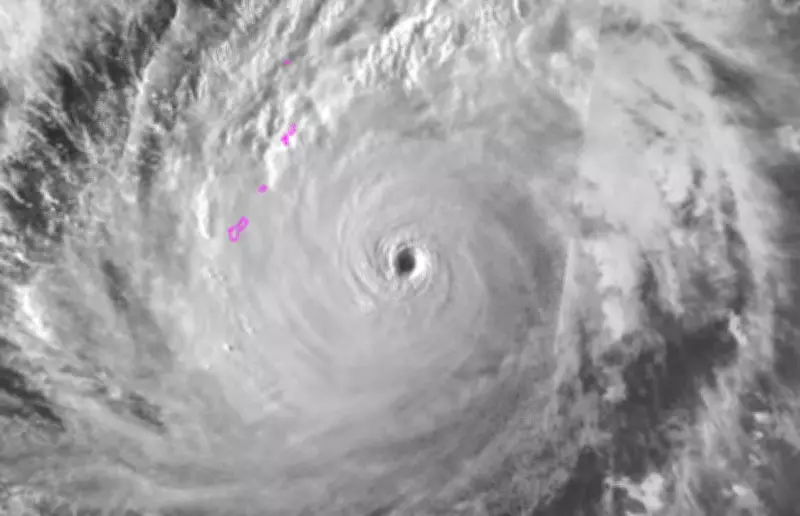
Super Typhoon Sinlaku Threatens Remote US Pacific Islands with Destructive Force
A dangerous super typhoon in the Pacific Ocean is rapidly advancing toward a group of remote US islands, posing a severe threat to communities and military installations. Super Typhoon Sinlaku, currently the strongest storm on Earth this year, is expected to make landfall on Tuesday in the Northern Mariana Islands, bringing with it destructive winds, widespread heavy rainfall, and significant flooding.
Immediate Threats and Warnings
The National Weather Service issued urgent warnings on Monday, highlighting the imminent danger. Guam, a US territory that hosts critical American military bases, is already under a tropical storm warning and could experience damaging winds starting Monday. The US Coast Guard has proactively issued flood and high wind advisories over the weekend to prepare residents and infrastructure.
According to the Joint Typhoon Warning Center, Super Typhoon Sinlaku was generating sustained winds of 173 miles per hour (278 kilometers per hour) on Monday as it approached the islands of Rota, Tinian, and Saipan. Although forecasters predict a slight weakening over the coming days, Sinlaku is projected to cross near these islands as a formidable category 4 or 5 typhoon, capable of causing extensive damage.
Emergency Preparations and Historical Context
In response to the escalating threat, US military officials in Guam have advised personnel to prepare for the storm and seek shelter in place. This precautionary measure comes in the wake of Typhoon Mawar's devastating impact in 2023, which left the island without power for several days, underscoring the vulnerability of the region to such extreme weather events.
Adding to the emergency response efforts, former President Donald Trump approved disaster declarations for both Guam and the Northern Mariana Islands on Saturday. This authorization enables enhanced support for emergency services, facilitating quicker aid and resource allocation to affected areas.
Understanding Super Typhoons
Super typhoons represent the most intense tropical cyclones that develop in the north-western Pacific Ocean, a region notorious for producing Earth's most powerful storms. Monitored by the Joint Typhoon Warning Center in Guam, these storms are equivalent to category 4 or 5 hurricanes in the Atlantic, characterized by wind speeds of at least 150 miles per hour.
Since the warning center began using the term "super typhoon" in 1947, more than 300 such storms have been identified, highlighting the persistent and severe nature of weather patterns in this part of the world. The current trajectory of Super Typhoon Sinlaku serves as a stark reminder of the ongoing challenges posed by climate-related extreme weather phenomena.



