Shetland Council Approves UK's Largest Salmon Farm Amid Fierce Opposition
In Collafirth, north Shetland, scallop fisher Sydney Johnson works tirelessly, unloading bags of two-dozen scallops after a grueling 10-hour shift on his boat, the Golden Shore. Johnson, who relies on the nutrient-rich waters for his livelihood, fears that a newly approved salmon farm will jeopardize his business and that of his two sons. "They say it's just one farm," Johnson remarks, "but it's one farm more. There's only so much water, and we're at saturation point."
Deepening Rifts in a Historic Fishing Community
Last week, the Shetland Islands council greenlit plans for what will become the UK's largest salmon farm, located next to Fish Holm off Shetland's east coast. This decision has intensified long-standing tensions between local fishers and aquaculture companies, drawing sharp criticism from environmental organizations concerned about lasting ecological damage. The site, a prime scallop bed for Johnson and others, is now at the center of a heated debate over marine resource use.
The Shetland Fishermen's Association (SFA), representing 450 members, argues that Scottish Sea Farms (SSF), the Norwegian-owned company behind the project, has failed to adequately assess environmental impacts on fish and shellfish nursery grounds. SSF, however, claims to have addressed these concerns by reducing the farm's size. The company employs nearly 300 people in Shetland, making it the islands' second-largest employer after the council.

A New Era in Aquaculture or an Environmental Threat?
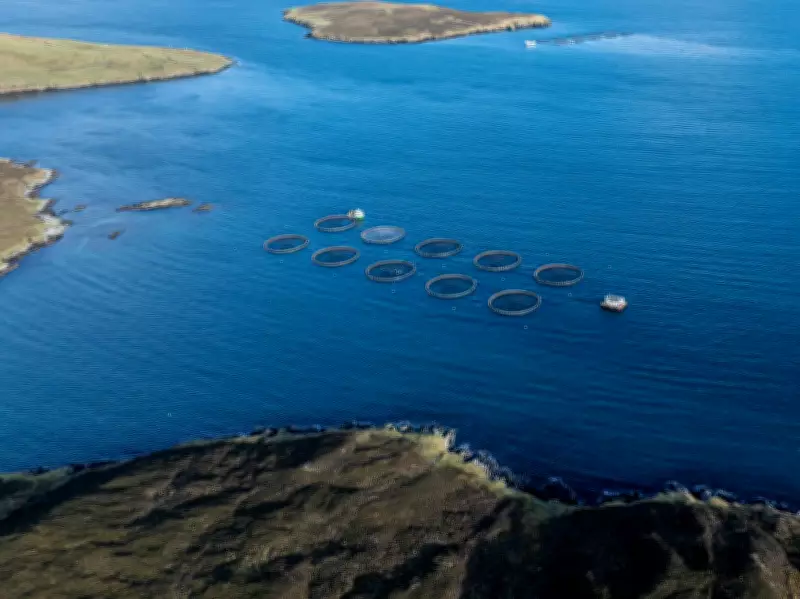
SSF plans to construct 12 pens, each 160 meters in circumference, capable of holding up to 6,000 tonnes of salmon. The company describes this as a "new era" in aquaculture, consolidating smaller farms into a larger, more efficient operation in deeper, high-energy waters with stronger tidal flows. According to SSF, this design will mitigate issues like sea lice, disperse waste more effectively, and promote healthier fish.
Johnson remains skeptical, dismissing SSF's environmental impact assessment as "laughable." He points to discrepancies in the company's valuation of the scallop beds, citing his own daily catches that far exceed SSF's estimates. "I've had four times that at Fish Holm in a day," he asserts. "They need to sack their accountant." The SFA supports this view, accusing SSF of misapplying statistical data.
Industry Expansion Amid Growing Scrutiny
Shetland has become a focal point for aquaculture expansion, with Norwegian and Canadian multinationals now dominating most of the island's salmon farms. In 2024, these operations produced 38,000 tonnes of salmon, valued at £174 million, accounting for roughly one-fifth of Scotland's total output. SSF is set to open another large farm in May, with production expected to reach 4,000 tonnes, and is evaluating seven additional sites.
This growth occurs against a backdrop of increasing regulatory scrutiny. The Scottish parliament's rural affairs and islands committee is scheduled to question salmon farming executives on February 25, following a 2024 inquiry that criticized the government's "slow progress" on industry regulation. Concerns persist over high mortality rates, with 2024 data showing a survival rate of just 61.8%, the lowest since the 1980s. In October alone, over 250,000 salmon died in Shetland farms, attributed by companies to plankton blooms and jellyfish in warm waters.
Calls for Moratorium and Community Division
Green MSP Ariane Burgess advocates for a moratorium on new farms and expansions, arguing it would allow regulators to enforce existing rules and address the industry's impact on marine ecosystems and local economies. Conservative MSP Edward Mountain, who convened a 2018 inquiry into salmon farming, now supports a moratorium, citing unaddressed mortality issues. "The industry hasn't done what it promised," he states.
Despite these challenges, Scottish farmed salmon production has surged by 23% since 2018, reaching 192,000 tonnes in 2024. Data from environmental charity WildFish indicates that 58 planning applications have proceeded, with only three refusals. Nick Underdown, Scotland director at WildFish, warns that the Fish Holm approval represents an "unprecedented expansion of industrial salmon farming that carries significant environmental risk."

Balancing Economic Benefits and Cultural Heritage
On Shetland, residents grapple with the farm's implications. SSF has contributed over £300,000 to local causes, from school laptops to sports teams, bolstering its community ties. William Cooper, a retired engineer from Mossbank, acknowledges the economic benefits, noting, "It's a big employer and it pays good wages." Yet, he expresses sadness at the potential loss of traditional fishing heritage. "For Shetland to be known for just producing millions of salmon would be quite sad really," he reflects.
SSF has declined to comment specifically on Fish Holm but emphasizes its commitment to "coexisting with other marine users while delivering long-term benefits for the islands." Karyn Lumsden, SSF's head of communications, highlights that the plans include vacating one site and reducing overall seabed impact. A spokesperson for Salmon Scotland, the industry representative, looks forward to updating the Holyrood committee on progress, including improved survival rates and investments in fish health.
As Shetland navigates this contentious issue, the approval of the Fish Holm farm underscores broader tensions between industrial aquaculture, environmental sustainability, and the preservation of traditional ways of life.