
Rare 'Ring of Fire' Solar Eclipse to Illuminate Southern Skies This Week
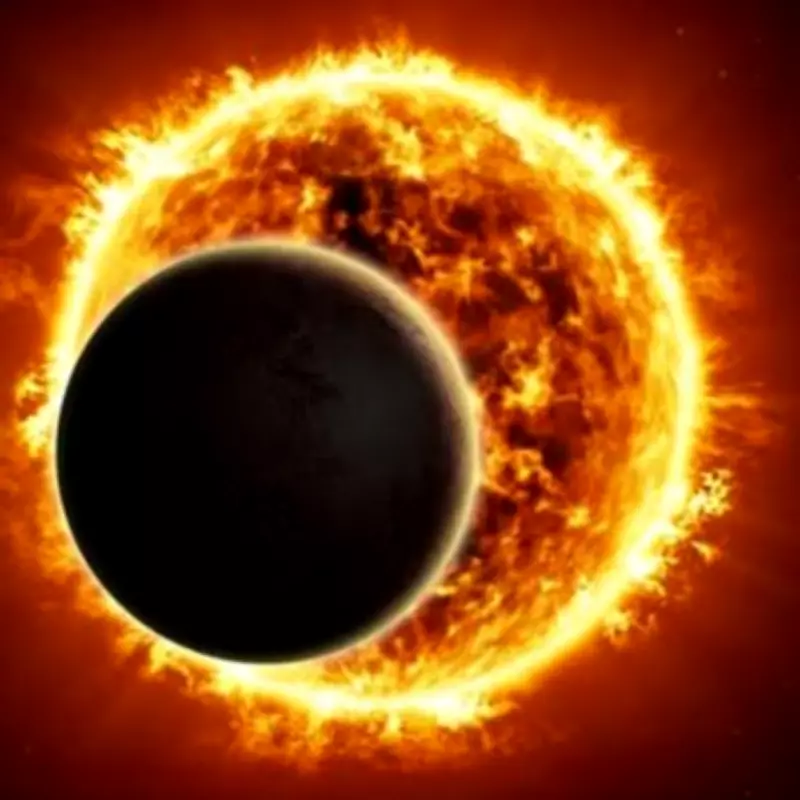
The first solar eclipse of 2026 is set to unfold this week, offering a spectacular celestial display that will captivate astronomy enthusiasts worldwide. This rare phenomenon, famously known as a "ring of fire," occurs when the Earth, Sun, and Moon achieve perfect alignment, creating a breathtaking visual effect in the sky.
What Creates the 'Ring of Fire' Effect?
During this celestial event, the Moon passes directly between the Sun and Earth, casting a distinct shadow across our planet's surface. However, unlike a total solar eclipse, the Moon does not completely cover the solar disk. Instead, the outer edge of the Sun remains visible, forming a glowing celestial ring that gives the phenomenon its dramatic "ring of fire" nickname.
Scheduled for Tuesday, February 17, the eclipse will begin at precisely 7:10 AM. The transformation of the Sun into this fiery ring represents a major highlight of the lunar calendar, though visibility remains limited to specific geographic regions.
Limited Visibility Path
The path of annularity—the route where the solar eclipse will be fully visible—will emerge across western Antarctica before continuing across the Davis Sea coast and Southern Ocean. This trajectory means the forthcoming solar eclipse won't be visible from the United Kingdom or most Northern Hemisphere locations.
According to astronomical experts, only those positioned along this narrow geographic path will witness the alignment in its entirety. The precise positioning of the Moon's shadow determines whether observers can experience the complete "ring of fire" effect or merely a partial eclipse.
Partial Eclipse Locations
While the full annular eclipse remains inaccessible to most, several Southern Hemisphere locations will experience partial solar eclipses with varying degrees of solar coverage:
- Heard and McDonald Islands, Australia - 88% of the Sun's disk obscured
- French Southern and Antarctic Lands, France - 88% coverage
- Mascarene Islands, Mauritius/France - 35% coverage
- Port Louis, Mauritius - 32% coverage
- Saint-Denis, Reunion, France - 31% coverage
- Antananarivo, Madagascar - 20% coverage
- Durban, South Africa - 16% coverage
- Maputo, Mozambique - 13% coverage
- Maseru, Lesotho - 11% coverage
- Gaborone, Botswana - 4% coverage
- Harare, Zimbabwe - 3% coverage
- Ushuaia, Argentina - 3% coverage
Upcoming Lunar Eclipse
Following Tuesday's solar spectacle, astronomy enthusiasts can look forward to another celestial event on March 3-4. A lunar eclipse will cast a reddish tint on the Moon as Earth passes between our satellite and the Sun, projecting its shadow onto the lunar surface.
This phenomenon, sometimes called a "Blood Moon" due to the Moon's distinctive reddish hue during the event, offers another opportunity for skywatchers to observe the intricate dance of celestial bodies. While the solar eclipse requires specific geographic positioning for optimal viewing, lunar eclipses typically offer broader visibility across larger regions of the Earth.
The 2026 celestial calendar continues to promise remarkable astronomical events for observers worldwide, with this week's "ring of fire" solar eclipse serving as a particularly rare and visually stunning highlight.



