
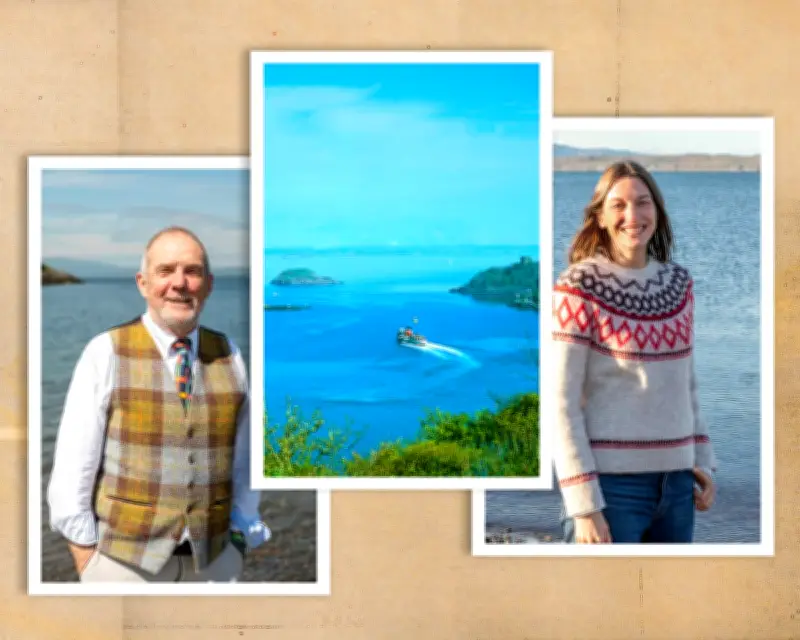
The Scottish Association for Marine Science (Sams) has appointed the ocean as a trustee, ensuring it has a formal voice in boardroom decisions. The 140-year-old organisation, based in Oban on Scotland's west coast, implemented the change last month, marking a shift from its origins in the Scottish Enlightenment when nature was seen as something to be exploited.
Inspired by Indigenous cultures and the rights of nature movement
Nick Owens, director of Sams and a marine scientist, said the idea came from a growing awareness of human impact on the planet and inspiration from Indigenous cultures in North America, where people have a strong connection to the environment. “There was this notion for a long time that the planet was so big, that we couldn’t possibly have any impact on it,” Owens said. “Over recent decades, we’ve become more conscious of the impact that we’re having, yet it occurred to me that our ethical decisions are almost entirely from the human perspective.”
Sams is not the first to adopt this approach. In 2022, eco beauty manufacturer Faith in Nature became the world’s first company to give nature a formal vote on corporate decisions. Since then, about 25 organisations in Britain, France, Belgium, the US and Australia have followed suit. Simeon Rose, brand director of Faith in Nature, said the move has led to tangible changes, such as sourcing more ethical ingredients like essential oil from orange juice waste and tea tree oil from areas with koala corridors. “There’s a real sense of community-building worldwide between interested parties and a will to figure out how we can improve this and strengthen it,” Rose said.
Implementation and representation
Sams established a working group to explore how to give the ocean a voice, defining it as planet-wide, including the seabed and parts of the airspace above, but excluding human activities. Helen Mitcheson, an environmental lawyer at Pinsent Masons with a background in marine mammal science, was appointed as the ocean's representative. She has a say in all discussions but no veto power. In the first meeting, Mitcheson had to intervene after 20 minutes of discussion without any mention of the ocean. She acknowledged that more work is needed to fully embed the concept but hopes it will allow environmental factors to be considered early in strategic decisions.
Potential impacts and challenges
Owens recognised that giving the ocean a voice could lead to unpredictable changes, such as rejecting lucrative contracts or limiting work with certain industries like aquaculture. “We would need to work with industries to understand them and their impacts, perhaps to help them minimise their impacts and perhaps to educate them,” Owens said. “In all instances, we would be completely objective, while representing the viewpoint of the ocean, and be entirely transparent and fact-based. It is possible that we might decide not to work with a particular industry, but we have not done so yet.” To ensure the decision is meaningful, the ocean trustee's remit is being added to Sams' constitution, making it a formal part of decision-making.
Internal acceptance and future outlook
Despite external bemusement, Owens said the change has been well-received internally, with staff beginning to ask, “What would the ocean think about this?” He hopes the decision will help Sams adopt a more sustainable approach and attract philanthropic funding. “Capitalism created the situation that we’ve got now,” Owens said. “But I think realistically it’s going to be industry and capitalism and human society that’s going to get us out of it. Rightly or wrongly, it is going to be the boardrooms where decisions are taken. I genuinely believe that in a decade or so this will be common practice.”



