Citizen scientists have identified dozens of sewage misconnections polluting London's smaller rivers, with the River Brent emerging as a hotspot, according to the Zoological Society of London (ZSL). The latest Outfall Safari audits found 88 polluting outfalls across four rivers, prompting emergency alerts to Thames Water and the Environment Agency.
Outfall Safari reveals widespread domestic sewage pollution
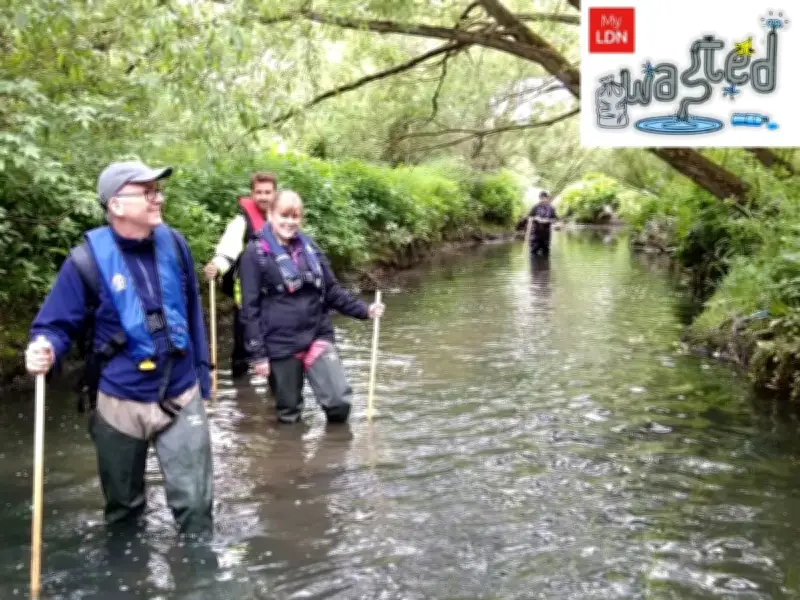
For the past decade, ZSL's Outfall Safari programme has trained volunteers to patrol riverbanks and identify drainage pipes discharging household sewage into London's waterways. The latest snapshot survey found misconnection pollution across the rivers Wandle, Brent, Ravensbourne and Pinn, with some more severely affected than others.
Misconnections occur when appliances are wrongly connected to surface water drains that discharge into rivers rather than the sewer system. Common examples include washing machines, toilets and sinks discharging wastewater directly into local watercourses.
The Brent: a North West London hotspot
The recent Outfall Safari audit of 22.4km of the River Brent identified 44 polluting outfalls among 123 inspected, prompting emergency alerts to Thames Water over 15 high-priority incidents. Ella Carbery-Tarrant, a project officer at ZSL leading the UK's first citizen science-led programme to identify misconnections in London's rivers, told the Local Democracy Reporting Service (LDRS): "The Brent is a hotspot for poor water quality."
"It is pretty disgusting to be honest," she said, reflecting on the Brent findings. "There are some pretty bad surface water outfalls that are polluting a lot of watercourse." While misconnections can be isolated to appliances in a single property, often following home improvements or renovations, they can also affect entire blocks of flats or even whole housing estates.
Ella told the LDRS about how activist Ben Morris from Clean up the River Brent previously identified a block of over 20 flats whose misconnected appliances were discharging wastewater directly into the nearby watercourse. A full-time enforcement officer was appointed last month by City Hall to tackle misconnections across West London, following persistent pollution problems affecting the Brent.
Other rivers also affected
Ella also told the LDRS that while conditions on the River Wandle were "not too bad compared to other catchments," chronic misconnections remain an ongoing issue. Of the 105 surface water outfalls inspected on the Wandle, 90 showed no visible contamination, but nine were actively polluting, including two severe leaks that triggered immediate alerts to Thames Water and the Environment Agency.
Elsewhere, the audit of the Ravensbourne identified 18 polluting outfalls, six of which required emergency alerts. Volunteers also found 17 polluting outfalls on the Pinn, with three severe incidents of contamination raised to Thames Water.
Earlier this year the LDRS revealed how misconnection pollution was impacting a stretch of the Wandle known for its rich biodiversity. During a visit to Watermeads Nature Reserve near Mitcham, a milky discharge was observed flowing from a nearby outfall into the river, where it mixed with the chalk stream waters and left a film on the surface. Dr Isobel Ollard, catchment officer at the South East Rivers Trust, told the LDRS that such discharges "can be harmful to wildlife and lead to further degradation of river ecosystems".
Following this visit, the LDRS submitted an environmental information request which revealed that Thames Water recorded six pollution incidents linked to plumbing misconnections along the River Wandle between 2021 and 2024, with none recorded in 2025 or 2026. The data showed wastewater entering the river through surface water drains serving homes and flats in the CR7, SW19 and CR0 postcodes, as well as a pop-up food stall in CR3 and a direct discharge from an apartment building in SW19.
Thames Water also runs a Surface Water Outfall Programme (SWOP), using dye tests and household surveys to identify misconnections along the capital's rivers. Its recent focus on the Wandle uncovered 77 household appliances wrongly plumbed into rainwater pipes across just eight properties on Wandle Road. An interactive map of Thames Water's findings on misconnections across London is available on the PowerBI app site.
Responsibility and challenges
A key problem is that it can take years to even notice a misconnection. Property owners are responsible for correcting misconnections once identified, but resolving them can be more complex when an entire block of flats is affected or residents move into a property unaware of the faulty connections. Property owners and tenants are therefore encouraged to check their plumbing for misconnections.
However, Thames Water and the Environment Agency also play key roles in the fight against misconnections. Thames Water uses containment measures, including booms, to limit the spread of pollution from known outfalls and aims to investigate all pollution reports within two hours. It also informs owners suspected of having misconnected properties of their responsibility to fix the issue. If a homeowner fails to correct a misconnection within the voluntary period - typically 12 weeks - Thames Water can refer the case to the local authority, which can serve statutory notices or carry out the work and recover the costs from the owner under the Building Act 1984.
While individual property-level misconnections are generally addressed by Thames Water or local authorities, the Environment Agency also retains powers under environmental protection legislation to intervene or prosecute in cases of serious or persistent environmental pollution.
Ella said many misconnections go unreported because pollution can be difficult to spot, particularly where vegetation obscures riverbanks. "A lot of it is unseen," she said, adding that sewage fungus, which is more likely to grow in spring and summer, can be hidden by dense vegetation, leaving polluting outfalls "out of sight out of mind".
She believes volunteer-led programmes like Outfall Safari, which teach members of the public how to spot and report polluting outfalls, are vital. "If local people don't report it nothing really happens," she said. "It is important for the public to have a role in this." Outfall Safari surveys provide a brief snapshot of river health at that point in time, but Ella believes repeat monitoring after the surveys is the key to ensuring regular enforcement.
After starting with five volunteers monitoring the River Crane in 2016, Outfall Safari now has around 30 volunteers covering each river catchment. "It's become a really collaborative project," Ella told the LDRS. However, she also acknowledged more financial and political support is needed to address the issue. "It is a really big job to do, that is why it would be great to have more roles in the sector that are specifically designed to resolve misconnections," Ella said.
To get involved with volunteering to identify outfalls, email MarineandFreshwater@ZSL.org or keep an eye on the group's Eventbrite page, titled ZSL Marine and Freshwater, for future training and volunteering sessions.