
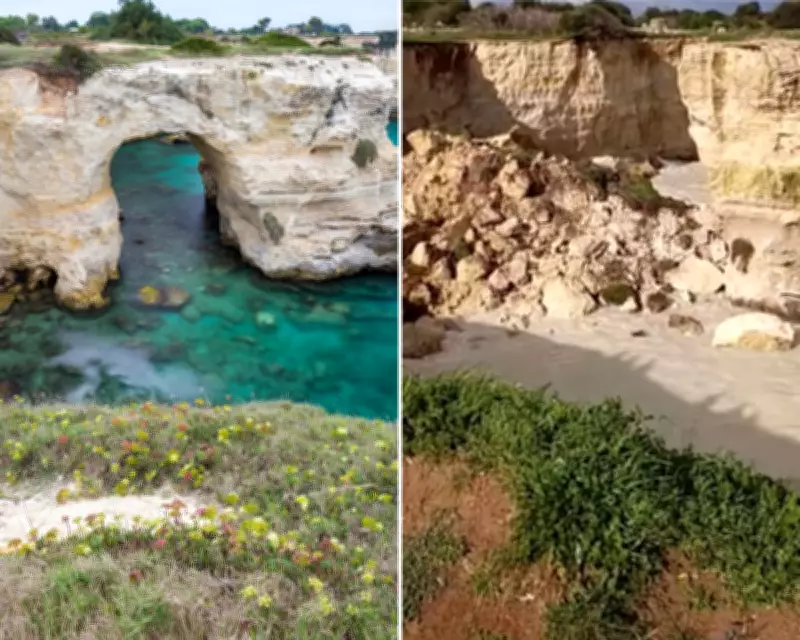
The iconic natural rock arch at Sant'Andrea in Melendugno, Puglia, known as Lovers' Arch, has tragically collapsed into the Adriatic Sea on Valentine's Day. This devastating event occurred after violent storm surges and heavy rainfall battered southern Italy, culminating in the final destruction of one of the region's most beloved landmarks.
A Symbol of Romance Lost
The rocky arch, celebrated as a backdrop for countless wedding proposals, selfies, and postcards, was a defining feature of the Salento coastline. Its collapse represents a significant loss for both local identity and Italy's tourism industry, as the arch was one of the most recognizable symbols in this heavily visited area.
Local Officials Mourn the Loss
Melendugno's mayor, Maurizio Cisternino, expressed profound sorrow, stating, "It is a devastating blow to the heart. One of the most famous tourist features of our coastline and of the whole of Italy has disappeared." He emphasized the urgent need for resources to address coastal erosion systematically, noting, "Nature has been overturned: what existed 30 years ago no longer exists."
Francesco Stella, the tourism councillor, somberly compared the event to a funeral, highlighting the emotional impact on the community.
The Role of Extreme Weather
According to local authorities, the collapse resulted from progressive weakening caused by strong winds, rough seas, and intense rainfall in recent days. This incident marks the most significant damage inflicted by coastal erosion on the Salento landscape, underscoring the growing threat of environmental changes.
Medicanes and Climate Impact
The destruction is linked to Mediterranean cyclones, known as medicanes, which are becoming increasingly frequent due to rising sea temperatures driven by the climate emergency. Cyclone Harry, which struck last month, exemplifies these devastating warm-core systems that reshape coastlines, destroy ports, and damage infrastructure.
Christian Mulder, a professor of ecology and climate emergency at the University of Catania, explained, "With the Mediterranean experiencing among its hottest years on record in 2025, warmer seas are supercharging the atmosphere and fuelling extreme events."
Widespread Devastation
These cyclones, with winds exceeding 60 mph and waves up to 15 meters, have left a trail of destruction across southern Italy. For instance, on January 25, Cyclone Harry triggered a devastating landslide in Niscemi, Sicily, creating a 4km-long chasm that swallowed roads, cars, and sections of the urban fabric.
The collapse of Lovers' Arch serves as a stark reminder of the fragility of natural landmarks in the face of climate-driven extreme weather, urging greater attention to coastal preservation and climate action.



